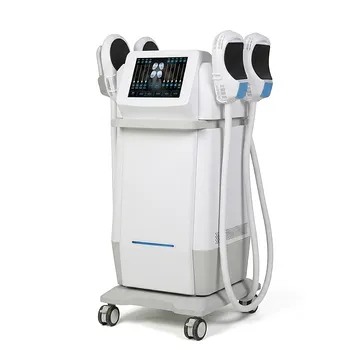
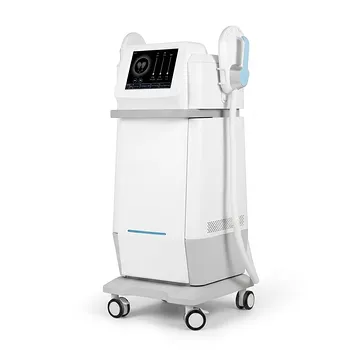
Risk management is vital because combining localized fat reduction with tissue firming can multiply treatment risks rather than simply multiply results. Injection-based protocols may use multiple agents at different concentrations and tissue depths, creating potential for severe inflammation, persistent edema, bruising, infection, or tissue necrosis when dosing, placement, or technique is incorrect. Non-invasive approaches such as cryolipolysis, radiofrequency (RF), cavitation, and electromagnetic muscle stimulation reduce many injection-related hazards by delivering controlled energy through the skin instead of introducing chemical agents into subcutaneous tissue.
Combined treatments require disciplined control of agents, volumes, injection depth, anatomy, and patient selection. Non-invasive body sculpting can improve the safety and reproducibility of localized contouring, but it remains a treatment for selected fat pockets rather than a substitute for weight loss or risk-free medical care.
Why Combined Treatments Require Careful Risk Management
Multiple agents increase clinical complexity
A combined protocol may pair a lipolytic compound with vascular or tissue-firming substances. Each ingredient can have its own adverse effects, and the interaction between agents may make inflammation, swelling, or discomfort more difficult to predict and manage.
The risk is not determined only by the product itself. Total volume, concentration, injection pattern, tissue depth, anatomical location, and spacing between sessions all influence the treatment’s safety profile.
Incorrect tissue depth can damage vulnerable structures
Injecting too superficially may cause excessive swelling, skin injury, or uneven results. Injecting too deeply or in the wrong anatomical plane can affect blood vessels, nerves, muscle, or other structures.
This is why localized injection treatments require appropriate anatomical knowledge, patient assessment, sterile technique, and a protocol that defines dose and placement precisely.
Tissue injury can become clinically serious
Expected bruising or temporary swelling may occur after injections, but severe or persistent inflammation requires attention. Reduced blood supply, excessive local pressure, contamination, or improper placement can contribute to delayed healing and, in serious cases, tissue necrosis.
Risk management therefore includes recognizing early warning signs, documenting the treatment, providing aftercare instructions, and having a clear escalation pathway for complications.
How Non-Invasive Body Sculpting Reduces Injection-Related Risk
Energy is delivered through the skin
Cryolipolysis, RF-based treatments, cavitation systems, and electromagnetic muscle stimulation use external applicators rather than needles. This removes the direct injection risks of puncture wounds, chemical misplacement, needle-related pain, and injection-site bruising.
The approach also avoids the need to introduce multi-agent cocktails into the hypodermal tissue, reducing uncertainty associated with combining substances and controlling their local distribution.
Automated parameters improve reproducibility
Many body sculpting systems use preset or monitored energy parameters. When operated according to the manufacturer’s instructions, these controls can make treatment delivery more consistent across sessions and between practitioners.
Reproducibility is valuable because it limits avoidable variation in exposure time, temperature, energy intensity, or electromagnetic output. It does not eliminate the need for proper training or patient screening.
Different technologies target different tissue responses
Cryolipolysis uses controlled cooling to affect selected fat cells. RF and related thermal technologies use heat to influence tissue and may support skin-firming goals, while cavitation systems use acoustic energy in targeted treatment protocols.
Electromagnetic muscle stimulation focuses on involuntary muscle contractions and may support muscle conditioning or toning. These technologies should not be treated as interchangeable, because their mechanisms, indications, contraindications, and adverse-effect profiles differ.
Fluid and electrolyte balance remain undisturbed
Large-scale surgical fat removal can involve substantial fluid infiltration and intravenous fluid management. Improper fluid volumes can contribute to systemic complications such as fluid overload or cardiac disturbances.
Non-invasive body sculpting does not require that type of fluid administration. It therefore avoids the fluid-management risks associated with extensive surgical fat-removal procedures, although it does not remove every possible medical risk.
What Risk Management Should Include
Confirm the patient is an appropriate candidate
These treatments are generally intended for localized fat reduction, contouring, or tissue-toning goals, not comprehensive weight loss. A patient should have realistic expectations and understand what the selected technology can and cannot change.
A complete assessment should consider medical history, medications, skin condition, treatment area, implanted devices, sensitivity to cold or heat, and any condition that could make the procedure unsuitable.
Match the technology to the actual goal
Fat reduction, loose skin, muscle definition, and overall weight management are different objectives. Selecting a device based only on its marketing category can produce disappointing results or expose the patient to an unsuitable treatment.
The practitioner should explain whether the intended effect is fat-cell reduction, thermal tissue treatment, skin firming, or muscle stimulation, and should define the expected timeline for results.
Control treatment parameters and documentation
Safe practice requires documented settings, treatment areas, applicator placement, session duration, and relevant patient responses. This record supports consistency and helps identify whether an adverse response is related to dosage, exposure, anatomy, or patient-specific factors.
For injection-based protocols, the need for precise documentation is even greater because multiple agents, concentrations, volumes, and tissue planes may be involved.
Provide monitoring and aftercare
Patients should receive clear instructions about expected short-term effects and symptoms that require prompt clinical review. Severe pain, rapidly increasing swelling, marked skin discoloration, blistering, fever, or signs of infection should not be treated as routine recovery.
Follow-up also matters because some tissue responses develop gradually. A post-treatment assessment can identify complications early and prevent repeated treatment over an area that has not recovered.
Understanding the Trade-offs
Non-invasive does not mean risk-free
External energy treatments can still cause temporary discomfort, redness, swelling, numbness, tenderness, or sensitivity changes. Thermal systems may cause burns if used incorrectly, and cold-based systems require attention to cold sensitivity and treatment-area suitability.
The correct conclusion is that non-invasive systems reduce specific injection and fluid-management risks, not that they guarantee a complication-free outcome.
Results may be gradual or limited
Localized body sculpting is designed to address small or resistant fat pockets and contouring concerns. It is not a substitute for nutrition, exercise, treatment of obesity, or surgical intervention when substantial tissue removal is required.
Results also vary according to the technology, treatment settings, anatomy, baseline tissue composition, and adherence to the recommended treatment plan.
Device quality and operator skill still matter
Automated parameters can improve consistency, but they cannot compensate for poor patient selection, defective equipment, incorrect applicator placement, or inadequate training. A non-invasive device remains a clinical tool that must be used within its intended indications.
Practitioners should also distinguish validated treatment claims from broad marketing language and avoid promising uniform outcomes.
Combined modalities need sequencing discipline
Using more than one modality may be reasonable in some treatment plans, but adding procedures without considering tissue recovery can increase irritation and obscure the cause of an adverse reaction. A staged plan may make it easier to evaluate response and manage risk.
The decision should be based on the patient’s anatomy and goals rather than the assumption that more simultaneous treatments automatically produce better results.
How to Apply This to Your Project
The safest approach is to define the treatment objective first, select the least invasive suitable modality, and apply a documented protocol with appropriate screening and follow-up.
- If your primary focus is localized fat reduction: Use a validated, appropriately selected technology for small fat pockets and explain that contouring is not the same as weight loss.
- If your primary focus is skin firming: Choose a modality whose mechanism and evidence align with tissue-tightening goals, while setting expectations about gradual and variable improvement.
- If your primary focus is muscle definition: Consider electromagnetic muscle stimulation as a muscle-conditioning approach, not as a replacement for fat reduction or exercise.
- If your primary focus is minimizing injection-related complications: Prefer non-invasive applicator-based treatment when clinically appropriate, because it avoids needle trauma, chemical misplacement, injection bruising, and hypodermal tissue injury.
- If your primary focus is clinic safety and consistency: Standardize screening, device settings, operator training, documentation, aftercare, and adverse-event escalation procedures.
Effective body sculpting depends less on combining the most treatments than on matching one appropriate treatment to the patient’s goal and controlling its risks from assessment through follow-up.
Summary Table:
| Risks in Injection-Based Protocols | How Non-Invasive Body Sculpting Mitigates Them |
|---|---|
| Multiple agents increase complexity | External energy delivery avoids chemical cocktails |
| Incorrect tissue depth damage | Energy delivered through skin via applicators |
| Injection-related bruising/pain | No needles, reducing puncture trauma |
| Fluid and electrolyte imbalance | No fluid infiltration needed |
| Inconsistent results | Automated parameters enhance reproducibility |
Elevate your clinic's body sculpting safety and outcomes with BELIS's advanced non-invasive technologies—Diode Laser, Cryolipolysis, RF Cavitation, EMSlim, and more. Our professional-grade aesthetic devices are designed exclusively for clinics and premium salons, ensuring reliable performance and patient satisfaction. Contact us today to explore how our solutions can enhance your practice and minimize treatment risks. Get in touch now!
Related Products
- EMS Body Sculpting Machine for Body Slimming and Sculpting
- EMSlim Neo Nova Body Sculpting EMS Sculpting Machine
- EMS Body Sculpting Slimming Machine EMSlim Body Slimming Machine
- EMSlim Body Sculpting Machine EMS Body Slimming Machine
- EMSlim RG Laser Body Sculpting and Slimming Machine
People Also Ask
- Does EMS sculpting really work? Achieve Clinically-Proven Body Contouring
- Why is it important for practitioners to avoid over-promising body sculpting results? Ensure Trust and Clinic Success.
- What are the technical advantages of professional body sculpting? Non-Invasive vs. Invasive Liposuction Explained
- Does EMS actually work for weight loss? A Realistic Look at Muscle Building and Metabolism
- What patient selection criteria and evaluation protocols should aesthetic clinics implement to optimize outcomes with non-invasive body sculpting devices?