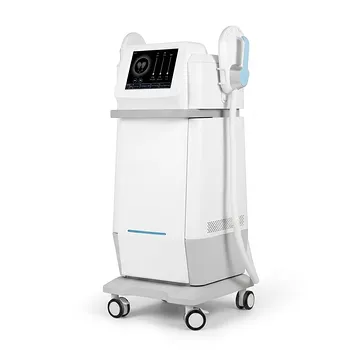
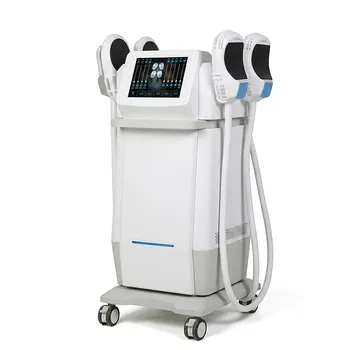
Objective pre-treatment documentation is critical because it creates a reliable baseline. Standardized photographs, high-resolution skin or tissue assessments, treatment-zone mapping, and detailed consultation notes allow clinics to compare the patient’s starting condition with later results. This helps demonstrate gradual improvement, identify pre-existing features, guide safer treatment planning, and reduce disputes driven by memory or subjective dissatisfaction.
The central value of documentation is objective comparison. When results develop progressively—as they do with cryolipolysis, EMS-based body sculpting, HIFU, and many laser treatments—consistent baseline records help patients and clinicians evaluate what actually changed rather than relying on impressions alone.
Why Subjective Satisfaction Is Not Enough
Patients judge outcomes through personal expectations
A technically successful treatment does not guarantee that a client will feel satisfied. Expectations, body image, prior experiences, and personal psychosocial factors can strongly influence how a patient interprets the result.
Documentation cannot eliminate dissatisfaction, but it gives the consultation a factual reference point. It allows the clinic to discuss visible and measurable changes alongside the patient’s subjective experience.
Improvements often appear gradually
Many non-invasive treatments do not produce their full visible effect immediately. Fat reduction, muscle-toning changes, skin tightening, pigment improvement, and resurfacing effects may develop over multiple sessions or weeks.
Without a clear starting record, patients may forget their original condition or compare current results with an inaccurate mental image. Pre- and post-treatment comparisons make gradual progress easier to recognize.
What a Strong Baseline Should Capture
Standardized photographic records
Clinical photographs should use consistent lighting, focal distance, background, anatomical positioning, and camera angle. The same conditions should be repeated during follow-up whenever practical.
This consistency is essential. A different pose, lens, shadow, or degree of muscle contraction can create the appearance of improvement or worsening even when the underlying tissue has not changed.
Diagnostic skin and tissue assessments
Professional skin testers, body analyzers, ultrasound, thermography, or other diagnostic tools may help document baseline characteristics such as:
- Skin hydration and barrier condition
- Pigment density and sensitivity
- Skin laxity and elasticity
- Subcutaneous fat thickness
- Localized temperature or circulation-related findings
- Cellulite severity and surface irregularity
The appropriate tool depends on the device, treatment area, and clinical setting. These measurements should support—not replace—history-taking, physical examination, and professional judgment.
Detailed consultation notes
Notes should record the patient’s concerns, relevant medical and medication history, treatment objectives, agreed treatment areas, observed asymmetries, and realistic expectations.
They should also distinguish the patient’s desired outcome from what the selected technology can reasonably deliver. This distinction is particularly important when a client expects surgical-level contouring or complete elimination of cellulite, laxity, or skin irregularity from a non-invasive procedure.
How Documentation Improves Treatment Planning
It identifies pre-existing anatomy
Natural asymmetry, localized laxity, cellulite, scarring, contour irregularities, and differences in fat distribution may exist before treatment. Patients may not notice these features until they examine the area closely after a procedure.
Recording them in advance helps establish that they were pre-existing rather than caused by the device or treatment. It also supports a more realistic discussion of the likely degree and pattern of improvement.
It supports precise treatment mapping
Body sculpting requires more than selecting a device. Practitioners must assess the target tissue, determine appropriate treatment zones, and consider how the treated area transitions into surrounding tissue.
Mapping the treatment area and documenting tissue characteristics can support consistent applicator placement and energy delivery. For body contouring, this may include assessing fat depth, skin elasticity, laxity, and peripheral transition zones.
It helps match protocols to the patient
Baseline classification can help clinicians select and customize an appropriate protocol. For cellulite, structured systems such as the Nürnberger and Müller scale or the Cellulite Severity Scale may provide a more consistent description of severity than informal language alone.
The resulting record can then be used to track whether changes are occurring in the features that were actually targeted, such as depression depth, surface morphology, laxity, or circumferential measurements.
How Documentation Improves Safety
It reveals contraindications and risk factors
Pre-treatment screening may identify active infections, inflammatory skin conditions, impaired barrier function, unusual sensitivity, or medications that increase photosensitivity. These findings can affect whether treatment should proceed, be modified, or be postponed.
For light- or laser-based rejuvenation, documenting skin condition and relevant medical history is especially important. A device should not be used simply because a patient has scheduled an appointment.
It establishes a defensible clinical record
A complete record shows that the clinic assessed the patient, discussed the proposed treatment, identified relevant risks, and documented the condition of the treatment area before intervention.
This is an important risk-management practice, but it is not an absolute defense against complaints or adverse events. Documentation is most valuable when it is accurate, contemporaneous, and consistent with the clinic’s actual clinical process.
How Documentation Improves Patient Communication
It turns expectations into an explicit agreement
Consultation images and mapped treatment areas give the patient something concrete to review. The clinician can explain which areas will be treated, which findings are pre-existing, and what degree of improvement is realistically expected.
This reduces ambiguity around statements such as “tighter,” “smoother,” or “slimmer,” which can mean different things to different people.
It makes progress easier to discuss
Showing standardized baseline and follow-up records allows the clinician to discuss change using the same reference points. This is more reliable than asking the patient whether they feel different or comparing unrelated photographs.
Objective evidence can reinforce professional credibility while still allowing the clinic to acknowledge that the patient’s satisfaction may not fully match the measured or visible outcome.
Understanding the Trade-offs
Documentation takes time and resources
High-quality photography, diagnostic testing, mapping, and note-taking require staff training, equipment, workflow design, and storage capacity. Clinics should use a process that is sufficiently thorough without collecting measurements that do not influence treatment or follow-up decisions.
Measurements are not automatically objective
A device reading is only useful when the equipment is appropriate, maintained, consistently operated, and interpreted within its limitations. Changes in hydration, lighting, positioning, pressure, or operator technique can affect results.
For this reason, clinics should use repeatable protocols and avoid presenting a single measurement as definitive proof of clinical improvement.
Photographs do not guarantee satisfaction
Even clear before-and-after images cannot promise that a patient will consider the result acceptable. They document physical change, but they do not measure every factor that shapes satisfaction.
The most effective process combines objective records with careful expectation management, appropriate patient selection, and honest discussion of limitations.
Privacy and consent must be managed separately
Clinical photographs and diagnostic records are sensitive health information. Clinics should obtain appropriate consent for treatment documentation and handle storage and access in accordance with applicable privacy requirements.
Consent for maintaining records should be distinguished from consent for commercial or promotional use. A patient’s agreement to treatment documentation does not automatically authorize marketing publication.
How to Apply This to Your Clinic
A practical documentation process should be consistent across consultations, treatment sessions, and follow-up reviews.
- If your primary focus is patient safety: Screen and document skin condition, relevant medical history, medications, contraindications, and the planned treatment area before operating the device.
- If your primary focus is demonstrating results: Use standardized photographs, repeatable measurements, and the same assessment conditions at baseline and follow-up.
- If your primary focus is treatment precision: Map the target zones and record tissue characteristics such as fat distribution, laxity, cellulite features, or asymmetry.
- If your primary focus is reducing disputes: Document pre-existing irregularities, agreed treatment areas, expected outcomes, limitations, and the patient’s understanding of the plan.
- If your primary focus is professional compliance: Maintain accurate clinical records, protect patient data, and obtain separate consent for clinical documentation and promotional use.
Objective documentation gives clinics a clearer basis for safer decisions, more credible communication, and fairer evaluation of non-invasive treatment outcomes.
Summary Table:
| Key Benefit | How Documentation Helps | Example Measurement |
|---|---|---|
| Reliable Baseline | Establishes a consistent reference point for comparison | Standardized photos, skin analyzer readings |
| Safety | Identifies contraindications and risk factors | Medical history, skin sensitivity tests |
| Treatment Precision | Supports mapping and protocol selection | Fat thickness, laxity scores |
| Communication | Aligns expectations and reduces disputes | Consultation notes, before/after images |
| Dispute Reduction | Pre-existing features are documented | Asymmetry, cellulite severity |
Ready to elevate your practice with reliable documentation protocols? At BELIS, we provide advanced aesthetic devices—from laser, IPL, and PDT to body sculpting and skin rejuvenation—designed for clinics and premium salons. Our solutions help you achieve precise outcomes while ensuring safety and client satisfaction. Contact us today to learn how our technology can help you build a defensible, result-driven practice.
Related Products
- EMS Body Sculpting Machine for Body Slimming and Sculpting
- EMSlim RG Laser Body Sculpting and Slimming Machine
- Ultrasonic Cavitation Machine Lipo Laser Device
- EMS Body Sculpting Slimming Machine EMSlim Body Slimming Machine
- EMSlim Body Slimming Machine for Muscle Building and Beauty
People Also Ask
- Does EMS sculpting really work? Achieve Clinically-Proven Body Contouring
- Why is it important for practitioners to avoid over-promising body sculpting results? Ensure Trust and Clinic Success.
- What are the technical advantages of professional body sculpting? Non-Invasive vs. Invasive Liposuction Explained
- Does EMS actually work for weight loss? A Realistic Look at Muscle Building and Metabolism
- How do the mid-infrared transmission spectra of fatty tissue and lipids assist in understanding selective targeting for body sculpting devices like cryolipolysis and RF cavitation? Mid-infrared spectra reveal lipid-specific markers, aiding tissue characterization.