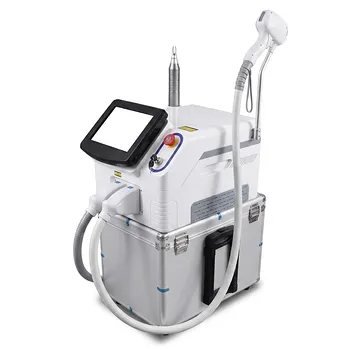
A long-pulse 1064 nm Nd:YAG laser is preferred because it can deliver useful heat deeper in the dermis while producing relatively little absorption by epidermal melanin. This allows it to target larger or deeper leg telangiectasias, including vessels several millimeters beneath the skin surface, with less energy diverted to the epidermis. The same property lowers—but does not eliminate—the risk of burns and post-inflammatory pigmentary changes in darker skin tones.
The key advantage is the balance between depth and epidermal safety: 1064 nm light reaches deeper vascular structures, while its relatively low melanin absorption helps protect the surface of the skin.
Why Deeper Leg Telangiectasia Requires a Different Approach
The Target Lies Beneath the Epidermis
Leg telangiectasias are often deeper and more substantial than the fine superficial vessels commonly treated on the face. Some lie approximately 1–2 mm below the epidermis, with larger vessels extending to around 3–4 mm in diameter.
A wavelength with greater tissue penetration is therefore useful because the therapeutic heat must reach the vessel rather than being concentrated at the skin surface.
Long Pulses Heat the Vessel Effectively
The Nd:YAG laser emits a long pulse, allowing heat to accumulate within the blood vessel over a controlled period. This produces photothermal vessel injury and thermocoagulation, sometimes described clinically as thermosclerosis.
The objective is to heat the vessel sufficiently for closure while limiting unnecessary thermal spread into surrounding tissue.
Vessel Size and Depth Matter
Shorter wavelengths may be absorbed more strongly by blood but can be less suitable for deeper or thicker leg vessels because their effective penetration is lower. The 1064 nm wavelength provides a practical compromise for treating vascular structures that are not close to the surface.
It is particularly relevant when vessels are too deep, too large, or otherwise poorly suited to superficial laser treatment.
Why 1064 nm Is Better Suited to Darker Skin
Melanin Absorbs Less Energy
Epidermal melanin competes with the blood vessel for laser energy. At 1064 nm, melanin absorption is relatively low compared with many shorter wavelengths.
More of the delivered energy can therefore pass through the epidermis and reach the deeper vascular target, reducing unwanted surface heating.
The Risk of Pigmentary Injury Is Lower
Excess epidermal heating can cause burns, blistering, or post-inflammatory hyperpigmentation. Because 1064 nm light is less strongly absorbed by melanin, the wavelength generally offers a wider safety margin for Fitzpatrick skin types I through VI, including darker and recently tanned skin.
This does not make treatment risk-free. Darker skin can still develop pigmentary changes if the fluence, pulse duration, cooling, or treatment spacing is poorly selected.
Cooling Protects the Epidermis
Professional systems commonly use active epidermal cooling before, during, or after the pulse. Cooling reduces the temperature of the skin surface while allowing the deeper vessel to receive therapeutic heat.
Pulse timing may also be selected to account for the epidermis’s thermal relaxation time, giving the surface an opportunity to dissipate heat between energy deliveries.
How the Treatment Balances Depth and Safety
Higher Fluence Compensates for Lower Hemoglobin Absorption
Hemoglobin absorbs 1064 nm light less strongly than it absorbs some shorter vascular wavelengths. As a result, treatment may require relatively higher fluences, often reported in the range of 70–150 J/cm² in appropriate clinical settings.
These values are not universal prescriptions. The correct settings depend on vessel diameter, depth, skin type, tanning, anatomic location, pulse duration, spot size, cooling, and the device itself.
Thermal Relaxation Guides Pulse Timing
The laser must deliver enough heat to damage the vessel without allowing excessive heat to accumulate in the epidermis. Pulse duration and delay are therefore selected in relation to the thermal behavior of both the target vessel and the overlying skin.
This is why parameter selection requires clinical judgment rather than simply choosing the highest available energy.
The Blood Vessel Becomes More Susceptible to Heating
Laser-induced heating can alter blood within the vessel, including the formation of methemoglobin. This may increase absorption of subsequent 1064 nm energy and contribute to vessel coagulation.
The effect supports treatment efficacy, but it does not remove the need for appropriate endpoint assessment and cooling.
Understanding the Trade-offs
Lower Melanin Absorption Does Not Mean Zero Risk
The 1064 nm wavelength is safer for darker skin than many more strongly melanin-absorbed wavelengths, but it can still cause epidermal injury. Inadequate cooling, excessive fluence, overlapping pulses, recent tanning, or an incorrect diagnosis can increase complications.
A cautious test spot and appropriate treatment intervals may be important, particularly for Fitzpatrick types IV–VI.
Deeper Penetration Can Increase Discomfort
The same penetration that helps reach deeper leg vessels can produce more discomfort because thermal energy is delivered deeper in the dermis. Cooling and appropriate pain-management measures may improve tolerability.
Patients should also understand that multiple sessions may be required and that temporary redness, swelling, bruising, or darkening of treated vessels can occur.
Not Every Leg Vessel Responds Equally
Very fine superficial vessels may respond better to other vascular lasers, while larger or feeder veins may require evaluation for venous reflux or alternative treatments such as sclerotherapy. Treating the visible vessel alone may be less effective if an underlying venous problem is contributing to it.
The laser should therefore be selected after assessing vessel depth, diameter, color, distribution, and the patient’s vascular history.
Making the Right Choice for Your Goal
The most appropriate treatment depends on both the vessel characteristics and the patient’s skin response risk.
- If your primary focus is deeper or larger leg telangiectasia: A long-pulse 1064 nm Nd:YAG laser is a strong option because its penetration can reach vessels that are less accessible to more superficial wavelengths.
- If your primary focus is treating darker skin tones: The 1064 nm wavelength is generally advantageous because its relatively low melanin absorption reduces epidermal heating and the risk of pigmentary injury, especially when combined with active cooling and conservative parameter selection.
- If your primary focus is fine superficial vessels: A different vascular laser or treatment approach may be more efficient, depending on vessel size, depth, and skin type.
- If your primary focus is persistent or recurrent leg veins: Evaluation for underlying venous disease is important because laser treatment may not address the cause of the visible telangiectasia.
Choosing the 1064 nm Nd:YAG laser is fundamentally a decision to prioritize deep vascular reach with a comparatively favorable epidermal safety profile, provided treatment is individualized and performed with appropriate cooling and clinical assessment.
Summary Table:
| Aspect | Long-Pulse 1064 nm Nd:YAG Laser | Notes |
|---|---|---|
| Depth of Penetration | High (1-4 mm) | Reaches deeper vessels effectively |
| Melanin Absorption | Low | Reduces epidermal heating, safer for darker skin |
| Ideal Vessel Types | Deeper, larger leg telangiectasia | Suitable for vessels 1-4 mm in diameter |
| Epidermal Safety | Good (with active cooling) | Lower risk of burns and pigmentary changes |
| Typical Fluence | 70-150 J/cm² | Requires careful parameter selection |
| Patient Comfort | May cause discomfort | Cooling and pain management needed |
| Limitations | Not ideal for fine superficial vessels | May need evaluation for underlying venous issues |
Elevate your practice with BELIS's advanced 1064 nm Nd:YAG laser systems, designed for safe and effective treatment of deeper leg veins and darker skin types. As a leading manufacturer of professional-grade aesthetic equipment, we provide cutting-edge technology, OEM/ODM support, and comprehensive training to ensure exceptional outcomes for your patients. Partner with us to expand your vascular treatment capabilities and grow your business. Contact us today to learn more about our solutions tailored for clinics and premium salons.
Related Products
- Tri Laser Diode Hair Removal Machine Professional Beauty Equipment
- 808nm Diode Laser Hair Removal Machine 755+808+1064nm Mixed Wavelength Professional Equipment
- Q Switch Nd Yag Laser Machine Tattoo Removal Nd Yag Machine
- Clinic Use IPL and SHR Hair Removal Machine with Nd Yag Laser Tattoo Removal
- Clinic Use IPL SHR ND YAG Laser Hair Removal RF Skin Tightening Machine
People Also Ask
- How can aesthetic practitioners prevent side effects like paradoxical hair regrowth and thermal burns when performing diode laser hair removal on dark skin? Master safe protocols for Fitzpatrick IV–VI skin.
- How do broad-spectrum noncoherent light sources compare to single-wavelength diode lasers in aesthetic hair removal applications? Find the best fit for your clinic.
- How do demographic trends in non-surgical procedures like laser hair removal compare to surgical aesthetics, and how should clinics leverage professional diode laser hair removal equipment to meet this demand?
- Why is monitoring the revenue rate per hour per physician essential when deciding to invest in high-throughput aesthetic technology like diode hair removal lasers or multi-applicator body sculpting machines? Optimize your practice's profitability
- What are the primary differences in mechanism and pigment dependency between standard laser hair removal devices (Alexandrite, Diode, Nd:YAG) and photosensitizer-assisted light therapies? Discover expert insights and tailored solutions