A homogeneous flat-top beam is preferable because it delivers nearly uniform fluence across the treatment spot, whereas a Gaussian beam concentrates energy in the center and delivers progressively less energy toward the edges. In Q-switched pigment removal, this produces more consistent photomechanical disruption of melanosomes, reduces central hot spots, and makes adjacent spot placement safer and more predictable.
Core takeaway: A flat-top profile treats the full spot more evenly, reducing the need for overlap and lowering the risk of localized overtreatment, thermal injury, scarring, and pigmentary complications.
Why Beam Profile Matters in Pigment Removal
Fluence determines the treatment effect
Fluence is the laser energy delivered per unit area. In pigment removal, the goal is to deliver enough energy to fragment target melanosomes while avoiding unnecessary injury to surrounding skin.
A Gaussian beam does not deliver the same fluence everywhere within the spot. Its center receives the highest energy, while the edges receive substantially less.
Gaussian profiles create uneven treatment
With a Gaussian profile, the center may reach or exceed the desired treatment threshold while the periphery remains below it. This can produce central overtreatment and peripheral undertreatment within the same laser spot.
The result is less uniform pigment fragmentation and a less predictable clinical endpoint.
How a Flat-Top Profile Improves Treatment
It distributes energy more uniformly
A flat-top, or top-hat, profile provides a substantially more even fluence across the treatment area. The target pigment therefore receives a more consistent photomechanical impulse from the center to the edges.
This improves treatment uniformity without requiring the operator to compensate for weak peripheral energy.
It reduces hot spots
The high central peak of a Gaussian beam can create localized areas of excessive energy. In superficial epidermal lesions, these hot spots may increase unwanted tissue injury and contribute to complications such as post-inflammatory hyperpigmentation, hypopigmentation, or scarring.
A flat-top profile minimizes these central energy spikes, improving the safety margin when appropriate parameters are used.
It reduces the need for spot overlap
Because the edges of a Gaussian spot may receive insufficient energy, practitioners may overlap adjacent pulses to avoid untreated gaps. However, overlap also adds energy in the regions where spots intersect.
This can create cumulative hot spots and increase the risk of excessive tissue injury. A homogeneous beam allows more precise adjacent placement with less reliance on overlap.
It improves consistency across the treatment field
A flat-top profile helps ensure that each portion of the lesion receives a similar therapeutic exposure. This supports more consistent pigment fragmentation and makes treatment endpoints easier to interpret.
It also improves reproducibility between treatment sessions, provided the wavelength, pulse duration, spot size, fluence, and repetition rate are appropriately selected.
Why This Is Especially Relevant to Q-Switched Systems
The intended effect is primarily photomechanical
Q-switched lasers deliver very short, high-power pulses designed to fragment pigment through rapid photothermal and photomechanical effects. The desired result is disruption of melanosomes with limited injury to surrounding tissue.
Although heat is involved, the treatment is not intended to create broad, uncontrolled thermal damage. Uneven beam intensity can therefore undermine the selective nature of the procedure.
Pigment lesions often require uniform superficial delivery
For epidermal lesions such as lentigines and other superficial pigmentary conditions, excessive energy at the center of the spot can injure the epidermis before the edges receive an adequate treatment dose.
A flat-top profile is better suited to producing a uniform epidermal treatment response and reducing localized energy accumulation.
It can improve patient comfort
Localized high-fluence regions may produce sharper discomfort and more intense tissue reactions. By distributing energy more evenly, a flat-top beam can reduce these variations across the spot, although comfort still depends on wavelength, fluence, pulse duration, cooling, and the individual patient.
Understanding the Trade-offs
Flat-top does not eliminate all complications
A homogeneous beam profile improves energy distribution, but it does not make treatment risk-free. Excessive fluence, inappropriate pulse settings, repeated passes, excessive overlap, poor cooling, or unsuitable patient selection can still cause adverse effects.
Clinical safety depends on the entire treatment protocol, not on beam profile alone.
Gaussian beams are not universally inappropriate
Gaussian delivery can be effective in some applications and may be selected for particular target depths or treatment objectives. The correct choice depends on the lesion, wavelength, pulse characteristics, skin type, and operator technique.
The advantage of a flat-top profile is greatest when uniform fluence across a defined spot is important, especially for superficial pigment treatment.
“Flat-top” may not mean perfectly uniform
Real optical systems often produce a beam that is highly homogeneous rather than mathematically flat across every point. Some systems specify uniformity over a central portion of the spot rather than the entire diameter.
The relevant question is whether the delivered profile is sufficiently uniform to avoid clinically significant central hot spots and peripheral under-treatment.
Making the Right Choice for Your Goal
The beam profile should be evaluated alongside the laser’s wavelength, pulse duration, spot size, fluence control, delivery optics, cooling system, and clinical protocols.
- If your primary focus is uniform pigment clearance: Prefer a well-characterized flat-top profile that delivers consistent fluence across the treatment spot.
- If your primary focus is minimizing PIH and other pigmentary complications: Use homogeneous delivery with conservative, lesion-appropriate parameters and avoid unnecessary overlap.
- If your primary focus is treating a specialized or deeper target: Do not select a beam profile in isolation; assess whether a Gaussian or flat-top profile better matches the target depth and treatment objective.
- If your primary focus is equipment selection: Request beam-profile and fluence-uniformity data rather than relying solely on the manufacturer’s “flat-top” label.
A homogeneous flat-top beam gives the operator a more even starting point, making Q-switched pigment removal more consistent, controllable, and forgiving.
Summary Table:
| Aspect | Gaussian Beam Profile | Flat-Top Beam Profile |
|---|---|---|
| Energy Distribution | High center, low edges | Uniform across spot |
| Treatment Uniformity | Uneven; possible undertreatment edges | Consistent fluence |
| Hot Spot Risk | High central hot spot | Minimal hot spots |
| Overlap Necessity | Often required to avoid gaps | Less overlap needed |
| Clinical Safety | Higher risk of PIH, scarring | Improved safety margin |
| Ideal Application | Specialized/deeper targets | Superficial pigment lesions |
Upgrade your clinic's pigment removal capabilities with BELIS's advanced Q-switched lasers featuring homogeneous flat-top beam profiles. Our professional-grade systems ensure uniform treatment, reduced complications, and superior patient outcomes. Contact our experts today to find the perfect solution for your practice and elevate your aesthetic services. Contact us now to learn more!
Related Products
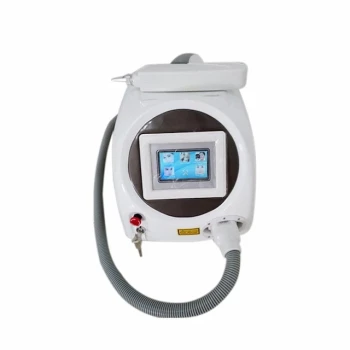
- Q Switch Nd Yag Laser Machine Tattoo Removal Nd Yag Machine
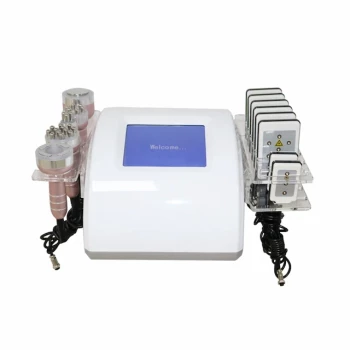
- Cryolipolysis Fat Freezing Cavitation Lipo Laser Machine
- Ultrasonic Cavitation Machine Lipo Laser Device
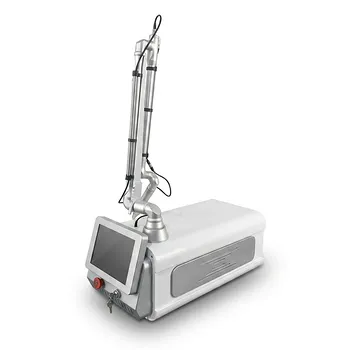
- Fractional CO2 Laser Machine for Skin Treatment
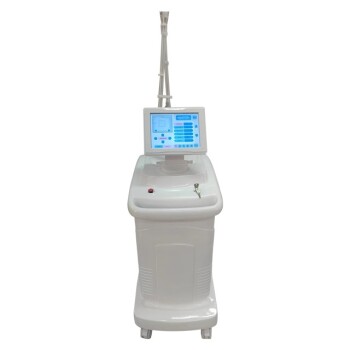
- Fractional CO2 Laser Machine for Skin Treatment
People Also Ask
- How do wavelength selection and parameter guidelines differ when using Q-switched Nd:YAG laser equipment for removing different tattoo colors? Master Tattoo Removal for Every Color
- How does laser fluence influence pigment clearance vs. safety? Balancing Speed and Skin Integrity in Tattoo Removal
- What is the documented effectiveness of Q-switched Nd:YAG lasers for tattoo removal? Gold Standard Results
- What pigment compositions and particle properties should practitioners evaluate before operating Q-switched Nd:YAG lasers for tattoo removal? Evaluate pigment composition and particle size for safe, effective tattoo removal.
- How should aesthetic practitioners select wavelengths across Nd:YAG and Q-switched laser systems for target pigment depth and skin phototypes? Key Insights for Clinicians