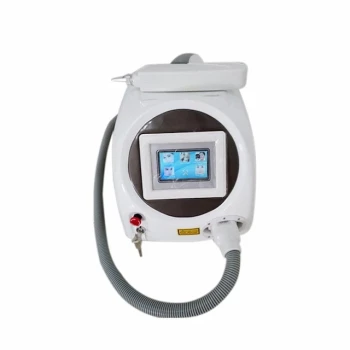
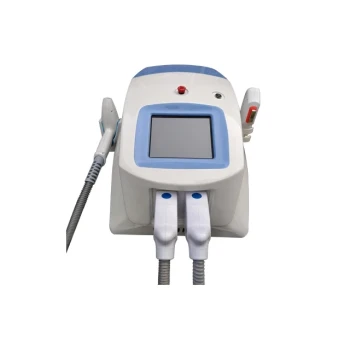
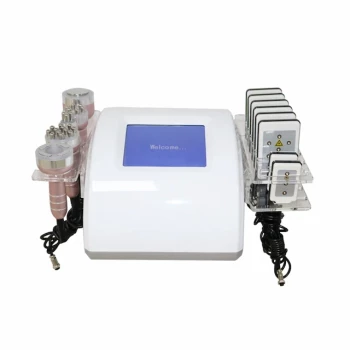
Select the wavelength by matching optical penetration to pigment depth, then adjust for epidermal melanin. Use 532 nm frequency-doubled Nd:YAG for predominantly superficial epidermal pigment, especially solar lentigines and freckles. Use 1,064 nm Nd:YAG for deeper dermal pigment, blue-black tattoo ink, and patients with Fitzpatrick IV–VI skin phototypes when epidermal sparing is a priority. Specialized tattoo colors, particularly green, may require 694 nm ruby or 755 nm Alexandrite systems.
The correct wavelength is determined by three interacting factors: where the pigment is located, what absorbs the laser energy, and how much competing epidermal melanin the patient has. Shorter wavelengths are usually more superficially absorbed; longer wavelengths generally penetrate more deeply and are safer when epidermal melanin is abundant.
Start With the Pigment’s Depth
Superficial epidermal pigment
Pigment in the epidermis is close to the surface and is strongly targeted by shorter wavelengths. A 532 nm Q-switched or picosecond Nd:YAG system is commonly appropriate for solar lentigines, ephelides, and other superficial pigmented lesions.
At 532 nm, melanin absorption is high, allowing effective photothermal or photomechanical disruption with relatively shallow energy deposition.
Deep dermal pigment
Dermal melanocytes or melanophages require energy to pass through the epidermis and reach deeper tissue. The 1,064 nm Nd:YAG wavelength penetrates substantially farther, commonly described as reaching approximately 2–3 mm into the dermis, although effective depth depends on tissue properties, spot size, pulse duration, and fluence.
This makes 1,064 nm useful for dermal melanocytosis, Nevus of Ota-type pigmentation, some drug-induced dermal pigmentation, and other lesions in which the target is not confined to the epidermis.
Mixed-depth or uncertain lesions
Some lesions contain pigment at more than one depth. Wavelength selection should not be based solely on visible color because a brown or gray appearance may reflect different distributions of epidermal and dermal pigment.
When depth is uncertain, clinical diagnosis, dermoscopic or histologic information where appropriate, and a conservative test spot are more reliable than choosing a wavelength from color alone.
Match Wavelength to Pigment Color
Black, blue, and dark brown tattoo ink
1,064 nm Q-switched Nd:YAG is generally the principal choice for black, blue, and dark brown tattoo pigments. These colors often absorb this wavelength effectively, while the longer wavelength reduces the amount of energy absorbed by epidermal melanin.
The same wavelength is particularly valuable when treating these inks in darker skin phototypes, where unnecessary epidermal heating increases the risk of post-inflammatory hyperpigmentation or hypopigmentation.
Red, orange, and some lighter tattoo pigments
532 nm Q-switched Nd:YAG is commonly used for red and orange tattoo pigments and may help target selected yellow, violet, light-brown, or flesh-toned components. Response varies considerably because tattoo formulations differ in their chemical composition.
The 532 nm wavelength is highly absorbed by superficial melanin and can also interact with hemoglobin. Clinicians should therefore expect a greater risk of epidermal pigment alteration and, in some cases, purpura.
Green tattoo pigment
Green ink may respond better to 694 nm ruby or 755 nm Alexandrite wavelengths than to Nd:YAG wavelengths. The optimal choice depends on the specific ink formulation, because “green” tattoos may contain mixtures of blue, yellow, or other pigments.
Ruby and Alexandrite systems have stronger melanin absorption than 1,064 nm Nd:YAG, so their use requires particular caution in darker or recently tanned skin.
Account for Fitzpatrick Phototype
Phototypes I–III
Lighter skin contains less competing epidermal melanin, giving clinicians more flexibility with shorter wavelengths. A 532 nm system may be suitable for superficial lesions, while 1,064 nm remains appropriate when the pigment is dermal or the tattoo ink is blue-black.
Lower competing melanin absorption does not eliminate the need for diagnosis, conservative parameters, eye protection, and appropriate aftercare.
Phototypes IV–VI
For darker skin, 1,064 nm Nd:YAG is generally the safer starting wavelength when it is clinically appropriate. Its lower relative absorption by melanin allows deeper delivery while producing less epidermal disruption than shorter wavelengths.
This does not mean that 532 nm is prohibited. It means the clinician must recognize its higher epidermal melanin absorption and use appropriate caution, including conservative treatment selection and test spots.
Recently tanned or pigment-reactive skin
A tan increases epidermal melanin and can change the risk profile even when the patient’s baseline phototype is lighter. Elective treatment should generally be deferred until the tan has resolved, and strict photoprotection is essential before and after treatment.
Pretreatment with pigment-modulating medication may be considered in selected patients under appropriate medical supervision. It should not be used as a substitute for correct diagnosis, conservative settings, or postponing treatment when the skin is actively tanned or inflamed.
Understand What the Wavelength Is Absorbing
Melanin absorption
At 532 nm, melanin absorption is strong and relatively superficial. This makes the wavelength efficient for epidermal pigment but also increases the chance of collateral epidermal injury in patients with more melanin.
At 1,064 nm, melanin absorption is lower, but the wavelength penetrates more deeply. The clinical advantage is not simply “less absorption”; it is the combination of deeper reach and relatively greater epidermal sparing.
Hemoglobin absorption
The 532 nm wavelength can also be absorbed by hemoglobin. This may produce purpura or superficial vascular effects, particularly when treating vascularized lesions or using aggressive parameters.
The possibility of hemoglobin absorption reinforces the need to distinguish a pigmented lesion from a vascular or mixed lesion before treatment.
Ink absorption
Tattoo treatment depends on the optical absorption and particle characteristics of the ink, not only on its apparent color. The same visible color can respond differently across tattoo brands, depths, ages, and mixtures.
For this reason, tattoo removal is often staged over multiple sessions, with treatment response guiding subsequent wavelength and parameter decisions.
Understand the Trade-offs
Shorter wavelengths are efficient but less forgiving
532 nm provides strong superficial absorption, which is useful for epidermal lesions. Its limitations include greater epidermal melanin absorption, increased risk of dyschromia in darker skin, and possible purpura from hemoglobin absorption.
Ruby at 694 nm and Alexandrite at 755 nm can be effective for selected pigment colors, but they also carry more epidermal melanin competition than 1,064 nm Nd:YAG.
Longer wavelengths improve epidermal sparing but may require more sessions
The 1,064 nm wavelength is safer for many darker skin phototypes and reaches deeper pigment. However, its lower melanin absorption can make superficial lesions less responsive than they are to 532 nm.
Selecting 1,064 nm solely because it is safer may therefore reduce efficacy when the target is clearly confined to the epidermis.
A visible endpoint is not a complete treatment plan
For tattoo treatment, immediate epidermal whitening is a commonly observed endpoint and often resolves within approximately 20–30 minutes. It confirms an acute tissue response, but it does not predict the final clearance or eliminate the need for staged treatments and follow-up.
Overtreatment to intensify the immediate endpoint can increase blistering, scarring, and long-lasting pigmentary change without reliably improving clearance.
Diagnosis limits wavelength selection
Not every pigmented lesion should be treated cosmetically without diagnostic assessment. A changing, atypical, symptomatic, or clinically uncertain lesion may require evaluation for malignancy before any laser procedure.
Laser treatment can alter or partially remove diagnostic features, making later assessment more difficult.
Apply a Practical Selection Sequence
First, identify the target depth
Ask whether the pigment is primarily epidermal, dermal, or mixed. Use the clinical diagnosis and lesion characteristics rather than surface color alone.
Next, identify the pigment or ink color
For superficial brown lesions, consider 532 nm. For deep blue-black pigment or dermal melanocytosis, consider 1,064 nm. For green tattoo components, evaluate whether 694 nm ruby or 755 nm Alexandrite is more appropriate.
Then, assess epidermal melanin
Record Fitzpatrick phototype, recent tanning, baseline dyschromia, and any history of post-inflammatory hyperpigmentation or hypopigmentation. These factors may shift the risk-benefit balance toward a longer wavelength or delayed treatment.
Finally, test conservatively
A test spot helps assess the individual response, particularly in darker phototypes, recently tanned skin, uncertain diagnoses, and tattoos with unknown ink composition. Parameters should be selected according to the specific device, pulse duration, spot size, lesion, and manufacturer guidance rather than wavelength alone.
Making the Right Choice for Your Goal
Begin with the target’s depth and chromophore, then use phototype to determine how much epidermal risk is acceptable.
- If your primary focus is superficial epidermal lesions: Use a 532 nm Q-switched or picosecond Nd:YAG when the diagnosis is appropriate, while accounting for epidermal melanin and possible hemoglobin absorption.
- If your primary focus is deep dermal pigmentation: Favor 1,064 nm Nd:YAG because its deeper penetration can reach dermal pigment with less superficial disruption.
- If your primary focus is tattoo removal: Match 1,064 nm to black, blue, and dark inks; evaluate 532 nm for red or orange inks; and consider ruby or Alexandrite for green components.
- If your primary focus is treating Fitzpatrick IV–VI skin: Prefer 1,064 nm when clinically suitable, and use shorter wavelengths only with careful risk assessment, conservative testing, and rigorous photoprotection.
- If your primary focus is minimizing dyschromia: Treat active tanning and pigmentary instability as reasons to modify or postpone treatment, not merely as variables to compensate for with higher energy.
The most reliable wavelength choice is the one that reaches the pigment at its actual depth while exposing the least amount of surrounding epidermal melanin to unnecessary energy.
Summary Table:
| Wavelength | Best For | Considerations |
|---|---|---|
| 532 nm | Superficial epidermal pigment (solar lentigines, freckles); red/orange tattoo ink | Strong melanin absorption; higher risk of epidermal damage in darker skin; possible purpura |
| 694 nm (ruby) | Green tattoo pigment; some dermal pigment | Requires caution in darker skin; stronger melanin absorption than 1064 nm |
| 755 nm (Alexandrite) | Green tattoo pigment; some dermal pigment | Requires caution in darker skin; stronger melanin absorption than 1064 nm |
| 1064 nm | Dermal pigment (Nevus of Ota, dermal melanocytosis); black/blue/dark brown tattoo ink; Fitzpatrick IV–VI | Deeper penetration; epidermal sparing; may require more sessions for superficial lesions |
Ready to enhance your practice with professional-grade laser technology? At BELIS, we specialize in advanced aesthetic equipment for clinics and premium salons, including Q-switched Nd:YAG, Alexandrite, and Ruby laser systems. Our expert team provides OEM/ODM support, certifications, and reliable supply to help you achieve superior patient outcomes. Contact us today to discuss your needs and discover how our solutions can boost your business. Get in touch with us!
Related Products
- Q Switch Nd Yag Laser Machine Tattoo Removal Nd Yag Machine
- Clinic Use IPL and SHR Hair Removal Machine with Nd Yag Laser Tattoo Removal
- Clinic Use IPL SHR ND YAG Laser Hair Removal RF Skin Tightening Machine
- Ultrasonic Cavitation Machine Lipo Laser Device
People Also Ask
- What is the documented effectiveness of Q-switched Nd:YAG lasers for tattoo removal? Gold Standard Results
- How does laser fluence influence pigment clearance vs. safety? Balancing Speed and Skin Integrity in Tattoo Removal
- What pigment compositions and particle properties should practitioners evaluate before operating Q-switched Nd:YAG lasers for tattoo removal? Evaluate pigment composition and particle size for safe, effective tattoo removal.
- How should wavelength and fluence settings be adjusted on Nd:YAG and Q-switched lasers when treating darker skin tones? Optimize Safety & Efficacy
- Which laser modalities and treatment schedules are recommended for clinical laser tattoo removal procedures? Q-Switched Nd:YAG and 6–12 Week Intervals Preferred for Safe, Effective Results