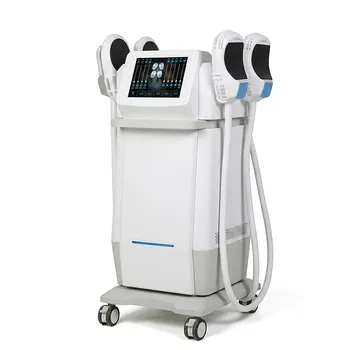
The short answer: Modern monopolar RF protocols favor multiple low- to moderate-fluence passes because they can produce effective collagen contraction while controlling peak tissue temperature, pain, and thermal injury. Repeated passes build heat gradually and more evenly through the dermis and fibrous tissue, reducing the risk associated with concentrating the same energy into one high-fluence treatment. Patient sensation also remains an important real-time safety signal.
Multiple-pass RF is a heat-management strategy, not merely a higher-dose strategy. It aims to achieve the desired cumulative thermal effect while avoiding the sharp temperature spikes that can cause burns, excessive pain, surface changes, or localized fat injury.
Why Single-Pass High-Fluence Treatment Created Problems
Concentrated energy increases peak temperature
A single high-fluence pass delivers substantial energy to tissue in a short interval. Although this can produce collagen contraction, it also creates localized hot spots where tissue temperature may rise beyond the intended therapeutic range.
The problem is not simply the total energy delivered. The rate and distribution of heating determine whether the treatment produces controlled remodeling or thermal damage.
Deeper tissue can be affected unintentionally
Monopolar RF heats tissue volumetrically rather than only at the surface. Excessive localized heating can therefore extend into subcutaneous fat, where thermal injury may cause fat necrosis or focal fat atrophy.
High-fluence protocols have also been associated with pain, blistering, scarring, persistent swelling, and surface texture changes such as indentation or “waffling.”
Patient discomfort limits control
High-energy passes are often more painful. When discomfort is severe, clinicians may have less useful feedback from the patient or may need deeper anesthesia, reducing the ability to detect excessive heating as it occurs.
How Multiple Low-Fluence Passes Work
Heat accumulates progressively
Each low- or moderate-fluence pass adds heat to tissue that may still retain some residual thermal energy from previous passes. The clinician can therefore build a cumulative effect without creating the same instantaneous temperature spike as a single high-energy pass.
This is analogous to warming a material gradually and evenly rather than exposing one area to an intense burst of heat.
The thermal effect is more uniform
Multiple passes can produce a broader and more consistent heating pattern in the dermis. Protocols may use approximately three to five passes, sometimes with controlled overlap, such as a 15% to 30% overlap rate.
The goal is to reduce untreated gaps and avoid excessive energy concentration in any one spot.
Collagen contraction remains effective
Controlled RF heating denatures and contracts existing collagen. It also supports subsequent collagen remodeling and deposition deeper within the dermis.
Clinical protocols use repeated lower-fluence passes because this approach can achieve comparable tightening to high-fluence single-pass treatment while providing a wider safety margin.
Treatment can be adapted in real time
Multiple-pass delivery allows the operator to assess tissue response and patient sensation after each pass. Fluence, speed, overlap, or the number of passes can then be adjusted according to the observed response.
This makes the protocol more responsive than a single predetermined high-energy delivery.
Why Patient Feedback Matters
Sensation acts as a practical safety signal
During monopolar RF treatment, patient feedback helps identify areas becoming disproportionately hot or painful. This information can prompt the clinician to reduce energy, modify technique, or avoid additional passes in that region.
Feedback does not replace temperature monitoring, device protocols, or clinical judgment. It is an additional layer of risk control.
Complete sedation can obscure useful information
A comfortable treatment is desirable, but eliminating all sensation can remove an important warning signal. Modern approaches therefore generally emphasize tolerability without unnecessarily suppressing the patient's ability to report excessive heat or pain.
This is one reason gradual, lower-fluence treatment is clinically attractive: it can often be performed without relying on invasive nerve blocks or deep sedation.
What Tissue Layers Are Being Targeted?
The dermis
The dermis contains the collagen framework responsible for much of the skin's structural support. Controlled heating causes collagen fibers to contract and initiates a longer-term remodeling response.
A wider, more uniform dermal thermal effect can make the tightening response more predictable.
Fibrous septae and subcutaneous structures
Monopolar RF can also heat deeper tissue, including fibrous septae within the subcutaneous layer. These structures contribute to the support and contour of the treated area.
The objective is controlled volumetric heating, not indiscriminate heating of all underlying tissue. Excessive exposure can damage fat, which is why energy distribution and feedback are critical.
Understanding the Trade-offs
More passes require disciplined technique
Multiple-pass treatment is not automatically safer if the operator uses excessive overlap, moves too slowly, or continues despite excessive tissue heating. Cumulative energy must be managed across the entire treatment area.
A low setting per pass does not eliminate risk when the total thermal load becomes excessive.
Treatment parameters are device-specific
Fluence, pulse duration, electrode geometry, coupling, movement speed, impedance, and cooling behavior all influence the final tissue temperature. A pass count or energy value cannot be transferred directly from one device to another.
Clinical protocols must therefore follow the specific device's validated parameters and the patient's anatomy.
Lower fluence does not mean no adverse effects
Even a conservative protocol can produce pain, redness, swelling, burns, pigmentary changes, or contour irregularities when applied incorrectly. Patient selection and anatomical judgment remain essential.
The multi-pass method improves the safety margin; it does not make thermal injury impossible.
Results develop over time
Immediate collagen contraction may be visible after treatment, but remodeling and new collagen deposition occur over a longer period. Patients should not interpret the gradual nature of the result as treatment failure or assume that increasing energy is the appropriate response.
Making the Right Choice for Your Goal
The appropriate protocol depends on the treatment area, device, tissue thickness, laxity pattern, and patient tolerance.
- If your primary focus is safety: Use controlled low- to moderate-fluence passes with appropriate overlap and continuous attention to tissue response, rather than concentrating energy in one high-fluence pass.
- If your primary focus is patient comfort: Preserve real-time sensation feedback and build the thermal effect gradually so energy can be adjusted before discomfort becomes excessive.
- If your primary focus is consistent tightening: Aim for broad, uniform dermal heating and tailor pass number, overlap, and energy to the device and treatment area.
- If your primary focus is avoiding tissue atrophy: Prevent localized overheating of subcutaneous fat by respecting device-specific limits and stopping when a region becomes disproportionately hot or painful.
The central principle is simple: controlled cumulative heating can deliver effective tightening with fewer thermal risks than concentrated high-energy delivery.
Summary Table:
| Aspect | Single-Pass High-Fluence | Multiple-Pass Low-Fluence |
|---|---|---|
| Peak Temperature | High, risk of overheating | Moderate, gradual heat buildup |
| Thermal Injury Risk | Higher (burns, fat damage) | Lower (even heating, controlled) |
| Pain & Discomfort | More pain, limited feedback | Reduced pain, better patient tolerance |
| Collagen Effect | Immediate contraction | Effective contraction & remodeling |
| Flexibility | Less adjustable | Real-time adaptation possible |
Elevate your RF skin tightening results with BELIS. Our advanced monopolar RF systems are designed for precise, multi-pass protocols that maximize safety and efficacy. Perfect for clinics and premium salons, our equipment offers exceptional control and patient comfort. Contact us today to discover how our cutting-edge aesthetic technology can enhance your practice and boost client satisfaction.
Related Products
- Ultrasonic Cavitation Radiofrecuency Machine for Body Slimming
- 4D 12D HIFU Machine Device for Skin Tightening and Lifting
- 4D 12D HIFU Machine Device for Skin Tightening
- 22D HIFU Machine Device Facial Machine
- Ultrasonic Cavitation Machine Lipo Laser Device
People Also Ask
- What are the pros and cons of the ultrasonic cavitation slimming treatment? A Guide to Painless Body Contouring
- Does an ultrasonic cavitation machine also tighten the skin? Achieve Total Body Contouring with RF Synergy
- How does radiofrequency technology in slimming machines promote fat reduction? The Science of Non-Invasive Sculpting
- How should one prepare for an ultrasonic cavitation appointment? 5 Essential Tips for Maximum Fat Loss Results
- What is an ultrasonic cavitation machine? Sculpt Your Body with Advanced Non-Invasive Fat Reduction