
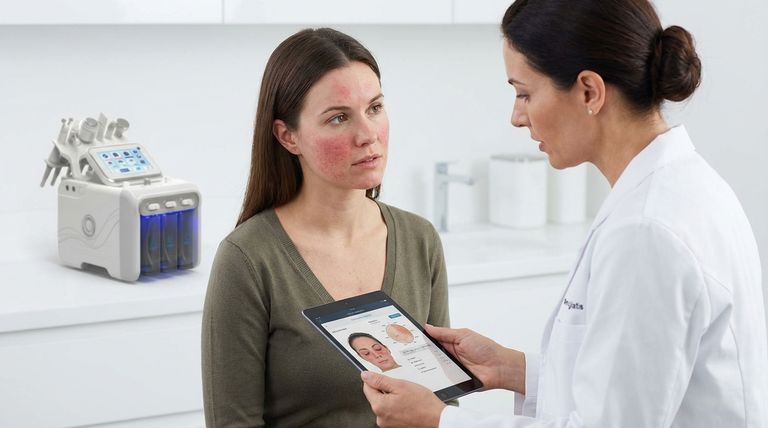
While the HydraFacial is known for its broad suitability, it is not the right choice for everyone, particularly individuals with specific skin conditions or health concerns. Those with active rashes, sunburns, or inflammatory skin disorders like moderate-to-severe rosacea or eczema should avoid the treatment to prevent irritation or worsening their condition.
The core principle is this: A HydraFacial should never be performed on a compromised or inflamed skin barrier. The treatment's success hinges on working with relatively healthy skin, and proceeding otherwise can lead to adverse effects rather than benefits.
The Core Mechanisms of HydraFacial
To understand the contraindications, you must first understand the process. A HydraFacial is a multi-step procedure that uses a wand-like device to cleanse, exfoliate, extract, and hydrate the skin.
Step 1: Cleansing and Exfoliation
The treatment begins by removing dead skin cells from the surface. This step uses a gentle acid peel, typically a combination of glycolic and salicylic acids, to resurface the skin.
Step 2: Extraction via Vortex Suction
The device uses a unique vortex-like suction to painlessly clean out pores. This step is effective for removing debris and blackheads but applies negative pressure to the skin.
Step 3: Infusion of Serums
In the final step, the device infuses the skin with intensive serums rich in antioxidants, peptides, and hyaluronic acid. These ingredients are designed to hydrate, nourish, and protect the skin.
Who Should Postpone or Avoid a HydraFacial?
Based on the mechanics of exfoliation and suction, certain individuals are poor candidates for the procedure. The primary concern is any condition that weakens the skin's natural defense barrier.
Active Skin Conditions and Rashes
If your skin is actively fighting an infection or inflammation, a HydraFacial can make it worse. This includes active sunburns, which are a form of radiation burn, as well as rashes, open sores, or active cold sores (herpes simplex). The treatment can easily exacerbate irritation or spread infection.
Inflammatory Skin Disorders
While a skilled provider can sometimes modify a HydraFacial for very mild cases, it is generally contraindicated for active flare-ups of chronic inflammatory conditions.
- Rosacea: The combination of exfoliation and suction can trigger or worsen the redness and inflammation associated with a rosacea flare.
- Eczema & Dermatitis: These conditions signify a severely compromised skin barrier. A HydraFacial can strip what little natural oil is left, leading to extreme irritation and dryness.
Certain Medical Conditions and Medications
If you are using potent topical prescriptions like tretinoin (Retin-A), you should stop using them for several days before and after a HydraFacial to avoid over-exfoliation and sensitivity. Similarly, individuals who have recently taken isotretinoin (Accutane) must wait at least six months, as the drug makes skin exceptionally fragile.
Understanding the Key Risks
Approaching this treatment without considering the risks can negate its benefits. The decision to proceed requires an honest assessment of your skin's current state.
The Risk of Exacerbating Flare-Ups
For those with sensitive or reactive skin, the primary risk is triggering a flare-up. The very processes designed to "deep clean" can be too stimulating, leading to prolonged redness, irritation, or breakouts.
The Importance of Full Disclosure
Your provider is not a mind reader. Failing to disclose a known allergy (such as to shellfish, an ingredient in some boosters) or the use of certain medications can lead to a significant adverse reaction. Always be transparent during your consultation.
When "Modification" Isn't Enough
The reference to modifying treatment for conditions like rosacea is a crucial nuance. This is only appropriate for very mild, non-inflamed cases and requires an expert provider. If your skin is visibly inflamed, red, or irritated, postponement is the only safe and responsible choice.
Making the Right Choice for Your Skin
Use this framework to have an informed discussion with a qualified skincare professional.
- If your primary issue is active inflammation (a sunburn, rosacea flare, or eczema patch): Postpone the treatment until your skin barrier is fully healed and calm.
- If you have a chronic but managed condition (like mild rosacea or known sensitivities): A detailed consultation is mandatory. Discuss modifying suction levels and using gentler serums with your provider.
- If you are pregnant, breastfeeding, or have other systemic health concerns: Always consult with your primary healthcare provider before booking any cosmetic procedure.
Ultimately, a thorough consultation with a qualified professional is the most critical step to ensure a safe and effective treatment.
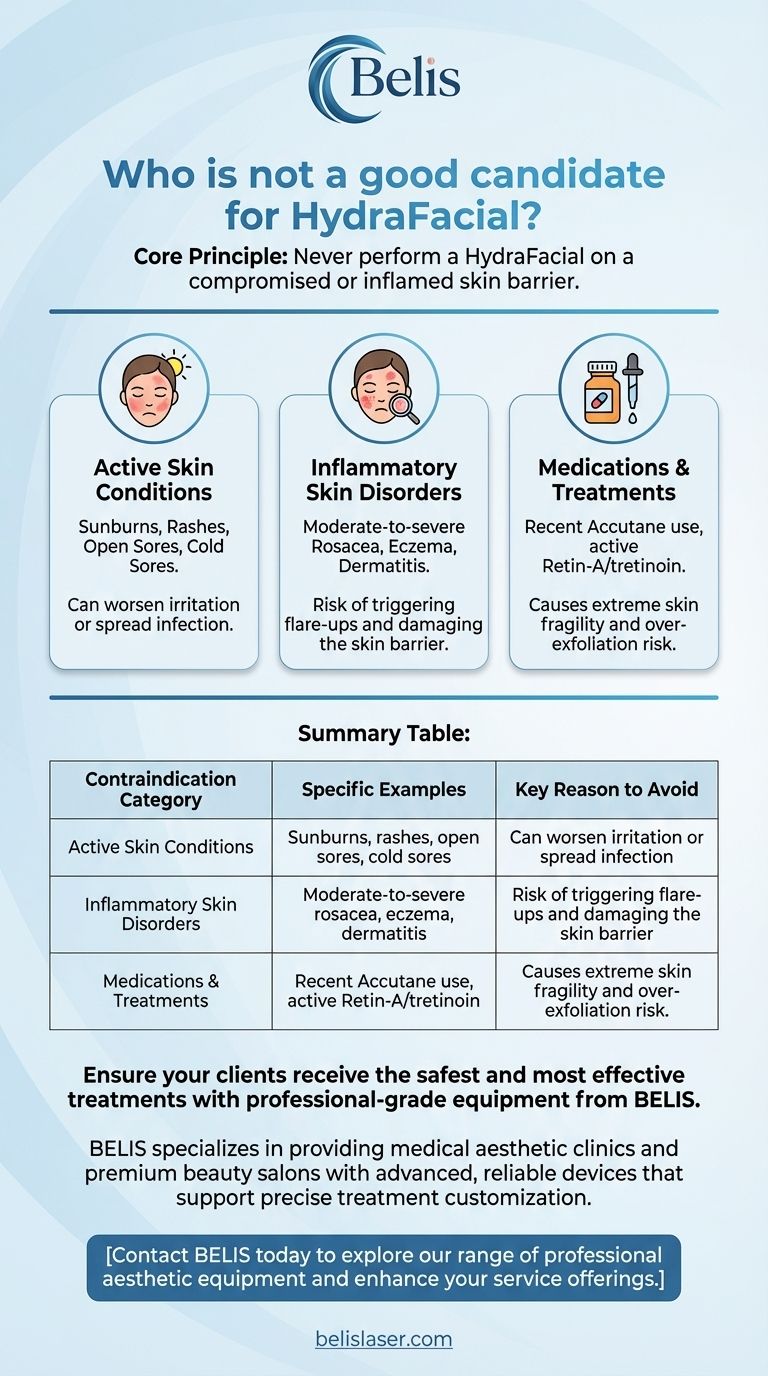
Summary Table:
| Contraindication Category | Specific Examples | Key Reason to Avoid |
|---|---|---|
| Active Skin Conditions | Sunburns, rashes, open sores, cold sores | Can worsen irritation or spread infection |
| Inflammatory Skin Disorders | Moderate-to-severe rosacea, eczema, dermatitis | Risk of triggering flare-ups and damaging the skin barrier |
| Medications & Treatments | Recent Accutane use, active Retin-A/tretinoin | Causes extreme skin fragility and over-exfoliation risk |
Ensure your clients receive the safest and most effective treatments with professional-grade equipment from BELIS.
BELIS specializes in providing medical aesthetic clinics and premium beauty salons with advanced, reliable devices that support precise treatment customization. Our expertise helps you deliver superior client outcomes while minimizing risks.
Contact BELIS today to explore our range of professional aesthetic equipment and enhance your service offerings.
Visual Guide
Related Products
- Hydrofacial Machine Facial Clean Face and Skin Care Machine
- Hydrafacial Machine with Facial Skin Analyzer Skin Tester
- Hydrofacial Machine with Facial Skin Analyzer and Skin Tester
- Cryolipolysis Fat Freezing Machine Cavitation Lipo Laser Machine
- Cryolipolysis Fat Freezing Machine and Ultrasonic Cavitation Device
People Also Ask
- What is the first step of a hydro-facial treatment? Master the Art of Professional Cleansing & Exfoliation
- What is a HydroFacial treatment? Discover the Secret to Instant, Radiant Skin with Vortex-Fusion Technology
- How are extractions performed with a hydro-facial machine? Discover the Power of Vacuum Suction & Nutrient Infusion
- How can a hydro-facial treatment be customized? Maximize Results with Tailored Professional Protocols
- What should be done if no water comes out from the handle tips of a hydro-facial machine? Expert Repair Guide














