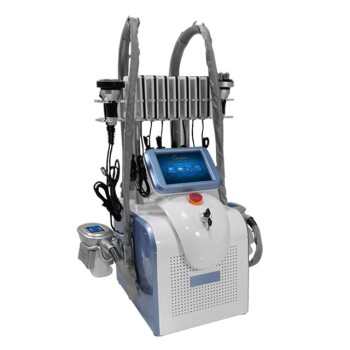
Individuals with specific cold-related blood disorders, pregnant or breastfeeding women, and those diagnosed with obesity are strongly advised against undergoing Cryolipolysis. This procedure is also unsuitable for people with compromised skin health in the target area or those seeking generalized weight loss rather than targeted fat reduction.
Core Takeaway Cryolipolysis relies on intense cooling to destroy fat cells, making it medically dangerous for anyone with conditions where blood reacts adversely to cold temperatures. Furthermore, it is a body-contouring treatment, not a solution for obesity or loose skin.
Medical Conditions Incompatible with Cold Therapy
To understand who must avoid this procedure, one must understand the mechanism: extreme cold. Consequently, the most critical contraindications involve how the body's blood and tissues react to low temperatures.
Severe Blood Disorders
The primary reference explicitly states that individuals with Cryoglobulinemia or Paroxysmal Cold Hemoglobinuria (PCH) should not have this procedure.
Supplementary data also includes Cold Agglutinin Disease in this category. For patients with these conditions, exposure to the freezing temperatures of Cryolipolysis can trigger severe, potentially dangerous complications.
Pregnancy and Lactation
Cryolipolysis is not recommended for individuals who are pregnant or breastfeeding.
While the mechanism is local, the physiological changes during pregnancy and lactation make this elective cosmetic procedure inadvisable until the body has fully recovered.
Abnormal Cold Sensitivity
Beyond diagnosed blood disorders, individuals with general abnormal cold sensitivity or intolerance are not suitable candidates.
The procedure involves prolonged exposure to freezing temperatures, which can cause adverse reactions in sensitive individuals.
Physical Suitability and Skin Health
Even if a patient is systemically healthy, the specific condition of their skin and body composition may rule them out.
Compromised Skin Integrity
Treatment should not be performed on areas of the skin that are currently cut, injured, or suffering from dermatitis.
Additionally, the presence of severe varicose veins or other skin lesions in the treatment area serves as a direct contraindication. The vacuum and cooling mechanism can worsen these existing issues.
Obesity
Cryolipolysis is strictly strictly defined as a fat-reduction procedure, not a weight-loss solution.
Therefore, it should not be performed on people with obesity. It is designed to target stubborn pockets of fat, not to treat significant excess weight.
Common Pitfalls and Expectations
Understanding who should avoid the procedure also requires understanding what the procedure cannot do. Misalignment here is a major reason for advising against treatment.
Skin Laxity Issues
Cryolipolysis destroys fat, but it is not intended for skin tightening.
If a patient has loose skin but minimal fat, removing the underlying volume may result in sagging skin appearing worse.
Unsuitable Body Areas
Certain anatomical areas are generally considered unsuitable for this specific treatment machinery.
References advise against treating the pubic area, legs and ankles, knees, face and neck, or the "buffalo hump" (fat accumulation at the back of the neck).
Determining Your Eligibility
Before scheduling a session, evaluate your goals and medical history against the following criteria:
- If your primary focus is Safety: Ensure you have screened negative for Cryoglobulinemia, Cold Agglutinin Disease, and Paroxysmal Cold Hemoglobinuria.
- If your primary focus is Weight Loss: Do not choose this procedure; focus on diet, exercise, or bariatric support, as this treatment does not address obesity.
- If your primary focus is Skin Texture: Avoid this treatment if you have dermatitis, injuries, or require skin tightening rather than fat removal.
Consult a physician to verify your medical history is compatible with extreme cold exposure before proceeding.
Summary Table:
| Category | Avoid Treatment If... | Why? |
|---|---|---|
| Medical Conditions | Cryoglobulinemia, PCH, Cold Agglutinin Disease | Risk of severe blood reactions to extreme cold. |
| Life Stage | Pregnant or Breastfeeding | Elective procedures are inadvisable during these physiological changes. |
| Weight & Goals | BMI indicating Obesity / General Weight Loss | Cryolipolysis is for targeted contouring, not overall weight reduction. |
| Skin Condition | Dermatitis, Injuries, Varicose Veins, or Loose Skin | Cooling/vacuum can worsen lesions; treatment does not tighten skin. |
| Treatment Areas | Face, Neck, Knees, Ankles, or Pubic Area | These anatomical regions are unsuitable for standard machinery. |
Ensure your clients receive only the safest and most effective body contouring results with professional-grade equipment from BELIS. As specialists in medical aesthetic technology for premium clinics and salons, we provide advanced Cryolipolysis systems alongside EMSlim, RF Cavitation, and HIFU to diversify your treatment portfolio. From high-end laser systems to specialized skin testers, we empower your business to deliver exceptional outcomes. Contact us today to consult with our experts and find the perfect solution for your clinic's needs.
Related Products
- Cryolipolysis Fat Freezing Machine Ultrasonic Cavitation Fat Reducing Device
- Cryolipolysis Fat Freezing Machine and Ultrasonic Cavitation Device
- Cryolipolysis Fat Freezing Cavitation Lipo Laser Machine
- Cryolipolysis Fat Freezing Machine with Cavitation and Laser Lipolysis
- Cryolipolysis Fat Freezing Machine Cavitation Lipo Laser Machine
People Also Ask
- What are the main benefits of using a fat freezing machine? Achieve Permanent, Non-Surgical Body Sculpting
- Do fat freezing machines really work? Achieve Non-Invasive Body Contouring
- What are the potential side effects and risks associated with fat freezing? Safety Profile & Rare Risks Explained
- What is the treatment principle of cryolipolysis fat freezing? Science-Backed Fat Reduction and Body Contouring
- What are the technical advantages of using lower temperatures and shorter durations in cryolipolysis fat reduction?