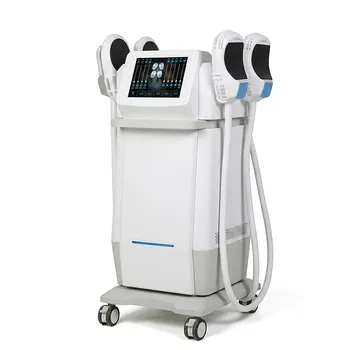
Vector-based monopolar RF tightening should combine individualized tissue mapping with conservative, temperature-controlled energy delivery. The operator first identifies the direction in which lax tissue should be supported, then applies controlled multi-pass treatment along that vector. Safety depends on intact grounding and coupling, continuous skin-contact and temperature monitoring, conservative treatment over bony or thin-tissue areas, and the patient’s ability to report excessive heat or pain.
Core takeaway: Vectors guide where and in what direction treatment is concentrated; they do not replace anatomical judgment or device-specific protocols. Use lower-fluence, multi-pass delivery with active monitoring, and stop or reduce treatment when pain, contact, temperature, or tissue response becomes abnormal.
How Vector Mapping Guides Treatment
Map laxity by manually elevating tissue
Before delivering RF, the clinician should gently elevate the target tissue manually and observe the direction that produces the desired lift. This provides a practical estimate of the treatment vector rather than relying on a fixed grid alone.
Vector mapping should be individualized for facial asymmetry, skin thickness, prior procedures, and the device’s approved treatment pattern.
Mid-face vector
A commonly described mid-face reference vector is approximately 30° inferior to the horizontal line between the ear and nose. Treatment can be concentrated in elongated or teardrop-shaped zones aligned with the direction of desired tissue support.
This angle is a planning reference, not a universal prescription. The operator should adapt the vector to the patient’s anatomy and avoid excessive energy over thin skin or prominent bony areas.
Jawline and neck vector
For the inferior cheek, jawline, and lateral neck, a reference vector may be approximately 60° inferior to the ear-to-nose horizontal line. Concentrated multi-pass zones can follow this downward or inferolateral direction when that matches the observed laxity pattern.
The anterior neck requires particular caution because tissue thickness and underlying structures vary substantially. Treatment should remain within the manufacturer-approved anatomy and should not be extended into areas the device is not cleared to treat.
Brow-lifting vector
For eyebrow elevation, pulse columns are placed superior to the eyebrow border and arranged to support the intended superior vector.
The operator should avoid extending pulses beyond the temporal fusion line, as excessive treatment in the temporal region may increase the risk of localized fat loss or contour change. The orbital rim and thin periorbital tissues also warrant conservative settings and careful adherence to the device instructions.
Submental contouring
Stacked or repeated passes over submental fullness may be considered only when the specific platform and treatment protocol support this use. The goal should be controlled heating, not aggressive fat destruction.
Overtreatment can produce focal fat atrophy, depressions, or irregular contours. This is especially important when tightening and contouring are being attempted in the same session.
How to Deliver RF Safely Along the Vectors
Prefer lower fluence over repeated passes
Contemporary protocols generally favor lower-fluence, multiple-pass delivery rather than one high-energy pass. Some protocols use up to approximately five passes, but the correct number depends on the device, treatment indication, tissue response, and manufacturer’s instructions.
Repeated passes should build heat gradually and evenly. They should not be used to compensate for inadequate coupling, poor contact, or an incorrect vector.
Titrate energy using patient feedback
The patient should remain sufficiently alert to describe heat and pain during treatment. A commonly used four-point discomfort scale targets a tolerable level around 2–3, while sharp pain, intense burning, or escalating discomfort requires immediate reassessment.
Energy should be reduced over the mandible, malar prominence, temples, and other areas where thin tissue or bone may increase heat concentration.
Distinguish tissue temperature from surface temperature
Collagen remodeling requires therapeutic heating within the target tissue, but the exact internal temperature cannot be inferred reliably from skin sensation alone. Claims about a specific internal threshold should therefore be interpreted in the context of the individual device and its validated protocol.
Surface temperature is a separate safety measure. Platforms may monitor the epidermal surface around the low-40°C range, but clinicians must follow the device’s specified limits rather than applying a generic temperature target.
Maintain full coupling and even contact
The skin should be clean and free of makeup, lotions, and other residues that can interfere with contact. A continuous layer of the manufacturer-approved conductive gel or coupling medium should be applied.
The handpiece must remain flat and evenly coupled to the skin. On concave or curved areas, gently tensioning the skin can improve contact and reduce treatment gaps, discomfort, and localized energy concentration.
Use cooling and contact controls
Active epidermal cooling, integrated temperature sensors, and contact-detection systems should be used whenever available. A system that automatically stops RF when contact is lost can reduce the risk of arcing, excessive heat, and blistering.
Where the device requires movement or pulsed delivery, the handpiece should not remain stationary unless the protocol specifically permits stationary pulses. Uneven pressure or prolonged dwell time can create localized high energy density.
Essential Patient and Equipment Precautions
Complete the electrical circuit correctly
Monopolar RF requires a properly positioned, temporary adhesive grounding or return pad. It must be applied securely according to the manufacturer’s instructions so that current follows the intended circuit.
A loose, damaged, poorly positioned, or improperly sized pad can compromise energy delivery and increase the risk of discomfort or thermal injury.
Remove conductive objects
Patients should remove metal jewelry and avoid contact with conductive metal surfaces during treatment. The operator should also assess for metallic tattoos or superficial metal directly beneath the treatment area.
Any concern about a metal implant, tattoo, or other conductive material should be resolved against the device’s labeling before treatment begins.
Screen for contraindications
Treatment should generally be deferred over open wounds, active skin lesions, or active herpes simplex outbreaks. Patients with impaired healing, active collagen-vascular or autoimmune skin disease, or other significant dermatologic conditions require appropriate medical assessment.
Monopolar RF systems using a grounding pad are generally contraindicated in patients with active implanted electronic devices, such as pacemakers or defibrillators, unless the device manufacturer and treating medical specialist explicitly establish safety.
Preserve real-time communication
Full sedation or general anesthesia is inappropriate for routine monopolar RF tightening because patient feedback is an important safety signal. The patient should be able to report abnormal heat, sharp pain, or unexpected sensations.
Topical or other analgesia, if used, must not prevent meaningful communication or mask a developing thermal injury.
Recognizing an Appropriate Treatment Response
Expected short-term effects
Mild erythema, warmth, and transient edema can occur after treatment and should generally resolve according to the expected recovery profile for the device and protocol.
The operator should document the immediate tissue response and provide clear instructions for reporting worsening pain, blistering, marked swelling, pigment change, or contour irregularity.
Warning signs requiring immediate action
Treatment should be paused if the patient reports sharp or intense burning pain, if contact is lost, or if the skin response becomes unusually focal or severe.
Blistering, whitening, charring, persistent severe pain, or rapidly developing focal swelling is not an acceptable endpoint and requires prompt clinical assessment.
Understanding the Trade-offs
More energy does not guarantee more tightening
High-fluence single passes may increase the risk of epidermal injury, subcutaneous fat atrophy, surface irregularity, and contour defects without producing proportionally better tightening.
The objective is controlled, uniform thermal exposure—not the highest tolerable energy level.
More passes can also cause overtreatment
Multiple passes are safer only when total energy, spacing, temperature, and tissue response are controlled. Stacking passes repeatedly over the same small region can create excessive heating.
This risk is greater over thin tissue, bony prominences, the temporal region, and areas with limited subcutaneous cushioning.
Vector algorithms are not universal guarantees
A structured vector algorithm can improve consistency and treatment planning, but it cannot guarantee a particular response rate or eliminate adverse events. Outcomes depend on patient selection, tissue characteristics, operator skill, device parameters, and follow-up.
The reported treatment geometry should therefore be treated as a planning framework rather than a substitute for clinical judgment.
Contouring and tightening involve different risks
Applying stacked passes to submental fullness may influence contour, but it also raises the risk of uneven fat loss. Tightening protocols should not be presented as a predictable substitute for dedicated fat-reduction procedures.
The intended endpoint must be defined before treatment, and the patient should understand the limits of the technology.
How to Apply This to Your Project
A safe treatment plan should document the mapped vectors, device settings, pass count, temperature and contact controls, patient discomfort, and immediate skin response.
- If your primary focus is facial lifting: Map the direction of manually elevated tissue, use individualized mid-face, jawline, neck, or brow vectors, and deliver conservative multi-pass energy with special care around thin and bony areas.
- If your primary focus is brow elevation: Keep pulse columns superior to the brow and remain within the approved temporal boundary to reduce the risk of temporal fat atrophy or contour change.
- If your primary focus is submental contouring: Use stacked passes only when supported by the specific device protocol, and avoid aggressive treatment that could produce focal fat loss or irregularity.
- If your primary focus is patient safety: Verify contraindications, grounding-pad placement, conductive coupling, handpiece contact, cooling, temperature limits, and the patient’s ability to provide real-time feedback.
- If your primary focus is consistent clinical outcomes: Use vector mapping as an individualized planning tool, not a rigid algorithm, and follow the device’s validated instructions rather than relying on generalized energy or temperature targets.
The safest monopolar RF procedure is controlled, anatomically individualized, continuously monitored, and conservative enough to protect the tissue it is intended to improve.
Summary Table:
| Aspect | Key Considerations |
|---|---|
| Vector Mapping | Individualized based on laxity; mid-face ~30° inferior to ear-nose line; jawline/neck ~60°; brow superior to eyebrow; submental only per protocol. |
| Energy Delivery | Lower fluence, multiple passes; titrate to patient feedback (2-3 on 4-point scale); avoid high-fluence single passes. |
| Safety Measures | Proper grounding pad, remove metal, maintain full coupling, use cooling/contact sensors, monitor temperature, screen contraindications. |
| Treatment Response | Expect mild erythema/warmth/edema; pause for sharp pain, blistering, or unusual focal reactions. |
| Contraindications | Active implants (pacemakers), open wounds, active infections, autoimmune skin diseases; avoid over thin/bony areas. |
Elevate your RF treatments with professional-grade devices from BELIS—designed for clinics and premium salons, offering advanced monopolar RF and a full spectrum of aesthetic technology. Ensure safety and efficacy with our CE-certified equipment and expert support. Contact us today to learn more about our RF platforms and how we can help you achieve superior outcomes for your clients.
Related Products
- Ultrasonic Cavitation Radiofrecuency Machine for Body Slimming
- 22D HIFU Machine Device Facial Machine
- Ultrasonic Cavitation Machine Lipo Laser Device
- 4D 12D HIFU Machine Device for Skin Tightening and Lifting
- 4D 12D HIFU Machine Device for Skin Tightening
People Also Ask
- What are the pros and cons of the ultrasonic cavitation slimming treatment? A Guide to Painless Body Contouring
- Does an ultrasonic cavitation machine also tighten the skin? Achieve Total Body Contouring with RF Synergy
- How does radiofrequency technology in slimming machines promote fat reduction? The Science of Non-Invasive Sculpting
- How should one prepare for an ultrasonic cavitation appointment? 5 Essential Tips for Maximum Fat Loss Results
- What areas of the body are targeted for ultrasonic cavitation? Best Zones for Effective Body Contouring