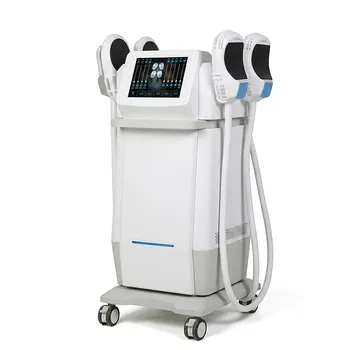
For nonablative RF skin tightening, the safest effective approach is controlled, staged heating rather than maximum power. Begin with higher-power passes to raise the baseline epidermal temperature from approximately 31–33 °C to about 42 °C, then reduce power and maintain the treated tissue within roughly 39–43 °C over multiple passes. Continuous handpiece movement, integrated contact cooling, and real-time temperature or impedance feedback are essential to prevent localized overheating, blistering, and burns.
The objective is a controlled thermal plateau, not the highest possible temperature. A two-phase protocol should gradually reach the therapeutic endpoint, then maintain it evenly while the handpiece keeps moving and cooling protects the epidermis.
Why RF Requires Controlled Heating
RF Converts Electrical Energy Into Tissue Heat
RF devices generate an electric field through tissue. Water-containing dermal tissue resists and dissipates this energy as heat, allowing the operator to create controlled thermal stress at the intended treatment depth.
The clinical effect depends on the combination of temperature, exposure time, tissue depth, electrode configuration, and movement speed. Temperature alone does not determine safety or collagen response.
Heating Produces Immediate and Delayed Effects
Thermal exposure can cause temporary collagen contraction, which contributes to an immediate tightening effect. The subsequent wound-healing response can stimulate fibroblast activity and longer-term extracellular-matrix remodeling over the following weeks.
The desired result is partial, controlled collagen alteration, not indiscriminate tissue coagulation. Excessive heat can damage collagen, epidermis, subcutaneous fat, or other structures.
The Two-Phase Thermal Protocol
Phase I: Raise the Baseline Temperature
The initial phase uses relatively higher power passes to elevate the treatment area from its starting epidermal temperature, commonly around 31–33 °C, toward approximately 42 °C.
Power should be titrated progressively. The operator should monitor the actual tissue response rather than applying a fixed energy level across every patient or anatomical area.
Phase II: Maintain the Therapeutic Plateau
Once the therapeutic endpoint is reached, power should be reduced to maintenance levels. Multiple passes should sustain dermal temperatures approximately within 39–43 °C, while avoiding rapid temperature accumulation.
The purpose of this phase is consistent volumetric heating. Repeated passes should preserve the therapeutic range rather than repeatedly pushing the tissue to a higher peak.
Surface and Dermal Temperatures Are Not Interchangeable
A measured surface temperature of approximately 40–42 °C may be used as a practical endpoint in some systems, but it does not necessarily equal the temperature in the deeper dermis.
RF devices differ in electrode geometry, treatment depth, cooling, pulse structure, and monitoring method. A protocol must therefore specify whether a temperature refers to the epidermal surface, electrode interface, or target dermal tissue.
How to Deliver Energy Evenly
Divide the Treatment Area Into Grid Sections
Pre-marking the treatment area into sections, such as 3 × 3 inch grids, helps prevent missed regions and reduces excessive overlap.
Each section should receive a consistent number of passes and comparable movement patterns. Treatment parameters may still need adjustment for thinner skin, bony areas, folds, and regions with different sensitivity.
Keep the Handpiece Moving
The probe should move continuously in controlled circular or overlapping motions. This distributes energy across the section and reduces the risk of creating localized hot spots.
The operator should not pause over a sensitive area while RF energy is active. Increasing movement speed temporarily over a discomfort-prone spot can reduce heat accumulation while maintaining overall treatment continuity.
Use Cooling as an Active Safety Control
Integrated contact cooling helps protect the epidermis while RF energy heats deeper tissue. Cooling should remain in reliable contact with the skin and should not be treated as a substitute for movement, temperature monitoring, or conservative energy titration.
Unexpected loss of cooling contact, excessive pain, or an abnormal temperature rise should prompt immediate cessation of RF delivery to that area.
Monitoring the Collagen Response
Treat Temperature and Time as a Combined Variable
Collagen remodeling depends on both thermal intensity and exposure duration. Lower temperatures may require longer exposure, while shorter exposures can produce stronger thermal effects at higher peak temperatures.
This relationship means that a temperature target cannot safely be separated from the device’s pulse duration, duty cycle, pass speed, and electrode design.
Do Not Generalize High-Temperature Protocols
Some specialized systems, including certain microneedle RF platforms, create controlled deeper thermal zones at substantially higher temperatures. References to approximately 60–67 °C, or to brief high-temperature pulses, describe different treatment mechanisms and monitoring requirements.
Those values should not be transferred to a conventional externally applied, surface-cooled RF protocol. In particular, a superficial device should not be driven toward a high dermal-temperature target based solely on literature from an invasive or fractional system.
Use Device Feedback When Available
Professional systems may use real-time temperature, tissue impedance, power, or contact monitoring. These controls help account for differences in hydration, tissue composition, electrode contact, and patient anatomy.
Feedback systems improve consistency, but they do not eliminate the need for clinical observation. The operator must assess skin appearance, patient discomfort, handpiece contact, and treatment symmetry throughout the procedure.
Understanding the Trade-offs
More Heat Does Not Automatically Mean Better Tightening
Higher temperatures may increase collagen contraction in some controlled systems, but they also narrow the safety margin. Excessive or poorly localized heating can produce epidermal injury, blistering, fat necrosis, fibrosis, or contour irregularities.
For a nonablative surface RF protocol, a stable therapeutic range is generally more defensible than pursuing the highest temperature the patient can tolerate.
Surface Cooling Can Conceal Deeper Overheating
Cooling may keep the epidermis within an acceptable temperature range while deeper tissue continues to accumulate heat. Surface comfort alone is therefore not proof that the underlying tissue is within the intended treatment window.
Operators should rely on the device’s validated monitoring method and treatment instructions, not on skin sensation alone.
Pain Is a Warning Signal, Not a Treatment Endpoint
Mild warmth can be expected, but escalating pain, sharp pain, focal burning, blanching, erythema that rapidly intensifies, or unusual swelling indicates that treatment should be paused and the area reassessed.
Topical or systemic analgesia should not be used to mask warning symptoms without appropriate clinical judgment.
Protocols Are Device-Specific
RF systems vary in frequency, electrode arrangement, cooling method, penetration depth, pulse duration, and feedback controls. A temperature or power setting from one device cannot be assumed to be safe or effective on another.
The manufacturer’s validated protocol and the operator’s training should take precedence over generic numerical targets.
How to Apply This to Your Project
Use the following principles when designing or reviewing an RF treatment protocol:
- If your primary focus is epidermal safety: Raise the treatment area gradually toward approximately 40–42 °C, maintain continuous handpiece movement, and use reliable contact cooling throughout energy delivery.
- If your primary focus is consistent collagen remodeling: Use a two-phase protocol with higher-power initial heating followed by reduced-power maintenance around 39–43 °C, while controlling pass count, overlap, and movement speed.
- If your primary focus is treatment reproducibility: Divide the area into marked grid sections and record temperature, power, pass count, duration, cooling status, and patient response for each section.
- If your primary focus is a microneedle or fractional RF system: Follow that platform’s validated dermal-temperature and pulse-duration parameters rather than applying surface-RF targets or generic high-temperature values.
- If your primary focus is burn prevention: Stop and reassess whenever cooling contact is lost, temperature rises unexpectedly, or discomfort becomes focal or excessive.
Safe RF therapy is achieved by controlling temperature, time, depth, movement, and cooling together, with the validated device protocol defining the final operating limits.
Summary Table:
| Parameter | Phase I: Heating | Phase II: Maintenance |
|---|---|---|
| Target temperature | ~42 °C (epidermal baseline) | 39–43 °C (dermal plateau) |
| Power level | Higher | Reduced |
| Purpose | Raise temperature to therapeutic threshold | Maintain consistent thermal exposure |
| Cooling | Active contact cooling | Continuous contact cooling |
| Movement | Continuous, grid-pattern | Continuous, overlapping passes |
| Monitoring | Temperature, impedance, pain | Temperature, impedance, skin response |
| Safety | Stop if pain or cooling loss | Reassess if abnormal response |
Ready to elevate your clinic's RF treatments with safe, effective protocols? BELIS offers a range of professional-grade RF devices designed for precision and safety. Our systems feature advanced temperature and impedance monitoring to help you achieve optimal collagen remodeling while minimizing risks. Empower your practice with the latest technology and expert support. Contact our specialists today to find the perfect RF solution for your clinic or premium salon.
Related Products
- Ultrasonic Cavitation Radiofrecuency Machine for Body Slimming
- IPL SHR+Radio frecuency machine
- 9D 7D HIFU Vaginal RF Lifting Treatment
- EMSlim Neo Nova Body Sculpting EMS Sculpting Machine
- RF Microneedling Machine Micro Needle Radio Frequency Machine
People Also Ask
- What are the pros and cons of the ultrasonic cavitation slimming treatment? A Guide to Painless Body Contouring
- Does an ultrasonic cavitation machine also tighten the skin? Achieve Total Body Contouring with RF Synergy
- How does radiofrequency technology in slimming machines promote fat reduction? The Science of Non-Invasive Sculpting
- How should one prepare for an ultrasonic cavitation appointment? 5 Essential Tips for Maximum Fat Loss Results
- What areas of the body are targeted for ultrasonic cavitation? Best Zones for Effective Body Contouring