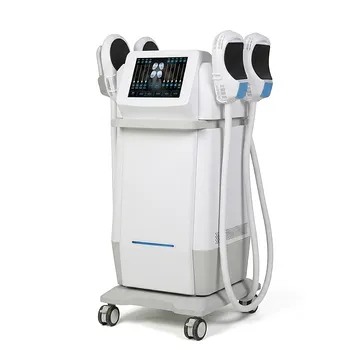
RF skin tightening causes an immediate collagen response followed by months of structural remodeling. During treatment, controlled heat raises the temperature of the dermis, producing partial collagen denaturation and contraction. As the tissue cools, collagen fibers become shorter and more compact; over the following weeks and months, fibroblasts produce new collagen and elastin, increasing dermal firmness and density.
The visible result develops in two phases: early tightening from thermal collagen contraction, followed by longer-term improvement as the skin rebuilds and reorganizes its extracellular matrix.
What Happens During the RF Treatment
Dermal tissue is selectively heated
Radiofrequency energy generates heat within targeted tissue, primarily in the dermis, where much of the skin’s collagen and elastin network is located.
The treatment is designed to heat this tissue without removing the skin’s surface. The exact effect depends on the RF device, energy level, treatment depth, and temperature control.
Existing collagen partially denatures
Heat disrupts the organized triple-helical structure of collagen molecules. This is better described as partial thermal denaturation, not melting in the literal sense.
The altered collagen fibers contract and become shorter. This produces an initial tightening effect that may be noticeable soon after treatment.
Collagen bundles become more compact
As the treated tissue cools, the collagen network settles into a tighter configuration. This early contraction can temporarily improve the appearance of laxity, fine lines, and skin texture.
The immediate effect is not the same as the final result. It reflects contraction of existing collagen rather than the full formation of new structural tissue.
What Happens in the Weeks After Treatment
A controlled healing response begins
The thermal stimulus activates a limited inflammatory wound-healing cascade within the dermis. This response signals the skin to repair and reorganize the treated tissue.
Mild redness or inflammation can occur, but these effects typically resolve relatively quickly after treatment.
Fibroblasts become more active
Fibroblasts are the primary cells responsible for producing components of the skin’s extracellular matrix. After RF heating, they increase activity and begin synthesizing structural proteins.
This process is known as neocollagenesis, or the production of new collagen.
New Type I and Type III collagen forms
The remodeling response produces newly synthesized Type I and Type III collagen, which help increase dermal support and density.
Type I collagen provides much of the skin’s tensile strength, while Type III collagen is associated with the formation of newer, more flexible connective tissue.
Elastin and elastic fibers improve
RF treatment can also stimulate production and organization of elastin-related fibers. This may improve the skin’s ability to recoil after stretching.
Structural remodeling may reduce the visual effects of solar elastosis, in which chronically sun-damaged elastic tissue becomes abnormal and less functional.
Structural Changes That Develop Over Time
The dermis becomes denser
New collagen deposition and reorganization can increase the density and thickness of the dermal connective-tissue network.
This provides greater structural support for the overlying skin and can contribute to a firmer appearance.
The epidermis may become thicker
Some studies of monopolar RF have reported increased epidermal and granular-layer thickness after treatment.
These changes may improve the skin’s overall appearance, although the principal tightening effect is generally associated with remodeling within the deeper dermis.
The dermal-epidermal junction may become more pronounced
RF-related remodeling has also been associated with more prominent rete ridges, which are projections at the junction between the epidermis and dermis.
A more structured junction can contribute to improved mechanical interaction between the skin layers.
Skin laxity improves gradually
Initial tightening may appear relatively early, but the more meaningful structural changes require time. Clinical improvement commonly continues for several months as collagen synthesis and tissue remodeling progress.
Peak improvement in laxity is often reported around four to six months, although the timeline varies by treatment type, skin condition, and individual healing response.
Why the Results Are Not Immediate
Contraction and remodeling are different processes
Immediate contraction affects collagen that is already present. By contrast, long-term improvement depends on fibroblast activity, new collagen production, elastin remodeling, and reorganization of the extracellular matrix.
That is why early tightening does not necessarily represent the final treatment outcome.
The skin must build new tissue
Neocollagenesis is a biological process rather than an instant physical effect. The skin needs time to synthesize, deposit, and organize new connective tissue.
Results therefore tend to become more apparent over the first several weeks and continue developing for a few months.
Understanding the Trade-offs
RF does not replace lost tissue
RF primarily remodels and contracts existing skin structures. It does not remove substantial excess skin or restore the volume lost from facial fat, muscle, or bone.
Severe laxity may therefore require a different treatment strategy, depending on the underlying cause.
Results vary by treatment parameters
Different RF systems deliver energy at different depths and with different heating profiles. Monopolar, bipolar, multipolar, and fractional RF treatments should not be assumed to produce identical histological effects.
The treatment result depends on controlled delivery of adequate heat while avoiding excessive injury.
Excessive heat can cause complications
A tolerable warming sensation is expected, but significant burning pain is not something to ignore. Excessive or poorly controlled heating can increase the risk of burns, prolonged inflammation, pigmentary changes, or unwanted tissue injury.
Patients should promptly tell the provider if the sensation becomes intensely painful or feels like burning.
Maintenance may be necessary
Collagen and elastin continue to change with age, ultraviolet exposure, and other biological factors. RF can improve firmness and texture, but it does not permanently stop the aging process.
Sun protection and appropriate maintenance treatments help preserve the structural improvements.
Making the Right Choice for Your Goal
RF tightening is best understood as a gradual remodeling treatment rather than an immediate lifting procedure.
- If your primary focus is immediate tightening: Expect early improvement mainly from contraction of existing collagen fibers.
- If your primary focus is long-term firmness: Allow several months for fibroblast activation, neocollagenesis, and elastin remodeling to develop.
- If your primary focus is improved texture: RF may increase dermal density and produce associated epidermal and dermal-junction changes.
- If your primary focus is severe loose skin: Recognize that RF may provide limited improvement when substantial excess tissue or volume loss is present.
- If your primary focus is treatment safety: Choose a qualified provider and report any intense burning sensation during treatment.
RF works through a sequence of controlled heating, collagen contraction, and delayed connective-tissue remodeling that gradually strengthens and firms the skin.
Summary Table:
| Phase | Timeframe | Structural Changes |
|---|---|---|
| Immediate | During treatment | Partial collagen denaturation and contraction; dermal tissue heats and collagen bundles compact |
| Early | Days to weeks | Inflammatory response stimulates fibroblasts; initial tightening from existing collagen contraction |
| Long-term | Weeks to months | Neocollagenesis: new Type I & III collagen, elastin remodeling, increased dermal density, thicker epidermis, improved rete ridges |
Elevate your practice with BELIS's advanced RF skin tightening devices, designed for professional clinics and premium salons. Our CE-certified technology ensures safe, effective collagen remodeling for your clients. Partner with us to expand your service offerings and boost revenue. Contact us today to learn about our OEM/ODM support and bulk pricing.
Related Products
- Ultrasonic Cavitation Radiofrecuency Machine for Body Slimming
- Clinic Use IPL SHR ND YAG Laser Hair Removal RF Skin Tightening Machine
- Ultrasonic Cavitation Machine Lipo Laser Device
- Fractional CO2 Laser Machine for Skin Treatment
- 4D 12D HIFU Machine Device for Skin Tightening
People Also Ask
- What are the pros and cons of the ultrasonic cavitation slimming treatment? A Guide to Painless Body Contouring
- Does an ultrasonic cavitation machine also tighten the skin? Achieve Total Body Contouring with RF Synergy
- How does radiofrequency technology in slimming machines promote fat reduction? The Science of Non-Invasive Sculpting
- How should one prepare for an ultrasonic cavitation appointment? 5 Essential Tips for Maximum Fat Loss Results
- What areas of the body are targeted for ultrasonic cavitation? Best Zones for Effective Body Contouring