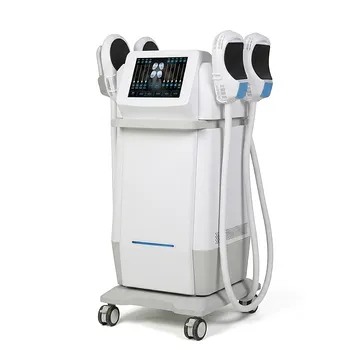
Monopolar RF body tightening is safest when energy delivery is continuously controlled, surface temperature is monitored, and the operator can immediately respond to patient feedback. Critical safeguards include a functioning contact interlock, appropriate dispersive grounding or return-pad placement when required by the device, continuous coupling medium, even handpiece contact, epidermal cooling, and gradual energy titration. The applicator should remain in motion or follow the manufacturer’s pulse protocol, with treatment stopped immediately for loss of contact, excessive temperature, sharp pain, or abnormal skin response.
The central safety principle is controlled heat—not maximum power. Maintain uniform coupling and contact, monitor the epidermal surface and patient sensation continuously, and use the device’s prescribed settings and treatment pattern rather than attempting to reach deeper tissue temperatures through aggressive surface heating.
Establish a Safe Electrical Circuit Before Treatment
Confirm the platform’s monopolar configuration
Monopolar RF systems use an active treatment electrode and a return path through a dispersive grounding or return pad, unless the specific platform uses another approved configuration.
Confirm the required circuit, pad location, and skin-preparation procedure in the manufacturer’s instructions for use. Do not substitute pad types or placements without authorization.
Prepare the patient and treatment area
Remove makeup, lotions, and other products that could interfere with uniform coupling. Remove metal jewelry and prevent contact with conductive metal surfaces that could create unintended current pathways.
Inspect the treatment area for compromised skin or other conditions addressed in the device’s contraindications and precautions. Only trained, authorized operators should perform the procedure.
Secure the return pad when required
If the device requires a temporary adhesive grounding or dispersive pad, apply it firmly to clean, intact skin with full surface contact.
Check the pad and cable before treatment and monitor for lifting, poor adhesion, or circuit alerts. A compromised return path requires treatment to stop until the problem is corrected.
Verify the Device’s Built-In Safety Controls
Use the contact interlock
A full-surface contact interlock should prevent RF emission when the handpiece is not flush against the skin. This reduces the risk of arcing, painful discharges, and focal epidermal injury.
Never bypass, disable, or ignore a contact alarm. Reposition the handpiece and restore even contact before resuming.
Monitor impedance and energy delivery
Where available, real-time impedance monitoring helps the platform adjust or interrupt energy delivery when tissue coupling changes.
Operators should still watch the treatment area and patient response. Automated controls are safeguards, not substitutes for clinical observation.
Confirm temperature sensing and cooling
Integrated temperature sensors should continuously assess the superficial skin temperature. Active contact cooling or another approved epidermal cooling mechanism should function before, during, and after energy delivery when specified by the platform.
The reference surface range of approximately 40–43°C is commonly used for controlled superficial heating, but the correct target is device- and protocol-specific. Do not use a surface-temperature number from one platform to set another platform.
Maintain Uniform Coupling and Contact
Apply a continuous conductive medium
Use the conductive oil, gel, or coupling fluid specified for the platform. Apply enough to maintain a continuous layer throughout treatment rather than allowing dry areas to develop.
Poor coupling can concentrate energy, increase impedance, reduce treatment uniformity, and raise the risk of superficial burns.
Keep pressure even
Maintain consistent, even handpiece pressure across the treatment zone. Excessive pressure, rocking, or partial contact can create localized high energy density and uneven heating.
On curved or concave anatomy, position or tension the skin as needed to keep the treatment tip flat and fully coupled. Follow the applicator’s instructions rather than forcing contact.
Use a controlled treatment pattern
Divide the area into clearly defined grid zones so that passes and coverage can be tracked. Move the applicator in continuous circular or other manufacturer-prescribed motions, avoiding prolonged stationary contact unless the device is specifically designed for stationary pulses.
Do not repeatedly treat one area simply because the patient does not feel intense heat. The operator must track passes, exposure, temperature, and energy.
Titrate Heat Gradually
Begin with conservative settings
Start at a lower energy level and increase gradually according to the device protocol, skin response, temperature readings, and patient sensation.
The objective is moderate, tolerable warmth, not sharp pain or intense burning. A commonly cited discomfort target is approximately 2–3 on a 1–4 scale, but the platform’s validated protocol takes priority.
Favor controlled multiple-pass delivery
When supported by the device and clinical protocol, lower-fluence multiple-pass treatment can build heat progressively while reducing the risks associated with a high-energy single pass.
A cited protocol approach uses several lower-energy passes—up to five in some systems—but the permitted number of passes, fluence, dwell time, and spacing must come from the specific device’s instructions and clinical training.
Reduce exposure over sensitive anatomy
Use reduced energy, fewer passes, or increased caution over bony prominences, thin tissue, folds, scars, and areas where the handpiece cannot maintain stable contact.
For body tightening, this may include prominent contours, narrow transition zones, or irregular anatomy. Avoid treating based solely on a preset grid when anatomy does not permit uniform coupling.
Use Patient Feedback as a Safety Sensor
Preserve the patient’s ability to report heat
Patient feedback is an important real-time indicator of excessive heating. Avoid full sedation or general anesthesia for routine treatment when it would prevent meaningful reporting of thermal discomfort.
Do not use nerve blocks or other approaches that remove the thermal warning signal unless specifically justified, permitted, and managed under an appropriate clinical protocol.
Stop for warning symptoms
Pause or stop treatment for sharp pain, intense burning, electrical zapping, sudden focal discomfort, or a sensation that differs substantially from the surrounding area.
Inspect the skin before continuing. Adjust coupling, contact, motion, cooling, energy, or pass count only after identifying the likely cause.
Observe the skin continuously
Mild, temporary erythema or edema may occur, but progressive redness, whitening, blistering, unusual swelling, or focal tenderness requires immediate cessation and clinical assessment.
Do not cover an abnormal response with additional passes.
Understand Temperature Control Correctly
Distinguish superficial monitoring from deep heating
The epidermal surface temperature is the directly monitored safety parameter in many systems. Therapeutic heating in deeper dermal or subdermal tissue may be higher, but it cannot be inferred reliably from the surface reading alone.
Therefore, operators should not deliberately overheat the epidermis in an attempt to reach a deeper target. Use the manufacturer’s validated relationship between power, pulse duration, movement, coupling, and tissue response.
Protect the surface while building thermal dose
Cooling, continuous motion, pulsed delivery, and gradual passes allow the epidermis to remain within a safer range while heat accumulates in deeper tissue.
If cooling fails, the temperature sensor alarms, or contact becomes unstable, suspend treatment until the fault is resolved.
Common Pitfalls to Avoid
Treating without a device-specific protocol
RF platforms differ in frequency, applicator geometry, feedback systems, cooling, grounding requirements, and permitted settings.
Do not transfer fluence, temperature, pass count, or treatment speed from another device without confirming compatibility with the current platform’s instructions and training.
Using high power to compensate for poor coupling
Dry skin, insufficient gel, uneven pressure, or partial contact can make energy delivery unpredictable. Increasing power in response to poor heating is unsafe.
Correct the coupling and handpiece position first, then reassess at a conservative setting.
Holding the applicator stationary
A stationary handpiece can create a concentrated thermal load unless the platform specifically controls stationary delivery.
Maintain the prescribed movement or pulse sequence and document treated zones to prevent accidental overlap.
Ignoring the patient’s pain report
Pain is not a reliable measure of treatment effectiveness, but sudden or escalating pain is a safety warning.
Treat patient feedback as one input alongside temperature, contact, impedance, skin appearance, and device alarms.
Continuing after a sensor or cooling fault
A contact interlock, temperature sensor, impedance monitor, or cooling system that is not functioning removes a key layer of protection.
Do not continue manually or override the fault. Remove the device from service according to the manufacturer’s escalation and maintenance procedure.
Making the Right Choice for Your Goal
A safe protocol should be selected according to the treatment area, device design, patient sensation, and real-time tissue response.
- If your primary focus is preventing burns: Prioritize full contact, continuous coupling, functioning temperature monitoring, active epidermal cooling, and immediate response to alarms or abnormal skin changes.
- If your primary focus is consistent tightening: Use grid-based coverage, even pressure, controlled motion, gradual titration, and the manufacturer’s prescribed multiple-pass limits.
- If your primary focus is patient comfort: Start conservatively, preserve meaningful patient feedback, and target tolerable warmth rather than intense heat.
- If your primary focus is electrical safety: Verify the platform’s circuit requirements, correctly apply any required dispersive pad, remove metal accessories, and never bypass contact interlocks.
- If your primary focus is operational reliability: Use only trained operators, follow the device-specific instructions for use, document settings and passes, and stop whenever a safety control or cooling function fails.
Controlled energy, reliable contact, continuous monitoring, and responsive clinical judgment are the foundation of safe monopolar RF body tightening.
Summary Table:
| Safety Aspect | Critical Measure | Key Points |
|---|---|---|
| Electrical Circuit | Verify monopolar configuration and grounding | Avoid wrong return pad placement; check integrity |
| Device Controls | Use contact interlock, monitor impedance, temperature | Never bypass alarms; maintain cooling |
| Coupling & Contact | Uniform conductive medium, even pressure | Prevents arcing, burns, and uneven heating |
| Energy Titration | Start low, increase gradually, controlled passes | Target moderate warmth, not pain |
| Patient Feedback | Preserve patient's ability to report heat | Stop for sharp pain or abnormal sensation |
| Skin Monitoring | Observe skin continuously for adverse reactions | Stop if blistering, whitening, or unusual redness |
| Common Pitfalls | Avoid high power for poor coupling, stationary handpiece, ignoring pain | Follow device-specific protocols |
Ensure your clinic delivers safe, effective body tightening with BELIS's advanced monopolar RF platforms. Our devices feature built-in safety controls and validated protocols. Contact our experts today to schedule a demo and elevate your practice—Get in touch with us.
Related Products
- Cryolipolysis Fat Freezing Machine and Ultrasonic Cavitation Device
- EMSlim Neo Nova Body Sculpting EMS Sculpting Machine
- Professional IPL SHR Hair Removal Machine for Laser and IPL Hair Removal
- EMS Body Sculpting Slimming Machine EMSlim Body Slimming Machine
- Clinic Use IPL and SHR Hair Removal Machine with Nd Yag Laser Tattoo Removal
People Also Ask
- What are the main benefits of using a fat freezing machine? Achieve Permanent, Non-Surgical Body Sculpting
- What anatomical factors determine whether a patient with submental fullness should be treated with cryolipolysis fat-reduction devices versus energy-based skin tightening modalities?
- What are the potential side effects and risks associated with fat freezing? Safety Profile & Rare Risks Explained
- What are the technical advantages of using lower temperatures and shorter durations in cryolipolysis fat reduction?
- What are the core differences in mechanism and clinical application between cryolipolysis and thermal modalities like radiofrequency and ultrasound for non-invasive body contouring?