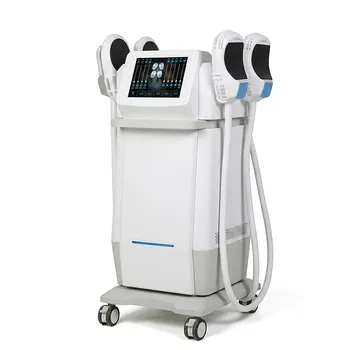
Integrated epidermal cooling is the safety mechanism that makes deep RF heating practical. It lowers and stabilizes the skin-surface temperature—typically around 35–45°C—while RF energy produces therapeutic volumetric heating in the deeper dermis. This thermal separation protects the epidermis from burns and blistering while allowing collagen contraction and longer-term remodeling to occur below the surface.
The central principle is controlled thermal contrast: keep the epidermis cool enough to remain intact while heating the dermis sufficiently to trigger collagen contraction, fibroblast activity, and tissue remodeling.
How RF Heating Drives Collagen Remodeling
RF Creates Volumetric Dermal Heating
Nonablative RF devices deliver alternating electrical energy into tissue. Tissue resistance, or impedance, converts that energy into heat throughout a targeted dermal volume rather than removing or vaporizing the epidermis.
This bulk heating is the basis of RF tightening: the treatment aims to raise dermal tissue temperature while preserving the skin surface.
Heat Produces Immediate Collagen Contraction
At sufficiently high dermal temperatures, collagen’s non-covalent bonds are disrupted. For multi-second exposures, collagen denaturation is often associated with temperatures around 65°C, although the required temperature depends on exposure duration, tissue properties, and treatment design.
The collagen fibers then become shorter and thicker, producing an immediate tightening effect.
Remodeling Continues After Treatment
The initial thermal response can stimulate fibroblastic activity and longer-term production and reorganization of collagen. This gradual remodeling contributes to progressive improvements in firmness and tissue structure after the treatment session.
Cooling does not create this remodeling directly; it enables the RF system to reach the required deeper thermal target without sacrificing the epidermis.
How Integrated Cooling Protects the Epidermis
It Establishes a Thermal Gradient
An integrated cooling system rapidly lowers the temperature at the treatment surface as RF energy is delivered. This creates a temperature gradient in which the epidermis remains relatively cool while heat accumulates in the deeper dermis.
The result is selective thermal protection, not the absence of heat. The device is designed to place the greatest therapeutic thermal effect in the intended subsurface tissue volume.
It Prevents Surface Thermal Injury
Without adequate cooling, heat can accumulate in the epidermis and produce excessive thermal injury. Potential consequences include pain, erythema, burns, blistering, pigmentary changes, and, in severe cases, scarring.
Maintaining the epidermis within a safer temperature range substantially reduces this risk, provided the device is correctly designed, calibrated, and operated.
It Improves Treatment Comfort
Surface cooling also reduces the patient's perception of heat during energy delivery. This can make higher or more therapeutically useful RF settings more tolerable and can help clinicians maintain consistent treatment technique.
Comfort is therefore a secondary benefit; the primary function remains protection of the epidermis.
Why Cooling Supports Effective Tightening
It Allows Adequate Dermal Energy Deposition
If the epidermis overheats before the dermis reaches its therapeutic temperature, treatment energy must be reduced or interrupted. That limits the thermal stimulus available for collagen contraction and remodeling.
Cooling permits the system to deliver sufficient RF energy to the dermis while controlling superficial temperature.
It Preserves the Nonablative Treatment Principle
Nonablative RF is intended to remodel deeper tissue while preserving the surface skin layer. Integrated cooling helps maintain this distinction by limiting heat-related damage at the epidermal boundary.
Unlike ablative procedures, the goal is not to remove or intentionally injure the epidermis.
It Helps Concentrate Treatment in the Intended Volume
High-power RF can produce heat that spreads beyond the intended target region. Surface cooling limits upward thermal accumulation and helps maintain a more controlled treatment profile.
This is particularly important when the device produces substantial volumetric heating or when repeated passes increase cumulative heat.
Understanding the Trade-offs
Excessive Cooling Can Reduce Thermal Delivery
Cooling is not automatically better at higher intensity. If it removes too much heat or is applied too deeply, the dermis may fail to reach the temperature needed for effective collagen contraction and remodeling.
The system must balance surface protection with preservation of dermal heating.
Cooling Does Not Eliminate All Risks
Cooling reduces epidermal risk but cannot compensate for excessive energy, prolonged contact, poor coupling, inadequate movement, or unsuitable treatment parameters. Patient anatomy, tissue impedance, skin condition, and operator technique also affect the final temperature distribution.
A cooled handpiece is therefore a control feature, not a guarantee of complication-free treatment.
Temperature Control Must Be Consistent
Uneven handpiece contact, inconsistent cooling, or incomplete coverage can create local hot spots. Reliable systems should combine cooling with appropriate temperature monitoring, energy control, and treatment protocols.
The clinically relevant question is not simply whether cooling exists, but whether it is stable, synchronized with RF delivery, and effective across the treatment area.
Device Claims Require Context
Surface temperature figures such as 35–45°C describe a control objective, not necessarily the temperature at every point during every pulse. Actual tissue response depends on RF frequency, power, pulse duration, electrode geometry, cooling method, and treatment technique.
Similarly, the approximately 65°C collagen-denaturation value should be treated as a general reference rather than a universal threshold for every RF exposure.
Making the Right Choice for Your Goal
Integrated epidermal cooling should be evaluated as part of the device’s complete thermal-control system, not as an isolated feature.
- If your primary focus is treatment safety: Confirm that cooling is synchronized with RF delivery and supported by reliable surface-temperature monitoring and appropriate treatment protocols.
- If your primary focus is collagen tightening: Look for a system capable of producing controlled deep-dermal heating while preventing excessive superficial cooling from suppressing the therapeutic temperature.
- If your primary focus is patient comfort: Prioritize consistent contact or active cooling that limits surface heat without creating uneven treatment or excessive cold exposure.
- If your primary focus is predictable remodeling: Evaluate the complete combination of RF delivery, cooling, impedance control, temperature monitoring, and operator technique rather than relying on cooling alone.
Effective epidermal cooling turns RF energy from an uncontrolled surface-heating hazard into a controlled dermal remodeling treatment.
Summary Table:
| Aspect | Role of Integrated Cooling |
|---|---|
| Safety | Prevents burns and blistering by keeping skin surface ~35-45°C while dermis heats |
| Efficacy | Allows sufficient dermal energy to reach therapeutic temperatures for collagen contraction |
| Comfort | Reduces pain and improves patient tolerance |
| Remodeling | Maintains thermal gradient to stimulate deep collagen production over time |
| Balance | Must avoid over-cooling to ensure dermal target temperatures are achieved |
Discover how BELIS professional RF systems integrate precise cooling to maximize collagen remodeling while ensuring patient safety. Our advanced technology is designed exclusively for clinics and premium salons, with proven results in skin tightening and body contouring. Ready to elevate your practice? Contact our experts today to learn more about our RF, laser, and aesthetic solutions that combine efficacy with comfort. Schedule a consultation and see how BELIS can help you achieve outstanding outcomes for your clients.
Related Products
- Ultrasonic Cavitation Radiofrecuency Machine for Body Slimming
- 4D 12D HIFU Machine Device for Skin Tightening
- 4D 12D HIFU Machine Device for Skin Tightening and Lifting
- Ultrasonic Cavitation Machine Lipo Laser Device
- Clinic Use IPL SHR ND YAG Laser Hair Removal RF Skin Tightening Machine
People Also Ask
- What are the pros and cons of the ultrasonic cavitation slimming treatment? A Guide to Painless Body Contouring
- Does an ultrasonic cavitation machine also tighten the skin? Achieve Total Body Contouring with RF Synergy
- How does radiofrequency technology in slimming machines promote fat reduction? The Science of Non-Invasive Sculpting
- How should one prepare for an ultrasonic cavitation appointment? 5 Essential Tips for Maximum Fat Loss Results
- What areas of the body are targeted for ultrasonic cavitation? Best Zones for Effective Body Contouring