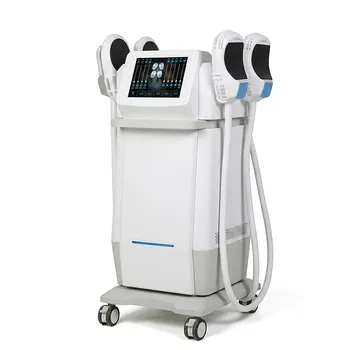
Deep dermal energy-based systems support volume-focused rejuvenation by tightening the skin envelope around restored facial volume. Devices such as radiofrequency (RF) deliver controlled heat into the dermis and, depending on the system, subdermal tissue. This stimulates collagen contraction and longer-term remodeling, improving laxity around the midface, jawline, and neck without directly replacing lost facial volume.
The central role of RF is structural support, not volume creation. In modern rejuvenation protocols, RF can complement fillers or other volumetric treatments by firming the surrounding tissue, refining contours, and helping avoid the hollowed appearance associated with excessive tissue removal.
Why Volume Restoration Alone Is Not Enough
Aging Changes Both Volume and Tissue Support
Facial aging involves a combination of volume loss, skin laxity, collagen depletion, and changes in tissue support. Replacing volume without addressing laxity can produce fullness without adequate definition.
Conversely, tightening or removing tissue without restoring depleted volume may create a drawn or hollow appearance. Modern protocols therefore often combine strategies rather than treating aging as a single problem.
The Skin Envelope Determines the Final Contour
Restored volume must be supported by an overlying skin envelope that is sufficiently firm. RF helps improve this envelope by stimulating contraction and remodeling within the dermal layers.
This can make volumetric correction appear more integrated, particularly in areas such as the cheeks, jowls, and neck.
How Deep Dermal RF Contributes
Controlled Thermal Energy Triggers Collagen Remodeling
RF uses high-frequency electromagnetic energy to generate heat through the electrical resistance of tissue. When delivered at appropriate depths and levels, this thermal effect causes contraction of existing collagen fibers and activates a wound-healing response.
Fibroblast activity and new collagen production can then improve dermal density and firmness over the following weeks to months.
RF Improves Laxity Rather Than Replacing Lost Volume
RF does not function like a filler, fat graft, or other volumizing treatment. Its principal contribution is to tighten and remodel tissue, helping define the contours created or preserved through volume-focused treatment.
This distinction is clinically important: a patient with substantial volume depletion may need volume restoration, while a patient with mild-to-moderate laxity may benefit more from tissue tightening.
Treatment Can Complement Fillers and Other Modalities
When appropriately selected, RF may be used alongside fillers or other volumetric interventions. The combination addresses two related but different needs:
- Volumetric treatments restore projection, support, or contour.
- RF treatments improve skin firmness and the tissue envelope around that volume.
The sequence and timing should be individualized according to the device, treatment depth, target area, and the specific volumetric product used.
Where RF Fits in a Modern Protocol
Mild-to-Moderate Laxity
Non-surgical RF is most logically positioned for patients with early or moderate laxity, fine lines, and reduced dermal firmness. It can improve contour without the incisions and recovery associated with surgery.
Expectations should remain realistic. RF generally produces refinement and tightening, not the degree of repositioning possible with a surgical facelift.
The Midface, Jowls, and Neck
Deep dermal systems can be useful where lax skin blurs restored facial structure. Treatment may help firm the midface, soften jowling, and improve the appearance of neck laxity.
The objective is not to flatten every fold or remove every irregularity. It is to create a more coherent relationship between restored volume and the surrounding skin.
Periorbital Refinement
Some RF approaches are used around delicate areas, including the periorbital region, when the device and operator are appropriate for that anatomy. The goal is controlled improvement in skin firmness with limited epidermal disruption and relatively little downtime.
This area requires particular caution because thin skin, proximity to the eye, and pre-existing volume loss can make overtreatment more apparent.
Post-Surgical Refinement
RF may also serve as an adjunct after surgery when residual skin laxity or texture concerns remain. It should not be viewed as a substitute for surgery when substantial tissue descent or excess skin is present.
What “Deep” Energy Delivery Actually Means
Depth and Heating Pattern Matter
Different RF systems deliver energy through different mechanisms, including monopolar, bipolar, multipolar, and microneedle approaches. Their depth, heating pattern, invasiveness, and tissue effects are not interchangeable.
A device marketed as “deep” is not automatically superior. The relevant question is whether it delivers an appropriate, controlled effect to the tissue layer responsible for the patient’s concern.
Epidermal Protection Is Part of the Design
Many RF systems are designed to heat deeper tissue while monitoring or protecting the skin surface. This can reduce epidermal injury compared with uncontrolled heating, but it does not eliminate risk.
Treatment safety depends on device settings, skin characteristics, anatomy, cooling or monitoring systems, and operator technique.
Energy Is a Biological Stimulus, Not a Guaranteed Outcome
RF initiates a tissue response that may include immediate collagen contraction and delayed remodeling. The visible result depends on the patient’s baseline collagen, degree of laxity, age-related tissue changes, treatment parameters, and healing response.
The treatment should therefore be presented as a process of controlled remodeling rather than an instant or universally predictable lift.
Understanding the Trade-offs
RF Cannot Correct Major Volume Deficiency
If the dominant problem is a deflated midface, hollow temple, or depleted perioral region, tightening alone will not restore the missing structure. In some patients, tightening an already volume-deficient face can make hollowness more noticeable.
A volume-focused assessment should determine whether the priority is replacement, preservation, tightening, or a staged combination.
More Heat Is Not Necessarily Better
Excessive or poorly controlled heating can increase the risk of burns, prolonged inflammation, contour irregularity, and unwanted changes in subcutaneous tissue. Some systems can affect fat as well as dermal tissue, which may be undesirable in a face where volume preservation is a priority.
Treatment intensity must be matched to anatomy and the desired tissue effect, not simply increased to pursue a stronger result.
Results Are Gradual and Variable
Collagen remodeling develops over time and may require a treatment series or maintenance strategy, depending on the system and clinical indication. Results are typically more subtle than those produced by surgery.
Patients seeking a dramatic repositioning of descended tissues may be disappointed if RF is selected despite a surgical-level problem.
Combination Treatments Require Planning
The order, spacing, and compatibility of RF with fillers or other procedures require clinical judgment. Treating every layer at maximum intensity can undermine the volume-preserving objective.
A sound protocol coordinates energy delivery with structural augmentation rather than accumulating procedures without a clear anatomical rationale.
Making the Right Choice for Your Goal
RF is most effective when it is assigned a specific role within an overall facial rejuvenation plan.
- If your primary focus is restoring lost facial volume: Use volumetric treatments to address projection and support; consider RF only as an adjunct for overlying laxity.
- If your primary focus is mild-to-moderate skin laxity: RF may provide non-surgical tightening and gradual collagen remodeling when expectations are realistic.
- If your primary focus is preserving a youthful, full contour: Prioritize conservative energy settings and avoid approaches that may unnecessarily affect subcutaneous fat.
- If your primary focus is major tissue descent or excess skin: Seek assessment for surgical options, because RF is not a replacement for substantial tissue repositioning.
- If your primary focus is refining a previous treatment: RF may help address residual laxity or texture concerns, provided the treatment plan accounts for existing fillers, surgery, and facial volume.
The best volume-focused protocol uses RF to support and refine restored structure—not to substitute for the volume, support, or surgical correction the face actually requires.
Summary Table:
| Role | Description |
|---|---|
| Structural Support | RF is solely for tissue tightening and support, not volume creation. |
| Complements Volume | Firms the skin envelope to refine contours around restored volume. |
| Stimulates Collagen | Heat triggers collagen contraction and remodeling for improved firmness. |
| Addresses Laxity | Best for mild-to-moderate laxity, not major tissue descent. |
| Adjunct to Fillers | Can be combined with fillers, providing a more integrated result. |
Enhance your facial rejuvenation results with BELIS's advanced RF devices, like the Venus Freeze or our RF Microneedling systems. Our professional-grade equipment is designed for clinics and premium salons, helping you deliver safe and effective treatments that tighten skin and refine contours.
Contact us today to discover how BELIS RF technology can elevate your practice and attract more clients seeking non-surgical skin tightening!
Related Products
- Ultrasonic Cavitation Radiofrecuency Machine for Body Slimming
- IPL SHR+Radio frecuency machine
- RF Microneedling Machine Micro Needle Radio Frequency Machine
- RF Microneedling Machine Micro Needle Radio Frequency Machine
- EMS Body Sculpting Slimming Machine EMSlim Body Slimming Machine
People Also Ask
- What are the pros and cons of the ultrasonic cavitation slimming treatment? A Guide to Painless Body Contouring
- Does an ultrasonic cavitation machine also tighten the skin? Achieve Total Body Contouring with RF Synergy
- How does radiofrequency technology in slimming machines promote fat reduction? The Science of Non-Invasive Sculpting
- How should one prepare for an ultrasonic cavitation appointment? 5 Essential Tips for Maximum Fat Loss Results
- What is an ultrasonic cavitation machine? Sculpt Your Body with Advanced Non-Invasive Fat Reduction