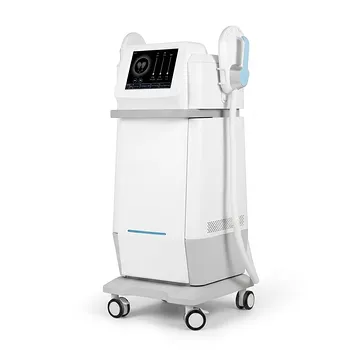
RF body sculpting and tissue-tightening devices work by converting alternating electromagnetic energy into controlled tissue heat. That heat is shaped by electrode configuration, tissue impedance, power, treatment time, and probe movement. The intended result is volumetric heating of the dermis and subcutaneous tissue—supporting collagen contraction and remodeling while, in body-contouring applications, thermally affecting adipose tissue—without allowing the epidermis or deeper structures to overheat.
The central control problem is not simply generating heat; it is delivering the right temperature at the right depth for the right duration. Effective systems combine controlled RF delivery, tissue-contact monitoring, cooling or heat dissipation, and real-time temperature or impedance feedback to reduce hot spots and thermal injury.
How RF Energy Produces Tissue Heating
Alternating current creates resistive heating
RF devices pass high-frequency alternating electrical energy through tissue. As ions and charged molecules respond to the changing electrical field, tissue resistance—or impedance—converts part of the electrical energy into heat.
This differs from laser treatment, which depends on optical absorption by selected chromophores. RF produces broader three-dimensional bulk heating, with depth governed primarily by the electrical field, electrode arrangement, tissue properties, and device settings.
Tissue impedance shapes energy distribution
Electrical impedance is not uniform throughout the body. Skin, fat, connective tissue, and muscle differ in water content, conductivity, and structure, so they interact with RF energy differently.
As tissue heats, its impedance can also change. This is why advanced systems monitor impedance or temperature rather than relying only on a fixed power setting.
Adipose heating is influenced by tissue properties
Subcutaneous fat can retain heat relatively effectively because of its tissue characteristics and comparatively limited heat transfer. However, RF does not automatically isolate fat from every other tissue layer.
The actual distribution of heating depends on electrode geometry, frequency, power, contact quality, tissue thickness, motion, and the treatment protocol. Claims of selective fat heating should therefore be understood as controlled preferential heating, not perfect tissue selectivity.
How Device Geometry Controls Treatment Depth
Monopolar RF reaches deeper tissue volumes
Monopolar systems use an active treatment electrode and a return electrode positioned elsewhere on the body. The electrical field travels through a larger tissue volume, allowing treatment of deeper dermal and subdermal layers.
The trade-off is that energy distribution can be less spatially confined. Careful grounding, coupling, power control, and temperature monitoring are therefore important.
Bipolar RF concentrates energy between electrodes
Bipolar systems place both electrodes within or near the applicator. RF energy is concentrated in the tissue between them, generally producing a more localized and predictable heating pattern.
This configuration can improve control of treatment depth, although the effective depth remains dependent on electrode spacing, tissue anatomy, and device design.
Multipolar and moving applicators distribute heating
Systems with multiple electrodes or moving probes can distribute energy across a broader treatment zone. Probe motion also helps prevent excessive dwell time at a single location.
Uniform coverage is essential because uneven contact or slow movement can produce localized hot spots even when the average treatment temperature appears acceptable.
How Heat Produces Tightening and Remodeling
Existing collagen contracts during heating
Controlled heating changes the structure of collagen fibrils and can produce immediate collagen contraction. This may create an early sensation or appearance of firmness, although the visible result is often modest at first.
The response depends on the temperature reached, exposure duration, tissue depth, and the individual’s baseline collagen structure.
Fibroblasts support longer-term remodeling
Thermal stimulation can activate dermal fibroblasts, which are involved in producing collagen and other extracellular-matrix components. The resulting remodeling develops progressively rather than appearing entirely during the treatment session.
This is why RF tightening is generally evaluated over time, not solely by immediate post-treatment contraction.
Body contouring combines tissue heating with tightening
In body applications, RF heating may be used to affect localized adipose tissue while also heating the dermis and connective septa. This can improve the appearance of lax skin over a treated contour.
RF should not be treated as a universal substitute for surgical fat removal. Its practical effect depends on the amount of adipose tissue, skin laxity, treatment area, and the device’s energy and thermal-control capabilities.
The Thermal Controls That Govern Performance
Surface temperature protects the epidermis
The epidermis is often the most immediately vulnerable layer because it is closest to the applicator and may receive concentrated surface energy. Systems commonly target controlled surface temperatures in the approximate 38°C to 42°C range, depending on the device and protocol.
Surface temperature is not the same as the temperature at the therapeutic target. A device may need to heat deeper tissue while preventing the skin surface from exceeding its safety limit.
Subdermal temperature determines therapeutic exposure
The desired subdermal temperature depends on the treatment objective and equipment design. The primary reference identifies maintaining subdermal temperatures below safety thresholds such as 47°C, while some systems use controlled target ranges around 40°C to 45°C.
These values should not be treated as universal prescriptions. Temperature at the electrode, skin surface, dermis, fat, and deeper tissue can differ substantially, and the clinically relevant target is device- and anatomy-specific.
Exposure time is as important as peak temperature
Thermal injury depends on the combination of temperature and duration. A short exposure to a higher temperature and a longer exposure to a lower temperature may produce different biological effects.
Consequently, safe RF control requires managing power, dwell time, pulse duration, treatment passes, and probe movement, not merely watching a single temperature number.
Sensors provide feedback during treatment
Modern professional systems may use integrated temperature sensors, impedance monitoring, contact detection, and automatic power modulation. These controls can reduce output when the tissue approaches a programmed limit or when coupling becomes unsafe.
Feedback is more reliable than fixed-output delivery because tissue thickness, hydration, pressure, and impedance vary across the treatment area.
Cooling protects the treatment surface
Some applicators cool or otherwise dissipate heat at the skin interface. This allows energy to be delivered to deeper tissue while reducing epidermal temperature and discomfort.
Cooling does not eliminate risk. Excessive cooling can reduce the therapeutic temperature in the target layer, while insufficient cooling can allow surface temperatures to rise too far.
How RF Systems Avoid Localized Overheating
Energy uniformity prevents hot spots
Uneven RF delivery can result from poor contact, air gaps, irregular anatomy, damaged coupling media, or holding the applicator stationary for too long. A uniform electrical field and consistent applicator motion help distribute heat across the intended zone.
Probe ergonomics are therefore part of thermal safety, not merely a usability feature.
Impedance changes can signal treatment conditions
As tissue heats and changes electrically, impedance feedback can help the system identify shifts in coupling or tissue response. The device may then adjust power, terminate delivery, or alert the operator.
Impedance monitoring is most effective when combined with temperature measurement and appropriate operator technique.
Thermal mapping is more useful than a single reading
A single surface sensor cannot fully describe the temperature throughout a three-dimensional tissue volume. Advanced control strategies therefore seek to manage both the measured surface condition and the expected subdermal heating pattern.
This is particularly important for body sculpting, where tissue thickness and composition can vary substantially within the same treatment area.
Understanding the Trade-offs
Higher heat may increase biological effect and risk
Greater thermal exposure can increase collagen contraction or tissue disruption, but it also narrows the margin between therapeutic heating and injury. Excessive temperatures can cause pain, burns, seromas, or skin necrosis.
Reported collagen-denaturation thresholds around 60°C and above describe tissue-level thermal effects, not a general treatment target for the skin surface. Intentionally reaching such temperatures without precise depth control would increase risk.
Deeper penetration reduces direct visual feedback
RF can heat tissue beneath an intact skin surface, which is one of its advantages. However, the operator cannot directly see the temperature or tissue response at every depth.
This makes calibrated equipment, real-time feedback, appropriate protocols, and continuous applicator movement essential.
“Non-invasive” does not mean risk-free
RF does not remove the possibility of thermal injury. Poor coupling, excessive energy, inadequate cooling, repeated passes, or treating over vulnerable anatomy can produce adverse events.
The safety profile depends on both the device’s control system and the operator’s execution.
Results vary between devices and patients
Frequency, electrode layout, power range, sensor placement, cooling method, and software controls differ across platforms. Patient factors—including tissue thickness, hydration, fibrosis, skin sensitivity, and anatomy—also affect heating.
Performance claims should therefore be compared using actual thermal-control specifications and clinical outcomes rather than the label “RF” alone.
Making the Right Choice for Your Goal
The most relevant evaluation criteria depend on whether the priority is tightening, contouring, safety, or operational consistency.
- If your primary focus is skin tightening: Prioritize controlled dermal heating, stable surface-temperature management, and a protocol designed to support both immediate collagen contraction and longer-term remodeling.
- If your primary focus is body contouring: Evaluate how the system distributes energy through subcutaneous tissue and whether it combines contour-focused heating with reliable skin-surface protection.
- If your primary focus is safety: Look for real-time temperature and impedance monitoring, automatic power modulation, contact detection, and clear thermal cutoff limits.
- If your primary focus is consistent results: Favor systems with uniform energy delivery, temperature mapping or multi-point sensing, ergonomic applicators, and protocols that control movement and exposure time.
- If your primary focus is minimizing discomfort and downtime: Assess surface cooling, treatment-temperature stability, and the device’s ability to avoid sudden thermal peaks rather than relying only on low average power.
RF performance is governed by controlled thermal engineering: the best system is the one that places predictable heat in the intended tissue layer while continuously protecting everything around it.
Summary Table:
| Mechanism/Control | Role | Key Considerations |
|---|---|---|
| Alternating current | Generates heat through tissue resistance | Power, frequency, and time determine tissue heating |
| Electrode configuration | Determines depth and distribution | Monopolar deeper, bipolar more localized, multipolar distributes heat |
| Impedance monitoring | Adjusts energy to tissue changes | Prevents hot spots and ensures consistent coupling |
| Temperature sensors | Provide real-time feedback on thermal exposure | Surface vs. subdermal temperatures differ; use multiple sensors |
| Cooling | Protects epidermis | Reduces surface temperature while allowing deeper heating |
| Exposure time | Balances thermal effect with safety | Short high temp vs. long low temp; manage dwell time and motion |
| Power modulation | Automatically adjusts output | Responds to impedance and temperature changes |
Take your RF body sculpting to the next level with BELIS's advanced systems, designed for precise thermal control and consistent results. Whether you're a clinic or premium salon, our diode lasers, multipolar RF, and cooling solutions help you safely deliver effective tightening and contouring. Contact our experts today to find the perfect device for your practice and enhance your patients' outcomes. Get in touch now!
Related Products
- Ultrasonic Cavitation Radiofrecuency Machine for Body Slimming
- Ultrasonic Cavitation Machine Lipo Laser Device
- EMS Body Sculpting Slimming Machine EMSlim Body Slimming Machine
- EMSlim Neo Nova Body Sculpting EMS Sculpting Machine
- EMSlim RG Laser Body Sculpting and Slimming Machine
People Also Ask
- What are the pros and cons of the ultrasonic cavitation slimming treatment? A Guide to Painless Body Contouring
- Does an ultrasonic cavitation machine also tighten the skin? Achieve Total Body Contouring with RF Synergy
- How does radiofrequency technology in slimming machines promote fat reduction? The Science of Non-Invasive Sculpting
- How should one prepare for an ultrasonic cavitation appointment? 5 Essential Tips for Maximum Fat Loss Results
- What is an ultrasonic cavitation machine? Sculpt Your Body with Advanced Non-Invasive Fat Reduction