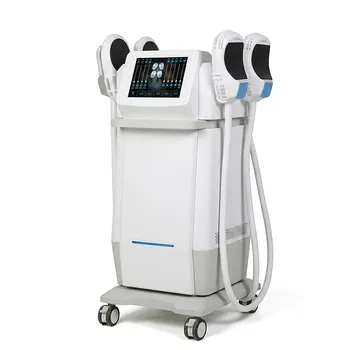
Monopolar and temperature-controlled RF devices tighten tissue by converting high-frequency electromagnetic energy into controlled internal heat. This heat reaches the dermis and, depending on device design and treatment parameters, deeper subdermal or SMAS-related tissues. It causes immediate collagen-fiber contraction while stimulating fibroblasts to produce new collagen and elastin, supporting progressive skin tightening; in some body-contouring applications, sufficient subcutaneous heating can also reduce localized fat volume.
The central mechanism is controlled volumetric heating: RF energy contracts existing collagen immediately, triggers longer-term tissue remodeling, and may thermally affect subcutaneous fat to improve contour definition.
How RF Energy Produces Tissue Tightening
RF energy creates internal thermal energy
RF devices deliver high-frequency alternating electrical energy through tissue. The resulting electromagnetic field causes charged or polar molecules to oscillate, producing heat within the targeted tissue rather than relying only on surface heating.
This is why RF can affect deeper layers than treatments that primarily act at the skin surface.
Heat reaches the dermal and subdermal layers
Monopolar RF generally uses a treatment electrode and a return pathway to direct energy through a larger tissue volume. The energy can heat the dermis, subcutaneous tissue, and, depending on the system and application, deeper connective-tissue structures.
Temperature-controlled systems use sensors, feedback algorithms, or energy modulation to maintain the intended thermal range and reduce the risk of excessive heating.
Existing collagen contracts immediately
When collagen is heated to a therapeutic range, its organized molecular structure changes and the fibers contract and thicken. This produces an early tightening effect, although the visible result may continue to evolve after treatment.
The exact tissue response depends on energy delivery, temperature, exposure time, tissue composition, and the device’s treatment geometry.
How RF Stimulates Longer-Term Remodeling
Fibroblasts respond to controlled thermal stress
Controlled heating activates a wound-healing and remodeling response in the skin. Fibroblasts—the cells responsible for producing structural proteins—are stimulated to synthesize new collagen and elastin.
This process is called neocollagenesis and elastin remodeling.
Dermal structure becomes denser over time
As new structural proteins are produced and existing collagen is reorganized, the dermis can become thicker and more supportive. This can improve laxity, surface texture, and the appearance of fine wrinkles.
The longer-term effect develops gradually rather than appearing entirely at the time of treatment.
How RF Can Support Body Contouring
Subcutaneous heating can affect localized fat
In body applications such as the abdomen, upper arms, and submental region, RF energy may heat subcutaneous adipose tissue and connective-tissue septa. With appropriate treatment parameters, this can damage or alter some localized fat cells and contribute to a reduction in treated volume.
However, skin tightening and fat reduction are separate biological effects. Not every RF device or treatment protocol is designed to produce meaningful fat reduction.
Tightening improves contour definition
When lax skin is tightened while localized fat volume is reduced, the treated area may appear firmer and more defined. The contouring effect therefore comes from the combination of tissue contraction, connective-tissue remodeling, and—where applicable—fat-volume reduction.
RF is not equivalent to surgical excision or liposuction, and results depend strongly on the amount of laxity and adipose tissue present.
Why Temperature Control Matters
Therapeutic heating must be precise
RF effectiveness depends on delivering enough heat to stimulate collagen remodeling without causing unintended tissue injury. Devices therefore aim to control both the depth and duration of heating.
Temperature monitoring and energy adjustment help maintain a consistent treatment effect across different tissue regions.
Surface temperature does not represent every tissue layer
A comfortable or controlled epidermal temperature does not necessarily reveal the temperature in the deeper dermis or subcutaneous tissue. Effective systems must account for energy distribution throughout the treated volume, not only the skin surface.
This is particularly important when treating areas with varying tissue thickness or composition.
Understanding the Trade-offs
Results are gradual and variable
Immediate collagen contraction can provide early firmness, but new collagen production and remodeling take time. The degree of improvement varies with age, baseline laxity, tissue thickness, treatment settings, and the number of sessions.
RF does not remove substantial excess skin
RF may improve mild to moderate laxity, but it cannot replicate the removal of significant excess skin achieved through surgery. Patients with pronounced skin folds or major tissue redundancy may require a different treatment approach.
Fat reduction is device- and protocol-dependent
Claims about fat disruption should not be generalized to all monopolar or temperature-controlled RF systems. The outcome depends on energy density, treatment temperature, exposure time, applicator design, and whether the device was specifically engineered and cleared for body contouring.
Excessive heating can cause harm
Poor temperature control, uneven energy delivery, or inappropriate settings can increase the risk of burns, pain, unwanted fat changes, or other tissue injury. Treatment should therefore be performed with a device-specific protocol and appropriate thermal monitoring.
Making the Right Choice for Your Goal
The mechanism is consistent, but the expected outcome should match the device’s design and the tissue problem being treated.
- If your primary focus is skin tightening: Choose a system capable of controlled dermal or deeper-layer heating that supports immediate collagen contraction and longer-term collagen remodeling.
- If your primary focus is body contouring: Confirm that the device and protocol are specifically intended to affect subcutaneous fat as well as tighten overlying skin.
- If your primary focus is treatment safety: Prioritize systems with reliable temperature monitoring, feedback control, and uniform energy delivery.
- If your primary focus is major excess skin or substantial fat removal: Recognize that RF may provide limited improvement and is not a substitute for surgical excision or liposuction.
RF contouring works by controlling heat where tissue remodeling and, in some applications, localized fat disruption can improve firmness and shape.
Summary Table:
| Mechanism | Description |
|---|---|
| Controlled Volumetric Heating | RF energy heats dermal and subdermal tissues internally, causing immediate collagen contraction and stimulating new collagen/elastin production. |
| Immediate Tissue Tightening | Thermal energy contracts existing collagen fibers, providing early firmness and visible lifting. |
| Long-Term Remodeling | Fibroblasts respond to thermal stress, producing new collagen and elastin over weeks to months, improving skin density and texture. |
| Localized Fat Reduction | In specific body applications, subcutaneous heating can partially destroy fat cells, reducing localized volume in areas like abdomen and submental region. |
| Temperature Control | Feedback systems maintain optimal thermal range to ensure efficacy while minimizing risks like burns, ensuring safety and consistency. |
Ready to elevate your clinic's aesthetic offerings? BELIS offers professional-grade RF devices engineered for maximum safety and efficacy, featuring advanced temperature-control technology. Our portfolio includes monopolar RF systems for skin tightening and body contouring, tailored for clinics and premium salons. Unlock new revenue streams with our FDA-cleared equipment and comprehensive OEM/ODM support. Partner with BELIS to enhance patient satisfaction and grow your practice. Contact our experts today for a personalized consultation!
Related Products
- Ultrasonic Cavitation Radiofrecuency Machine for Body Slimming
- IPL SHR+Radio frecuency machine
- RF Microneedling Machine Micro Needle Radio Frequency Machine
- RF Microneedling Machine Micro Needle Radio Frequency Machine
- EMS Body Sculpting Slimming Machine EMSlim Body Slimming Machine
People Also Ask
- What are the pros and cons of the ultrasonic cavitation slimming treatment? A Guide to Painless Body Contouring
- Does an ultrasonic cavitation machine also tighten the skin? Achieve Total Body Contouring with RF Synergy
- How does radiofrequency technology in slimming machines promote fat reduction? The Science of Non-Invasive Sculpting
- How should one prepare for an ultrasonic cavitation appointment? 5 Essential Tips for Maximum Fat Loss Results
- What areas of the body are targeted for ultrasonic cavitation? Best Zones for Effective Body Contouring