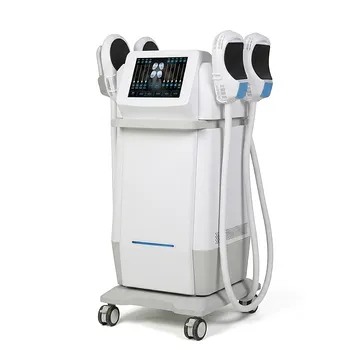
In professional RF aesthetic devices, tissue impedance and cooling work together to influence where heat is deposited. RF current generates heat as it encounters electrical resistance, while tissue temperature changes that resistance—typically, warmer tissue becomes less impedance-heavy. Active surface cooling keeps the epidermis colder and relatively more resistant, encouraging a greater proportion of RF energy to reach deeper dermal or subcutaneous tissues; however, penetration depth is also controlled by frequency, electrode design, power, contact, hydration, and treatment technique.
Core takeaway: Active cooling does not create a fixed RF penetration depth by itself. It helps protect the epidermis and can shift current distribution away from the cooled surface, while the device’s electrical configuration and treatment parameters determine how deep and how broadly the tissue is heated.
How Tissue Impedance Controls RF Heating
RF energy is converted into heat by resistance
The thermal effect of RF is commonly expressed through the Joule-heating relationship:
[ Q = I^2Rt ]
Here, Q is generated heat, I is current, R is tissue resistance or impedance, and t is application time.
This means that heat depends on more than the device’s power setting. Current density, tissue impedance, exposure time, electrode geometry, and tissue composition all affect the final temperature distribution.
Different tissues conduct RF differently
Blood and hydrated tissue generally conduct electrical current more readily than dry skin or adipose tissue. Representative conductivity values include approximately 0.7 S/m for blood, 0.25 S/m for wet skin, and 0.02–0.03 S/m for adipose tissue, although actual values vary with temperature, frequency, hydration, and measurement method.
Conductivity and impedance are related but not interchangeable terms: higher conductivity generally means lower electrical impedance for a given geometry. Tissue layers therefore do not respond uniformly when RF current passes through them.
Heat distribution is not determined by impedance alone
A high-impedance region can generate substantial local heating because it resists current flow. At the same time, current tends to favor more conductive pathways, particularly when tissues are arranged in parallel.
For this reason, it is inaccurate to say simply that RF always heats either the highest- or lowest-impedance tissue. The result depends on the complete electrical circuit, including electrode placement, tissue geometry, coupling, and the device’s control mode.
Why Active Surface Cooling Can Shift Heating Deeper
Cooling preserves higher superficial impedance
Tissue impedance generally falls by about 1.5–2% per 1 °C temperature increase before coagulation-related changes occur. If the epidermis warms, it becomes electrically less resistant and may accept a greater share of the current.
Active contact cooling or cryogen spray keeps the superficial skin colder. This helps maintain relatively higher epidermal impedance compared with warmer underlying tissues.
Cooling protects the epidermis while changing current distribution
A cooled superficial layer can act as an electrical and thermal buffer. In suitable electrode configurations, the RF field is distributed preferentially toward deeper conductive tissue rather than concentrating at the surface.
The result is greater protection of the epidermis and the potential for more effective dermal or subcutaneous heating. Cooling does not guarantee that all RF energy bypasses the surface, and it does not eliminate the need for controlled contact and temperature monitoring.
Cooling is not the same as increasing nominal penetration
Active cooling does not mechanically push RF energy to a specified depth. Instead, it changes the surface’s thermal and electrical conditions, which can alter the current path and the location of peak heating.
The achievable treatment depth remains dependent on the device’s frequency, electrode configuration, power, pulse duration, coupling medium, and movement pattern.
How Penetration Depth Is Actually Determined
Frequency influences the interaction with tissue
At lower RF frequencies, heating is driven primarily by ionic current flow. At higher frequencies, including ranges around 30–40 MHz, water-dipole rotation contributes more strongly to energy absorption in water-containing soft tissue.
Frequency is therefore one important determinant of field behavior and heating distribution, but it should not be treated as a standalone depth control. The applicator and treatment protocol remain equally important.
Electrode configuration shapes the field
Monopolar systems use an active electrode and a return electrode, creating a current path through a larger tissue volume. Other configurations concentrate energy between or around treatment electrodes and can produce more localized or superficial fields.
The distance and geometry between electrodes strongly influence where current density—and therefore heating—will be greatest.
Power, duration, and movement alter the thermal zone
Higher power and longer exposure generally increase tissue temperature, but they can also increase the risk of hot spots if energy delivery is poorly controlled. Stationary application concentrates energy in one region, whereas continuous movement spreads exposure across a wider area.
Penetration depth should therefore be understood as a thermal-zone outcome, not a single immutable measurement.
Hydration and coupling affect current entry
Dry skin has substantially lower conductivity than wet skin. Hydration or an appropriate coupling medium can improve electrical contact and reduce irregular current concentration at the applicator-skin interface.
Good coupling may allow more predictable energy transfer, but it does not necessarily mean that RF will travel uniformly or deeper in every device. The effect depends on the electrical design and treatment pathway.
Relating Impedance to Clinical Temperature Targets
Controlled bulk heating
Protocols intended for thermal tightening commonly aim to sustain tissue temperatures around 40–45 °C, depending on the device, treatment area, and clinical protocol. The objective is generally controlled volumetric heating rather than immediate tissue destruction.
The clinically relevant factor is the temperature reached in the intended tissue volume—not merely the temperature displayed at the surface.
Coagulation-based treatment
More aggressive protocols may target approximately 55–65 °C in selected structures to produce controlled coagulation or remodeling effects. These temperatures require careful control because the margin between therapeutic heating and unwanted injury can be narrow.
Surface cooling can help maintain a safer epidermal temperature while deeper tissues are treated, but it cannot compensate for excessive energy, poor coupling, or inappropriate application time.
Impedance changes provide feedback
As tissue warms, impedance commonly decreases before coagulation. Once structural changes and dehydration occur, impedance can change direction; near 90–100 °C, evaporation can cause a substantial impedance increase.
Professional systems may monitor voltage, current, and impedance in real time. This feedback can help detect poor contact, current concentration, excessive heating, or conditions associated with arcing and burns.
Understanding the Trade-offs
“Deeper” does not always mean “better”
Greater penetration is appropriate only when the intended target is deeper. For facial or superficial tightening, excessive subcutaneous heating may increase the risk of unwanted tissue effects without improving the desired outcome.
The correct goal is controlled heating at the target depth, not maximum depth.
Cooling can obscure the true treatment temperature
A cooled surface may feel comfortable or remain within a safe temperature range while deeper tissue is substantially warmer. Surface sensation and surface temperature therefore cannot reliably indicate the temperature of the entire RF treatment zone.
Devices and operators should rely on appropriate feedback, treatment parameters, and anatomical knowledge rather than comfort alone.
Improper contact can create hot spots
Uneven pressure, air gaps, insufficient coupling, damaged electrodes, or contaminated surfaces can concentrate current. These conditions may produce localized heating even when the average power appears acceptable.
Impedance monitoring and automatic power adjustment can reduce this risk, but they do not replace correct applicator placement and technique.
Tissue composition varies between patients and sites
Hydration, blood flow, skin thickness, adipose thickness, fibrosis, and anatomical geometry all influence impedance and heat dissipation. A setting that is appropriate for one body area or patient may not produce the same thermal distribution elsewhere.
Device specifications and validated protocols should therefore take precedence over generalized assumptions about depth.
Making the Right Choice for Your Goal
The relationship between impedance, cooling, and depth is best applied as a system-level decision:
- If your primary focus is epidermal safety: Use a device and protocol with effective active surface cooling, reliable skin contact, and temperature or impedance feedback; cooling should reduce superficial heating but is not an absolute guarantee against injury.
- If your primary focus is dermal tightening: Select electrode geometry, frequency, and delivery settings designed to create controlled dermal heating, typically within a bulk-heating range rather than simply maximizing power.
- If your primary focus is subcutaneous remodeling: Confirm that the applicator and field configuration are designed for the intended deeper tissue volume, because surface cooling alone does not establish subcutaneous penetration.
- If your primary focus is treatment consistency: Prioritize stable coupling, appropriate hydration, controlled applicator movement, and real-time monitoring of impedance or temperature.
- If your primary focus is risk reduction: Treat impedance changes as feedback about tissue and contact conditions, not as a substitute for validated protocols, anatomical judgment, and conservative energy control.
Understanding RF as a coupled electrical, thermal, and anatomical system allows depth and safety to be managed deliberately rather than inferred from cooling or power settings alone.
Summary Table:
| Factor | Role in RF Heating | Impact on Depth |
|---|---|---|
| Tissue Impedance | Determines heat generation via resistance; higher impedance can increase local heating | Influences current distribution; depth not solely defined by impedance |
| Active Cooling | Preserves higher surface impedance; protects epidermis | Shifts heating toward deeper tissues; does not fix depth |
| Frequency | Affects heating mechanism (ionic vs. dipole rotation) | Higher frequencies may enhance water absorption; not standalone depth control |
| Electrode Configuration | Shapes current field (monopolar vs. bipolar etc.) | Defines where current density and heating are greatest |
| Power, Duration, Movement | Control total energy delivery and thermal zone | Higher power/longer duration increase heat; movement spreads exposure |
| Hydration/Coupling | Improves electrical contact and reduces hot spots | Better coupling may allow more predictable energy transfer |
Discover how BELIS professional RF systems combine precise impedance monitoring, advanced active cooling, and flexible electrode configurations to deliver controlled, target-specific heating—enhancing both safety and efficacy for your clinic. Whether you're treating for skin tightening, body contouring, or collagen remodeling, our solutions are designed for your success. Contact us today to find the perfect RF device for your practice.
Related Products
- Ultrasonic Cavitation Radiofrecuency Machine for Body Slimming
- RF Microneedling Machine Micro Needle Radio Frequency Machine
- IPL SHR+Radio frecuency machine
- Ultrasonic Cavitation Machine Lipo Laser Device
- Cryolipolysis Fat Freezing Machine and Ultrasonic Cavitation Device
People Also Ask
- What are the pros and cons of the ultrasonic cavitation slimming treatment? A Guide to Painless Body Contouring
- Does an ultrasonic cavitation machine also tighten the skin? Achieve Total Body Contouring with RF Synergy
- How does radiofrequency technology in slimming machines promote fat reduction? The Science of Non-Invasive Sculpting
- How should one prepare for an ultrasonic cavitation appointment? 5 Essential Tips for Maximum Fat Loss Results
- What is an ultrasonic cavitation machine? Sculpt Your Body with Advanced Non-Invasive Fat Reduction