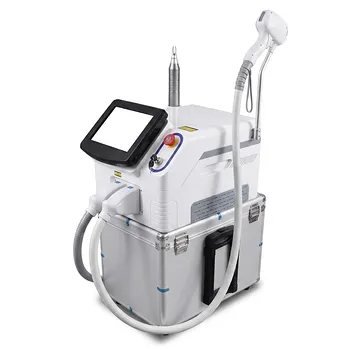
The use of 70% alcohol for pre-laser skin preparation is a critical dual-purpose protocol designed to ensure clinical safety and technical precision. It functions primarily as a disinfectant to prevent post-operative infections and as a degreasing agent to remove surface barriers—such as oils, sweat, and skincare residues—that can interfere with the laser beam. By clearing these contaminants, practitioners ensure that the laser energy penetrates the target tissue uniformly and at the intended intensity.
70% alcohol acts as both a biological safeguard and an optical clearing agent, removing pathogens and surface debris that would otherwise compromise the sterile environment or scatter the laser's energy.
The Biological Mandate: Infection Prevention
Mitigating Risk in Ablative Procedures
Ablative lasers, such as the CO2 fractional laser, function by creating micro-channels that breach the skin’s natural physical barrier. Without thorough disinfection using 70% alcohol, surface pathogens can enter these deep tissues, leading to complications like redness, swelling, or secondary infections.
Optimizing the Sterile Field
70% alcohol is the standard medical concentration for effectively neutralizing a broad spectrum of microorganisms. This step is particularly vital in protocols involving combined drug delivery, where medications are introduced through the skin immediately following laser treatment.
The Physics of Energy Delivery: Removing Optical Interference
Eliminating Energy Scattering
Surface contaminants like oils, metabolic waste, and makeup residue can scatter or non-selectively absorb laser energy. This interference prevents the beam from following its intended path, potentially leading to uneven treatment results or unintended thermal damage to the epidermis.
Ensuring Uniform Absorption
For a treatment to be effective, laser energy must act on the target lesion with consistent intensity. Degreasing the skin ensures that the laser interacts directly with the target tissue—such as the nail plate or dermal layers—without being reflected or blocked by a layer of sebum or sweat.
Enhancing Clinical Efficacy
Reducing Skin Impedance
Removing the oily "acid mantle" and debris layer reduces skin impedance, which is beneficial for the absorption of other topical agents. This is especially relevant when applying topical anesthetics prior to the procedure, as it allows the numbing agent to penetrate the stratum corneum more efficiently.
Improving Predictability of Results
A clean, dry surface allows the practitioner to rely on the calibrated parameters of the laser device. When the skin is properly prepared, the "dose" of energy delivered to the tissue matches the settings on the machine, leading to more predictable and safer clinical outcomes.
Understanding the Trade-offs and Risks
Potential for Skin Irritation and Dryness
While 70% alcohol is an effective cleanser, it is also a potent desiccant that can strip the skin of necessary moisture. In patients with compromised skin barriers or extreme sensitivity, this can lead to temporary irritation or post-treatment erythema.
The Critical Danger of Flammability
Alcohol is highly flammable, and its use in conjunction with high-energy laser devices presents a significant fire risk. It is imperative that the alcohol is allowed to evaporate completely and that the skin is bone-dry before the laser is fired to prevent accidental ignition or flash burns.
How to Apply This to Your Clinical Protocol
Integrating Preparation into the Workflow
Proper skin preparation is not merely a preliminary step but a foundational component of the treatment's success. The choice to use 70% alcohol should be balanced with the specific needs of the patient's skin type and the type of laser being utilized.
- If your primary focus is patient safety: Ensure that 70% alcohol is applied in multiple passes to achieve a truly sterile surface, especially before using ablative fractional lasers.
- If your primary focus is treatment precision: Prioritize the removal of all makeup and heavy oils to prevent the laser energy from scattering and to ensure uniform penetration.
- If your primary focus is patient comfort: Allow the alcohol to dry fully before applying topical anesthetics to maximize their penetration and reduce the overall duration of the procedure.
Effective laser therapy begins with a clean, decontaminated surface to ensure that energy delivery is as safe and predictable as possible.
Summary Table:
| Function | Clinical Purpose | Benefit for Laser Treatment |
|---|---|---|
| Disinfection | Neutralizes microorganisms | Prevents infection in ablative/micro-channel procedures |
| Degreasing | Removes oils, sweat & makeup | Eliminates energy scattering and ensures uniform absorption |
| Impedance Reduction | Strips the acid mantle | Enhances penetration of topical anesthetics and laser energy |
| Evaporation | Final dry surface | Crucial for safety to prevent flammability risks |
Elevate Your Clinic’s Standards with BELIS Professional Aesthetic Solutions
At BELIS, we understand that clinical excellence relies on both superior protocols and state-of-the-art technology. We specialize in providing professional-grade medical aesthetic equipment exclusively for clinics and premium salons worldwide.
Our advanced portfolio is designed to deliver predictable, high-performance results when paired with rigorous prep protocols:
- Advanced Laser Systems: Diode Hair Removal, Alexandrite, CO2 Fractional, Erbium, Nd:YAG, and Pico lasers.
- Skin & Face Rejuvenation: HIFU, Microneedle RF, Hydrafacial systems, and high-precision skin testers.
- Body Sculpting Excellence: EMSlim, Cryolipolysis, and RF Cavitation technologies.
- Specialized Care: Professional hair growth machines.
Ready to upgrade your treatment outcomes? Partner with BELIS for reliable equipment, comprehensive technical support, and the certifications your premium salon deserves.
Contact Our Experts Today to receive a customized quote and learn how our technology can enhance your practice’s efficiency.
References
- Indra Ginting, Mohd Ihsanuddin Bin Abas. Evaluation of Cost-Effectiveness and Patient Satisfaction of Topical, Topical Plus Systemic, and Topical Plus Laser Treatment in Patients with Acne Vulgaris High Level. DOI: 10.37899/journallamedihealtico.v6i6.2675
This article is also based on technical information from Belislaser Knowledge Base .
Related Products
- Fractional CO2 Laser Machine for Skin Treatment
- Multifunctional Laser Hair Growth Machine Device for Hair Growth
- Multifunctional Laser Hair Growth Machine Device for Hair Growth
- Clinic Use IPL SHR ND YAG Laser Hair Removal RF Skin Tightening Machine
- Clinic Use IPL and SHR Hair Removal Machine with Nd Yag Laser Tattoo Removal
People Also Ask
- What is the technical principle behind CO2 Laser Fractional micro-perforations? Master Scar Revision Mechanics
- What parameters and treatment intervals are advised when applying fractional CO2 laser technology to delicate periorbital skin laxity? Discover safe protocols for eyelid rejuvenation.
- What is the primary function of a high-precision fractional CO2 laser system for GSM? Restore Vaginal Health Naturally
- Why do fractional CO2 laser parameters need to be differentiated? Master Keloid vs. Hypertrophic Scar Treatment
- How should laser power output be adjusted based on tissue vaporization? Mastery of Fractional CO2 Precision