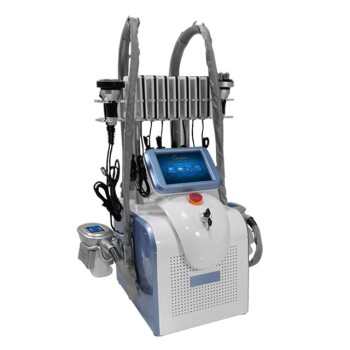
The medical-grade suction cannula with built-in optical fibers acts as the essential conduit for delivering high-precision laser energy directly to targeted adipose tissue.
In laser-assisted lipolysis, this specialized cannula serves as a transmission carrier, guiding a flexible optical fiber into the subcutaneous fat layer. As the operator moves the cannula reciprocally, the laser energy creates temporary membrane pores and liquefies fat cells, while simultaneously coagulating blood vessels to reduce trauma and bleeding.
The integration of optical fibers within a surgical cannula transforms a mechanical extraction tool into a precision energy-delivery system. This allows for the simultaneous melting of fat and the cauterization of tissue, resulting in a more refined body contouring outcome with significantly less patient downtime.
The Mechanics of Energy Delivery
Serving as a Precision Transmission Carrier
The cannula provides the necessary structural rigidity to navigate the subcutaneous environment while protecting the flexible light-guiding fiber. It ensures that the fiber, often as small as 600-μm in diameter, reaches the specific depth and location required for effective treatment.
Facilitating Fat Liquefaction and Disruption
As the cannula moves through the treatment area, the laser energy emitted from the fiber tip acts directly on adipose (fat) cells. This thermal energy disrupts cell membranes and converts solid fat into a liquid emulsion, making it significantly easier to remove or allow the body to metabolize.
Optimizing Thermal Distribution
By housing the fiber within a cannula, the practitioner can ensure that laser energy is distributed with high uniformity. The mechanical motion of the cannula prevents "hot spots" by constantly redistributing the point of energy emission throughout the targeted fat layer.
Enhancing Surgical Control and Safety
The Role of Integrated Trans-illumination
Many professional-grade fibers within the cannula feature an integrated red aiming beam. This beam provides trans-illumination through the skin, allowing the surgeon to visually track the exact position of the fiber tip in real-time.
Reducing Hemorrhage and Tissue Trauma
Unlike traditional liposuction, which relies on purely mechanical force, the laser energy delivered via the cannula coagulates small blood vessels on contact. This leads to a marked reduction in bruising, swelling, and blood loss during and after the procedure.
Promoting Tissue Tightening
The thermal energy delivered by the cannula does more than just melt fat; it also stimulates the surrounding dermal collagen. This secondary effect encourages skin retraction and tightening in the treated area, addressing the "loose skin" often associated with traditional fat removal.
Understanding the Trade-offs
Thermal Management Risks
The primary risk associated with laser-integrated cannulas is excessive heat accumulation. If the cannula remains stationary for too long or if the energy settings are too high, there is a potential for internal burns or skin necrosis.
Fiber Fragility and Maintenance
The high-precision optical fibers are delicate components that can be damaged by sharp bends or improper handling within the cannula. Ensuring the fiber is correctly seated and maintained is critical to prevent energy leaks or equipment failure during a procedure.
Increased Procedure Complexity
Using a laser-assisted cannula requires a steeper learning curve than traditional mechanical methods. Practitioners must balance the speed of cannula movement with the laser's power output to achieve consistent results without over-treating the tissue.
How to Apply This to Your Practice
The choice to utilize a cannula with built-in optical fibers depends heavily on the specific clinical goals of the procedure and the patient's anatomy.
- If your primary focus is high-definition contouring: Utilize the integrated aiming beam and small-diameter micro-cannulas to refine delicate areas like the neck, jawline, or upper arms.
- If your primary focus is minimizing patient recovery time: Prioritize the laser's coagulative properties to reduce post-operative bruising and swelling in larger treatment zones.
- If your primary focus is skin laxity: Ensure the cannula is guided through the superficial fat layers to maximize the thermal stimulation of collagen for better skin retraction.
By mastering the interface between mechanical movement and laser energy delivery, practitioners can provide a safer, more precise alternative to traditional fat reduction techniques.
Summary Table:
| Feature | Primary Role & Mechanism | Clinical Benefit |
|---|---|---|
| Energy Conduit | Houses and protects the 600-μm flexible optical fiber. | Precise delivery of laser energy to deep adipose layers. |
| Fat Liquefaction | Converts solid fat into a liquid emulsion via thermal disruption. | Easier fat removal and smoother body contouring results. |
| Hemostasis | Coagulates small blood vessels upon contact. | Minimizes bruising, swelling, and patient downtime. |
| Trans-illumination | Integrated red aiming beam tracks the fiber tip position. | Enhanced surgical control and real-time safety monitoring. |
| Collagen Stimulation | Distributes thermal energy to the surrounding dermis. | Promotes skin retraction and post-surgical tightening. |
Elevate Your Clinical Outcomes with BELIS Precision Technology
At BELIS, we specialize in providing professional-grade medical aesthetic equipment designed exclusively for clinics and premium salons. Whether you are performing high-definition laser-assisted lipolysis or advanced skin rejuvenation, our portfolio offers the reliability and precision your practice demands.
Our advanced systems include:
- Laser Solutions: Diode Hair Removal, Alexandrite, CO2 Fractional, Erbium, Nd:YAG, and Pico lasers.
- Body Sculpting: EMSlim, Cryolipolysis, and RF Cavitation systems.
- Specialized Care: HIFU, Microneedle RF, Hydrafacial systems, and advanced skin testers.
Ready to enhance your treatment precision and maximize patient satisfaction?
Contact our expert team today to find the perfect equipment solution for your business.
References
- Jong‐In Youn. A Comparison of Wavelength Dependence for Laser-assisted Lipolysis Effect Using Monte Carlo Simulation. DOI: 10.3807/josk.2009.13.2.267
This article is also based on technical information from Belislaser Knowledge Base .
Related Products
- Cryolipolysis Fat Freezing Cavitation Lipo Laser Machine
- Cryolipolysis Fat Freezing Machine with Cavitation and Laser Lipolysis
- Cryolipolysis Fat Freezing Machine Cavitation Lipo Laser Machine
- Cryolipolysis Fat Freezing Machine and Ultrasonic Cavitation Device
- IPL SHR+Radio frecuency machine
People Also Ask
- What are the main benefits of using a fat freezing machine? Achieve Permanent, Non-Surgical Body Sculpting
- Do fat freezing machines really work? Achieve Non-Invasive Body Contouring
- What are the potential side effects and risks associated with fat freezing? Safety Profile & Rare Risks Explained
- What is the treatment principle of cryolipolysis fat freezing? Science-Backed Fat Reduction and Body Contouring
- What is the recommended treatment course for different body parts using the cryolipolysis machine? Expert Fat Loss Tips