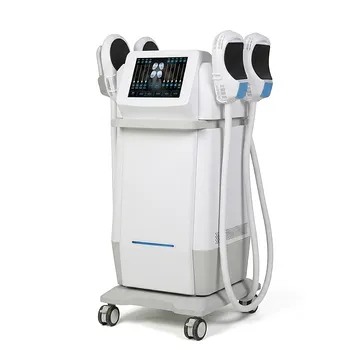
HIFU body sculpting destroys fat through precisely localized acoustic energy, while non-thermal cavitation relies primarily on mechanical disruption. HIFU transmits ultrasound through the skin and focuses it at a selected depth within subcutaneous fat. At that focal point, energy concentration rapidly raises tissue temperature, typically above approximately 55–56°C, producing localized coagulative necrosis of adipocytes. Non-thermal cavitation systems generally use lower-frequency ultrasound to form and collapse microscopic bubbles, stressing or disrupting cell membranes without intentionally creating a sustained thermal lesion.
The central difference is controlled focal ablation versus distributed mechanical action: HIFU creates precisely positioned thermal treatment zones inside fat, whereas non-thermal cavitation produces pressure-driven mechanical effects over a less sharply defined treatment field.
How HIFU Ablates Subcutaneous Fat
Ultrasound Energy Passes Through the Skin
HIFU transducers deliver acoustic energy from outside the body. The beam can pass through the epidermis and superficial dermis with limited heating when the device, coupling, treatment depth, and energy settings are properly controlled.
The system is designed to concentrate energy at a selected subcutaneous depth, such as a defined fat layer several millimeters beneath the skin. The exact frequency and focal depth vary by device, applicator, and treatment indication.
Energy Converges at a Focal Point
Before reaching the focus, the ultrasound energy is distributed across the beam path. At the focal zone, many wavefronts converge, producing a much greater local energy density than in the intervening tissue.
This focusing principle allows HIFU to create treatment points or lines within fat while limiting exposure to adjacent skin and non-target structures. The result resembles placing heat precisely inside a material rather than heating its entire surface.
Focal Heating Causes Coagulative Necrosis
At sufficient intensity, the focal temperature rises rapidly above the threshold required for irreversible protein and cellular damage. Adipocytes in the treated volume undergo coagulative necrosis, meaning the cells are destroyed by localized thermal injury.
HIFU may also produce secondary mechanical stress at the focal point, but the defining body-sculpting mechanism described here is controlled thermal ablation. The device’s clinical effect depends on maintaining the intended temperature, exposure time, treatment depth, and focal pattern.
The Body Clears the Treated Material
Following adipocyte injury and tissue remodeling, cellular debris and released lipid material are gradually processed through normal inflammatory, lymphatic, and metabolic pathways. This clearance is not equivalent to physically removing fat through liposuction.
HIFU reduces localized fat deposits by destroying targeted cells, but it does not prevent remaining adipocytes from enlarging if overall energy balance later promotes weight gain.
How Non-Thermal Cavitation Works
Lower-Frequency Waves Create Pressure Changes
Non-thermal cavitation systems commonly operate at lower frequencies than many focused HIFU applicators. A frequency around 220 kHz is a representative example, but specifications differ across systems.
The ultrasound alternates between compression and rarefaction. These pressure changes can cause microscopic gas-containing cavities, or cavitation bubbles, to form in susceptible tissue or fluid environments.
Bubble Activity Produces Mechanical Stress
When cavitation bubbles oscillate or collapse, they generate local shear forces, pressure transients, and fluid movement. These effects can stress adipocyte membranes and alter the surrounding tissue mechanically.
The intended action is mechanical disruption rather than deliberate thermal coagulation. Therefore, the treatment is generally characterized as non-thermal when operated within parameters intended to avoid meaningful bulk tissue heating.
The Treatment Effect Is Less Focally Ablative
Cavitation does not use the same sharply defined focal thermal lesion as HIFU. Its biological effect depends on acoustic frequency, intensity, pulse pattern, tissue composition, bubble behavior, and the system’s applicator design.
This can make cavitation useful for non-invasive body-contouring approaches, but it also means the treatment should not be described as identical to surgical fat removal or as equivalent to HIFU’s focal ablation mechanism.
HIFU and Cavitation Compared
Primary Mechanism
HIFU concentrates acoustic energy to generate high temperatures at a predetermined focal zone. Its principal effect is localized thermal coagulation and adipocyte destruction.
Non-thermal cavitation generates pressure-driven bubble activity. Its principal effect is mechanical membrane stress or disruption without intentionally heating the tissue to the temperatures used for HIFU ablation.
Precision and Depth Control
HIFU is designed around focal depth and energy convergence. This enables treatment planning around specific subcutaneous fat layers while reducing direct exposure to the epidermis and limiting effects outside the focal region.
Cavitation systems generally act through an acoustic field rather than a discrete thermal focus. Their depth and distribution are determined by the transducer and treatment parameters, so the field may be broader or less sharply localized.
Effect on Surrounding Structures
With appropriate settings and technique, HIFU leaves the tissue along the beam path relatively unaffected while concentrating injury at the focus. The skin, superficial tissues, blood vessels, and nerves are not intended to be the treatment targets.
Cavitation is also non-invasive, but mechanical effects can extend beyond individual fat cells depending on the acoustic field. Applicator selection, coupling, anatomical location, and operating parameters remain important for protecting non-target tissue.
Potential Skin-Tightening Component
HIFU’s localized thermal effect can also stimulate contraction and remodeling of collagen-containing tissue. This may provide a secondary skin-tightening or tissue-firming effect in addition to fat reduction.
Non-thermal cavitation does not provide the same direct thermal stimulus for collagen remodeling. Any contouring effect is therefore primarily associated with the mechanical treatment and subsequent tissue response.
Understanding the Trade-offs
Precision Does Not Eliminate Treatment Risk
HIFU’s focal design improves control, but excessive energy, incorrect depth selection, poor coupling, or inappropriate treatment over thin fat layers can cause unwanted pain or injury. Precise targeting depends on device calibration, anatomical assessment, and trained operation.
The fact that the skin is not the intended target does not mean it is completely immune to damage. Energy can be misdirected or insufficiently controlled.
Non-Thermal Does Not Mean Biologically Inactive
Cavitation avoids intentional thermal ablation, but bubble activity still creates mechanical forces. Improper settings or treatment over unsuitable anatomy may produce unwanted tissue effects.
“Non-thermal” describes the intended dominant mechanism, not an absence of all energy deposition or all possible heating.
Fat Reduction Is Not Weight-Loss Treatment
Both approaches are intended for localized contouring rather than general weight reduction. They address selected fat deposits and cannot substitute for management of overall body weight, metabolic health, or lifestyle factors.
Results also depend on the amount of target fat, treatment parameters, biological clearance, and patient selection.
Frequency Alone Does Not Define the Technology
A lower frequency often supports stronger mechanical cavitation effects, while focused systems use acoustic focusing and sufficient intensity to create a thermal lesion. However, frequency by itself does not determine the complete mechanism.
Intensity, duty cycle, pulse duration, focusing geometry, cooling, applicator design, and treatment depth must be evaluated together when comparing equipment.
Claims About Clearance Should Be Framed Carefully
Destroyed adipocytes and tissue debris are handled progressively by the body’s normal inflammatory, lymphatic, and metabolic processes. The exact route and timing of clearance are biologically complex and should not be reduced to the claim that all released triglycerides simply travel directly to the liver.
This distinction matters when evaluating marketing claims about speed, predictability, and magnitude of contour change.
How to Apply This to Your Project
The appropriate system depends on whether the goal is focal thermal ablation, primarily mechanical cavitation, or a treatment protocol that combines different modalities.
- If your primary focus is precise localized fat ablation: Choose a properly validated HIFU system with controlled focal depth, calibrated energy delivery, and treatment parameters suited to the available fat layer.
- If your primary focus is non-thermal mechanical contouring: Evaluate cavitation equipment by its acoustic field, operating frequency, intensity, pulse pattern, and evidence for the specific treatment outcome rather than by frequency alone.
- If your primary focus is skin tightening alongside fat reduction: HIFU may offer an additional thermal collagen-remodeling effect that non-thermal cavitation is not designed to provide.
- If your primary focus is patient safety and predictable outcomes: Prioritize validated indications, operator training, anatomical screening, device calibration, and clear contraindication protocols over headline power or frequency specifications.
The practical distinction is straightforward: HIFU uses focused thermal energy to ablate fat at a defined depth, while non-thermal cavitation uses acoustic pressure and bubble dynamics to mechanically disrupt tissue without creating the same thermal lesion.
Summary Table:
| Aspect | HIFU (High-Intensity Focused Ultrasound) | Non-Thermal Cavitation |
|---|---|---|
| Primary Mechanism | Localized thermal coagulation via focused ultrasound | Mechanical disruption via bubble collapse |
| Temperature | High (>55°C) at focal point | Minimal temperature increase |
| Precision | High (focal zone) | Moderate (broader field) |
| Depth Control | Precise and adjustable | Variable, less predictable |
| Tissue Effect | Coagulative necrosis of adipocytes | Mechanical stress on cell membranes |
| Skin Tightening | Possible (collagen remodeling) | Not typically |
| Best for | Targeted fat reduction, some skin tightening | General contouring |
Are you ready to enhance your practice with advanced HIFU technology? At BELIS, we specialize in professional-grade medical aesthetic equipment for clinics and premium salons. Our HIFU systems offer precise, non-invasive fat reduction and skin tightening, backed by reliable OEM/ODM support and international certifications. Whether you're seeking to expand your service menu or boost profitability, our solutions are tailored to your clinic's needs. Contact us today to discuss how our FDA-approved devices can elevate your business and attract more clients. Get in touch with our experts!
Related Products
- 7D 12D 4D HIFU Machine Device
- 22D HIFU Machine Device Facial Machine
- 4D 12D HIFU Machine Device for Skin Tightening and Lifting
- EMS Body Sculpting Machine for Body Slimming and Sculpting
- 12D HIFU Machine Device for Facial HIFU Treatment
People Also Ask
- What is the mechanism of action of High-Intensity Focused Ultrasound (HIFU) devices in noninvasive body sculpting, and how is surrounding tissue protected?
- What are the main functions of a High Intensity Focused Ultrasound (HIFU) machine? Advanced Skin Lifting and Sculpting
- What is the mechanism of action and anatomical target layer of High-Intensity Focused Ultrasound (HIFU) in non-invasive skin tightening procedures? Achieve Precise Lifting with Targeted HIFU Technology
- What is the operating principle of HIFU in non-invasive facial lifting? The Science of Precision SMAS Targeting
- Why is a HIFU device essential for non-invasive facial lifting? Discover the Power of Deep SMAS Layer Targeting