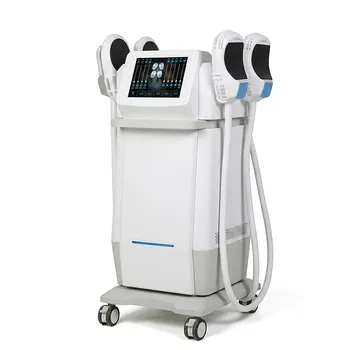
Volumetric RF deep dermal heating is an adjunctive, non-invasive treatment for submental fullness, skin laxity, and neck aging. It delivers controlled thermal energy to the deep dermis and subdermal tissue, producing immediate collagen contraction and stimulating longer-term collagen remodeling. Stacked RF pulses may also support a localized lipolytic effect, but the primary clinical role is tissue tightening and contour refinement, not the removal of substantial fat volumes.
Volumetric RF is most useful when submental aging is driven by a combination of mild-to-moderate laxity, limited fat accumulation, and reduced dermal support. It can improve the skin envelope and jawline definition, while neuromodulation may address the separate problem of dynamic platysmal band activity.
What Volumetric RF Addresses
Deep dermal laxity
RF energy passes through the epidermis to generate controlled heating within the dermal and subdermal layers. This can contract existing collagen fibers and stimulate fibroblast activity, supporting new collagen formation over the following weeks and months.
The clinical result is gradual improvement in skin firmness, texture, and tissue drape rather than an instant surgical-style lift.
Submental contour irregularity
Stacked RF pulses over the submental region concentrate thermal exposure within the treatment area. This may improve contour by combining dermal contraction with a localized lipolytic effect on small submental fat pockets.
RF is therefore best suited to modest fullness accompanied by lax skin. It is not equivalent to surgical fat excision or a dedicated fat-reduction procedure for large-volume adiposity.
Neck and jawline definition
Improving the tightness of the submental skin envelope can sharpen the transition between the neck, chin, and lower face. The effect is usually one of refinement rather than dramatic repositioning of descended tissue.
Treatment planning must distinguish whether poor jawline definition is caused primarily by fat, lax skin, platysmal activity, skeletal structure, or combinations of these factors.
How the Clinical Effect Is Produced
Controlled volumetric heating
RF devices use high-frequency electrical energy to generate heat through tissue impedance. The therapeutic objective is to heat the target tissue in a controlled and sufficiently uniform manner while protecting the skin surface.
The treatment response depends on the device, applicator, energy settings, tissue characteristics, treatment technique, and temperature monitoring. A single temperature range should not be treated as universally appropriate across all RF platforms.
Immediate collagen contraction
Thermal exposure changes the structure of existing collagen fibers, producing an initial degree of tissue contraction. This early effect can provide some immediate firmness, although visible remodeling generally develops progressively.
Immediate contraction should not be confused with the full clinical outcome. The longer-term benefit depends on the subsequent biological remodeling response.
Delayed neocollagenesis
After treatment, the controlled thermal stimulus activates a wound-healing response and supports new collagen production. This can increase dermal density and improve skin quality over time.
Patients should therefore be counseled that RF tightening is typically progressive, with results assessed after an appropriate remodeling interval rather than immediately after the procedure.
Why Combination Treatment Can Be Clinically Useful
RF treats lax tissue; neuromodulation treats muscle activity
Platysmal bands contribute to neck aging through dynamic muscle contraction and downward or lateral traction. Neuromodulators can reduce this hyperkinetic activity, whereas RF primarily addresses the skin and subdermal tissue.
These treatments target different anatomical mechanisms. Combining them may produce a more complete result when both platysmal activity and tissue laxity are clinically significant.
Sequencing can address multiple contributors
A treatment plan may use neuromodulation to reduce dynamic banding and volumetric RF to tighten the overlying tissue and refine the submental contour. The exact sequence, interval, and dosing must be determined by a qualified clinician according to the product, device, anatomy, and treatment protocol.
The combination should be presented as complementary, not as proof that either modality alone is inadequate.
Patient selection remains decisive
The strongest candidates generally have mild-to-moderate laxity, limited-to-moderate submental fullness, and realistic expectations about gradual improvement. They must also understand that RF cannot fully correct substantial skin excess, marked fat accumulation, or prominent structural causes of neck contouring problems.
A clinical assessment should evaluate skin quality, fat distribution, platysmal activity, chin projection, jaw anatomy, and prior procedures before selecting treatment.
Understanding the Trade-offs
It is not a non-surgical facelift
RF can contract and remodel tissue, but it does not reproduce the repositioning and excision capabilities of a surgical neck lift or facelift. Patients with substantial skin excess or advanced tissue descent may experience limited improvement.
Presenting RF as a replacement for surgery creates unrealistic expectations and undermines appropriate treatment selection.
Fat reduction is limited and variable
The possible lipolytic contribution of stacked RF pulses is most relevant to localized, modest submental fullness. Results may be less predictable when adiposity is substantial, fibrotic, anatomically deep, or driven by factors that thermal treatment cannot correct.
RF should not be selected solely because a patient wants major fat removal.
Results develop gradually
Collagen remodeling requires time, and the degree of improvement varies among patients. Some individuals may require a treatment series or maintenance treatments, depending on the platform and clinical protocol.
The absence of an immediate dramatic change does not necessarily indicate treatment failure, but it does require appropriate follow-up and outcome assessment.
Safety depends on energy control and anatomy
Excessive or poorly distributed heating can cause pain, burns, unintended tissue injury, or contour irregularity. Device-specific training, appropriate energy delivery, cooling or temperature control where applicable, and careful avoidance of vulnerable structures are essential.
RF is non-invasive in the sense that it does not require surgical incisions, but it is not risk-free.
Combination treatment adds planning requirements
Neuromodulators introduce their own considerations, including dose selection, injection accuracy, duration of effect, and the possibility of unwanted muscle weakness or asymmetry. Combining modalities should therefore be based on a clear anatomical diagnosis rather than a routine protocol.
How to Apply This to Clinical Goals
Volumetric RF should be selected according to the dominant cause of the patient’s submental and neck concerns.
- If your primary focus is mild-to-moderate skin laxity: Use volumetric RF to promote deep dermal contraction and longer-term collagen remodeling, with expectations centered on progressive tightening rather than surgical lifting.
- If your primary focus is modest submental fullness: Consider RF when localized fat is accompanied by lax skin, while recognizing that its fat-reduction effect is limited and variable.
- If your primary focus is platysmal banding: Assess neuromodulation separately, because RF tightening does not directly relax hyperkinetic platysmal muscle activity.
- If your primary focus is comprehensive neck rejuvenation: Combine modalities only when the patient has distinct contributors—such as lax skin, limited fat, and dynamic platysmal activity—and ensure each treatment addresses a defined anatomical problem.
- If your primary focus is substantial fat or excess skin: Evaluate dedicated fat-reduction or surgical options, because RF alone may not provide adequate correction.
Used with appropriate patient selection and realistic counseling, volumetric RF is a valuable tool for refining the submental contour and improving neck skin quality without surgery.
Summary Table:
| Aspect | Role of Volumetric RF | Considerations |
|---|---|---|
| Primary indication | Mild-to-moderate skin laxity and improved contour | Not for severe fat or excess skin |
| Mechanism | Collagen contraction and remodeling | Progressive results over time |
| Fat reduction | Limited effect on small fat pockets | Not for substantial adiposity |
| Neck and jawline | Refines definition | May need combination treatment |
| Comparison to surgery | Non-invasive alternative | Does not replace surgical lift |
| Treatment course | Series may be required; results vary | Patient selection crucial |
Are you looking to offer your clients advanced non-invasive body contouring solutions? At BELIS, we specialize in professional-grade medical aesthetic equipment for clinics and premium salons. Our portfolio features cutting-edge RF devices designed for submental contouring and neck rejuvenation, delivering safe, effective results. With comprehensive support, including training and marketing resources, we help you expand your services and grow your practice. Contact our experts today to learn more about our RF solutions and how collaboration with BELIS can elevate your business. Get in touch with us now.
Related Products
- RF Microneedling Machine Micro Needle Radio Frequency Machine
- RF Microneedling Machine Micro Needle Radio Frequency Machine
- Ultrasonic Cavitation Radiofrecuency Machine for Body Slimming
- Ultrasonic Cavitation Machine Lipo Laser Device
- EMSlim Neo Nova Body Sculpting EMS Sculpting Machine
People Also Ask
- How does Microneedling RF differ from standard microneedling? Advanced Scars Treatment for Clinic Results
- What is the function of applying high-concentration topical anesthetic cream? Unlock Deeper Results in Microneedling
- How does Microneedling assist in drug absorption for vitiligo? Boost Treatment Efficacy with Enhanced Micro-channels
- Why is evaluating localized skin thickness essential when setting needle depth and energy parameters for microneedling RF and microdermabrasion devices? Achieve Safe and Effective Treatments
- Why is a 2.5mm needle depth typically selected for deep scars? Unlock Professional Microneedling Results