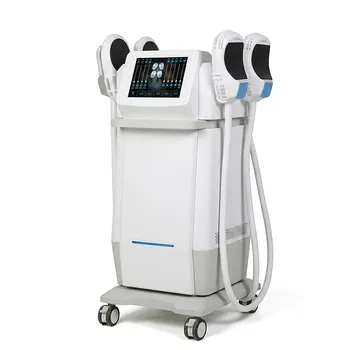
RF tissue tightening works by converting electrical resistance into controlled heat within the tissue. As RF energy passes through the dermis and, depending on the device, subcutaneous tissue, impedance generates volumetric thermal energy rather than relying on pigment or another optical chromophore. At sufficiently high and sustained temperatures, commonly around the low-to-mid 60s °C in treated tissue, collagen fibers contract immediately and the subsequent wound-healing response stimulates remodeling and new collagen formation. Targeted laser collagen stimulation is more spatially selective: it uses light absorption by specific tissue chromophores to create localized thermal injury or heating, usually producing more focused surface or treatment-column effects than RF's broader three-dimensional contraction.
RF primarily changes tissue geometry through bulk heating, immediate collagen contraction, and longer-term remodeling. Targeted lasers primarily create controlled, optically selected zones of collagen stimulation, so their clinical strengths tend to be surface refinement and localized remodeling rather than broad soft-tissue lifting.
How RF Produces Tissue Tightening
Electrical resistance becomes thermal energy
RF devices deliver high-frequency alternating electrical energy through tissue. The tissue's impedance, or resistance to that current, converts the electrical energy into heat.
This differs from a laser, which first delivers light and depends on the absorption characteristics of the target tissue. RF heating is therefore governed mainly by electrical properties, electrode configuration, energy delivery, and tissue depth.
The treatment heats a volume of tissue
The geometry and placement of the electrodes influence where the RF current travels and how deeply the heat develops. This allows many RF systems to warm a relatively broad volume of the dermis and, in some applications, subcutaneous soft tissue.
The result is volumetric heating rather than a narrow optical target. The actual depth and temperature distribution still vary by device design, treatment technique, tissue composition, and cooling strategy.
Existing collagen contracts
When collagen is heated to an adequate temperature for an adequate duration, the weak non-covalent interactions that maintain its triple-helix structure are disrupted. The fibers partially denature, shorten, and thicken.
This produces an early tightening effect as collagen bundles contract. It is not the same as physically removing excess skin, but it can alter the organization and tension of treated soft tissue.
Fibroblasts drive later remodeling
The thermal injury also activates a controlled repair response. Fibroblasts contribute to the production and reorganization of collagen over the following weeks and months.
This delayed remodeling helps sustain and refine the initial effect. Claims about elastin production are more variable than claims about collagen remodeling, so the most defensible description is that RF primarily promotes collagen contraction and neocollagenesis, with broader extracellular-matrix changes depending on the treatment.
What RF Changes Clinically
RF is suited to laxity and contour
Because RF can heat deeper and broader tissue volumes, its clinical objective is often soft-tissue tightening and contraction. This makes it relevant to mild-to-moderate facial laxity, early jowl formation, and selected areas requiring tissue remodeling.
The effect is generally a gradual improvement in firmness and contour rather than a sharply defined correction of one superficial lesion.
The result is usually incremental
RF does not reproduce the mechanical lift of surgery. Its visible effect depends on baseline laxity, tissue thickness, treatment parameters, and the patient's remodeling response.
Patients commonly experience an immediate component from collagen contraction followed by a more gradual component as new collagen is produced and reorganized. The degree of improvement is therefore meaningful for some patients but limited when laxity is substantial.
RF is less dependent on skin pigment
Because RF is not based on selective absorption by melanin, it is not affected by epidermal pigmentation in the same way as a laser that targets optical chromophores. This can make RF useful when pigment-related absorption limits the choice or aggressiveness of a light-based treatment.
That does not make every RF treatment risk-free for every skin type. Excessive heat, poor contact, inappropriate settings, or inadequate cooling can still cause pain, burns, pigmentary changes, or unwanted changes in subcutaneous tissue.
How Targeted Laser Collagen Stimulation Works
Lasers rely on chromophore absorption
A laser delivers light at a wavelength chosen for absorption by a tissue chromophore, such as water, melanin, or hemoglobin. Absorbed light is converted into heat at the selected target.
The laser's wavelength, pulse duration, spot size, and delivery pattern determine whether the treatment creates superficial heating, microscopic treatment columns, or more selective thermal injury.
Laser effects are spatially focused
Targeted laser treatments can concentrate energy in specific layers or microscopic zones. Nonablative systems may heat collagen without removing the epidermis, while fractional approaches create discrete treatment columns surrounded by untreated tissue.
This focused geometry can be valuable for fine lines, texture irregularities, selected pigmentation concerns, and localized collagen remodeling. The exact result depends heavily on the laser type and its target chromophore.
Laser collagen stimulation can be more surface-oriented
Many collagen-stimulating laser protocols emphasize the epidermis and superficial-to-mid dermis. Their clinical effect may be strongest in skin quality, including texture, fine lines, and some pigment or vascular concerns when the relevant chromophore is targeted.
Some lasers can reach deeper structures, so “laser” should not be treated as a single clinical category. The important distinction is that laser depth and effect are controlled through optical absorption and light delivery, whereas RF depth is primarily shaped by electrical current paths and electrode geometry.
The Core Clinical Difference
RF emphasizes three-dimensional contraction
RF aims to heat a substantial tissue volume and induce contraction across collagen-containing structures. Its clinical language is therefore commonly tightening, firming, contour improvement, and soft-tissue remodeling.
This makes RF more directly aligned with laxity-related concerns such as early jowling or generalized facial looseness, although the achievable lift remains non-surgical and variable.
Lasers emphasize selective tissue refinement
Targeted lasers create thermal effects where the chosen wavelength is absorbed. Their clinical strengths often include surface refinement, texture improvement, fine-line reduction, and treatment of chromophore-related imperfections, alongside collagen remodeling.
A laser can improve apparent tightness as skin quality improves, but that is different from producing broad contraction of deeper soft tissue.
The treatments solve different parts of aging
Facial aging involves changes in skin texture, pigmentation, collagen quality, fat compartments, ligaments, and soft-tissue position. A technology that improves the surface may not substantially reposition lax tissue, while a technology that contracts deeper tissue may not correct pigment or fine texture as effectively.
The choice should therefore follow the dominant problem rather than the general label of “collagen stimulation.”
Understanding the Trade-offs
RF is not automatically deeper or better
RF can deliver deep volumetric heating, but depth and uniformity are device-dependent. Electrode design, tissue impedance, contact, energy settings, and cooling determine the treatment profile.
A claim that RF always bypasses the epidermis or uniformly heats a precise deep layer is too absolute. The epidermis can still be exposed to heat, and safe treatment requires temperature control and appropriate technique.
Laser precision can also mean limited coverage
The selectivity of a laser is an advantage when a clinician needs to target a defined chromophore or treatment zone. It can also mean that the treatment is less suited to broad three-dimensional contraction of lax soft tissue.
Conversely, a broad RF treatment may improve firmness without addressing a specific pigment, vessel, or superficial texture problem.
Heat must be controlled in both technologies
Both RF and laser treatments rely on controlled thermal effects. Insufficient energy may produce little clinical benefit, while excessive or poorly distributed energy can cause burns, prolonged inflammation, pigmentary changes, scarring, or unwanted fat alteration.
Clinical safety depends on the specific device, treatment area, skin characteristics, cooling method, and operator judgment. Device category alone does not predict the outcome.
“Immediate tightening” has limits
The immediate RF effect is largely a physical and structural response of heated collagen, not the completed formation of new tissue. The longer-term result requires biological remodeling and may take weeks or months to become clear.
A dramatic immediate change should therefore be interpreted cautiously, particularly when swelling or temporary tissue contraction contributes to the early appearance.
Making the Right Choice for Your Goal
The practical decision is to identify whether the primary problem is soft-tissue laxity, surface skin quality, or a combination of both.
- If your primary focus is facial laxity or early jowl sagging: RF is generally the more directly relevant mechanism because it delivers controlled volumetric heating that can contract collagen and remodel deeper soft tissue.
- If your primary focus is fine lines, texture, or a specific superficial imperfection: A targeted laser may be better suited because its chromophore-based delivery can create localized collagen stimulation and surface-focused correction.
- If your primary focus is both contour and skin quality: A carefully planned combination may address different tissue depths, provided the devices, sequencing, and thermal burden are appropriate for the individual.
- If your primary focus is predictable correction of substantial sagging: Neither RF nor laser should be viewed as equivalent to surgical lifting, because non-surgical thermal remodeling has more limited and variable tissue repositioning.
The right technology is the one whose energy-delivery pattern matches the anatomical problem you want to change.
Summary Table:
| Feature | RF Tissue Tightening | Laser Collagen Stimulation |
|---|---|---|
| Mechanism | Electrical resistance converts to heat in tissue volume | Light absorbed by chromophores (water, melanin, etc.) creates localized heating |
| Depth Control | Electrode geometry shapes current path | Wavelength and optics determine absorption depth |
| Collagen Effect | Immediate contraction + long-term remodeling | Controlled thermal injury triggers remodeling |
| Best For | Laxity, contour, early jowls | Fine lines, texture, pigment, superficial issues |
| Pigment Dependence | Low (not chromophore-based) | High (depends on target chromophore) |
| Clinical Outcome | Broad tightening, gradual firmness | Surface refinement, localized improvement |
| Safety Considerations | Requires careful temperature control | Requires precise energy delivery to avoid burns |
Ready to elevate your clinic's offerings with advanced RF and laser technology? At BELIS, we specialize in professional-grade aesthetic devices for clinics and premium salons. Our portfolio includes cutting-edge RF systems, diode lasers, and fractional lasers, all backed by OEM/ODM support, international certifications, and reliable supply. Whether you're targeting laxity or skin refinement, our tailored solutions help you achieve superior patient outcomes and grow your business. Contact us today to discuss your needs and discover how we can power your practice's success! Get in touch
Related Products
- Ultrasonic Cavitation Radiofrecuency Machine for Body Slimming
- Clinic Use IPL SHR ND YAG Laser Hair Removal RF Skin Tightening Machine
- Ultrasonic Cavitation Machine Lipo Laser Device
- 4D 12D HIFU Machine Device for Skin Tightening and Lifting
- EMSlim RG Laser Body Sculpting and Slimming Machine
People Also Ask
- What are the pros and cons of the ultrasonic cavitation slimming treatment? A Guide to Painless Body Contouring
- Does an ultrasonic cavitation machine also tighten the skin? Achieve Total Body Contouring with RF Synergy
- How does radiofrequency technology in slimming machines promote fat reduction? The Science of Non-Invasive Sculpting
- How should one prepare for an ultrasonic cavitation appointment? 5 Essential Tips for Maximum Fat Loss Results
- What areas of the body are targeted for ultrasonic cavitation? Best Zones for Effective Body Contouring