
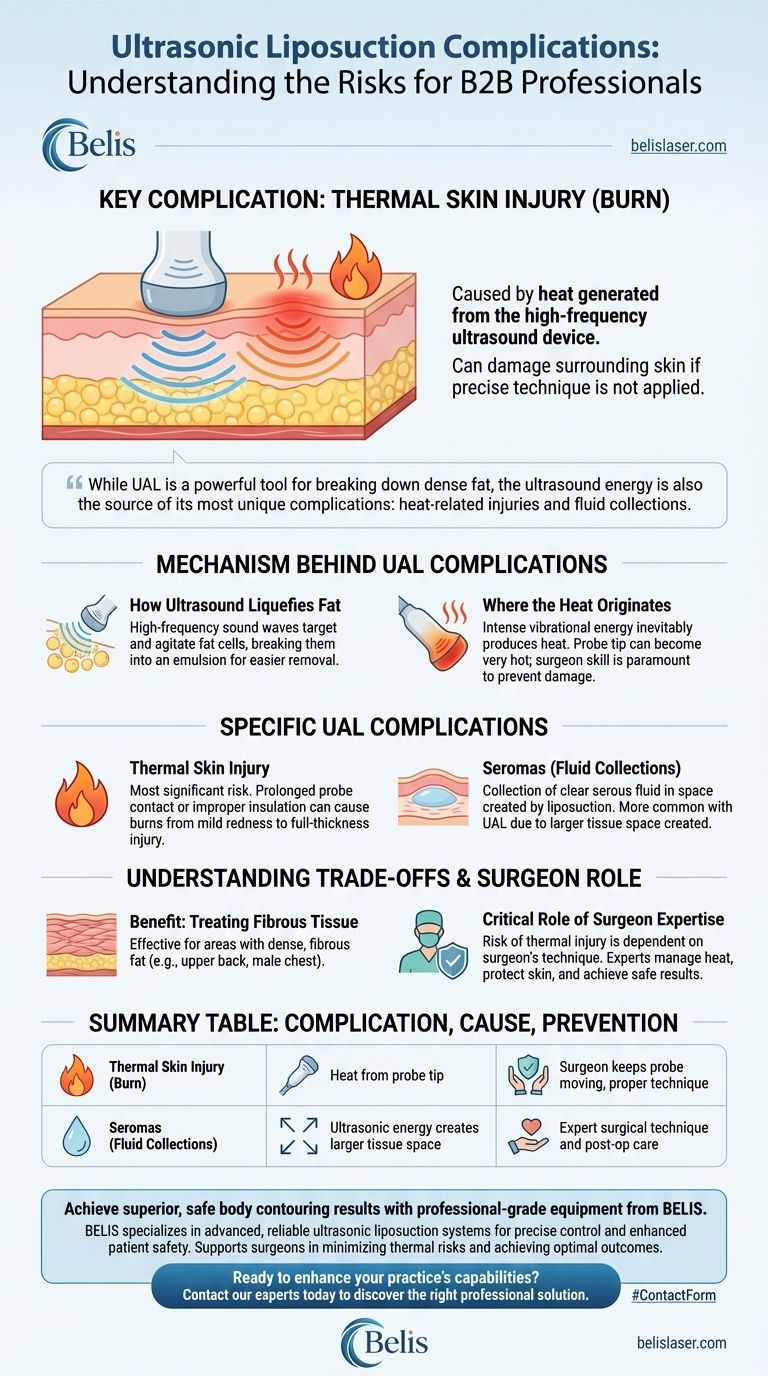
A key complication specifically related to ultrasonic liposuction is the risk of thermal skin injury, or a burn, caused by the heat generated from the ultrasound device. The high-frequency energy used to liquefy fat cells can inadvertently damage the surrounding skin if not applied with precise technique.
While ultrasonic-assisted liposuction (UAL) is a powerful tool for breaking down dense fat, the ultrasound energy that makes it effective is also the direct source of its most unique complications: heat-related injuries and fluid collections under the skin.

The Mechanism Behind UAL Complications
To understand the risks, it's essential to first understand how this technology works. Unlike traditional methods, UAL introduces a specific energy source before fat removal.
How Ultrasound Liquefies Fat
Ultrasonic liposuction employs a special probe, or cannula, that emits high-frequency sound waves. This vibrational energy specifically targets and agitates fat cells, causing them to break apart and liquefy into an emulsion. This liquid fat is then much easier to remove from the body via suction.
Where the Heat Originates
The process of generating this intense vibrational energy inevitably produces heat. The tip of the ultrasound probe can become very hot during the procedure. The skill of the surgeon is paramount in keeping the probe moving and using protective measures to prevent this heat from damaging the skin or other tissues.
Key Complications Specific to UAL
The use of ultrasonic energy introduces two potential complications that are more common with this technique compared to traditional suction-assisted liposuction.
Thermal Skin Injury
This is the most significant risk unique to UAL. If the ultrasound probe remains in one place for too long or is not properly insulated from the skin, the concentrated heat can cause burns ranging from mild redness to more severe, full-thickness injury.
Seromas (Fluid Collections)
A seroma is a collection of clear serous fluid that can accumulate in the space created by liposuction. While seromas can occur with any form of liposuction, studies suggest they are more common with UAL. The ultrasonic energy can create a larger tissue space where this fluid can gather during the healing process.
Understanding the Trade-offs
Choosing a cosmetic procedure requires weighing the benefits against the potential risks. UAL is often selected for specific, valid reasons.
The Benefit: Treating Fibrous Tissue
UAL is particularly effective at treating areas with dense, fibrous fat that can be difficult to remove with other methods. This includes areas like the upper back, posterior flanks, or the male chest (in cases of gynecomastia).
The Critical Role of Surgeon Expertise
The risk of thermal injury is almost entirely dependent on the surgeon's technique and experience with the UAL device. An expert practitioner understands how to manage heat, protect the skin, and achieve the desired result safely, significantly mitigating this complication.
Making the Right Choice for Your Goal
Ultimately, the decision to proceed with UAL should be based on a clear understanding of your specific anatomy and goals.
- If your primary focus is treating dense, fibrous fat: UAL may be the most effective option, but you must prioritize finding a board-certified surgeon with extensive, proven experience in this specific technique.
- If your primary focus is minimizing risk in less dense areas: Traditional suction-assisted liposuction or other energy-assisted methods may offer a more favorable risk profile for your specific needs.
A thorough consultation with a board-certified plastic surgeon is the essential step to align the right technique with your anatomy and safety expectations.
Summary Table:
| Complication | Cause | Prevention |
|---|---|---|
| Thermal Skin Injury (Burn) | Heat from the ultrasound probe tip | Surgeon keeps probe moving, uses proper technique |
| Seromas (Fluid Collections) | Ultrasonic energy creates larger tissue space | Expert surgical technique and post-op care |
Achieve superior, safe body contouring results with professional-grade equipment from BELIS.
BELIS specializes in providing medical aesthetic clinics and premium beauty salons with advanced, reliable ultrasonic liposuction systems designed for precise control and enhanced patient safety. Our equipment supports surgeons in minimizing thermal risks and achieving optimal outcomes.
Ready to enhance your practice's capabilities and patient satisfaction? Contact our experts today to discover the right professional solution for your clinic's needs.
Visual Guide
Related Products
- Cryolipolysis Fat Freezing Machine Ultrasonic Cavitation Fat Reducing Device
- Cryolipolysis Fat Freezing Machine and Ultrasonic Cavitation Device
- Ultrasonic Cavitation Radiofrecuency Machine for Body Slimming
- IPL SHR Hair Removal Machine for Permanent Hair Removal
- Clinic Use IPL and SHR Hair Removal Machine with Nd Yag Laser Tattoo Removal
People Also Ask
- What are the main benefits of using a fat freezing machine? Achieve Permanent, Non-Surgical Body Sculpting
- Do fat freezing machines really work? Achieve Non-Invasive Body Contouring
- What are the potential side effects and risks associated with fat freezing? Safety Profile & Rare Risks Explained
- What is the treatment principle of cryolipolysis fat freezing? Science-Backed Fat Reduction and Body Contouring
- What are the technical advantages of using lower temperatures and shorter durations in cryolipolysis fat reduction?
















