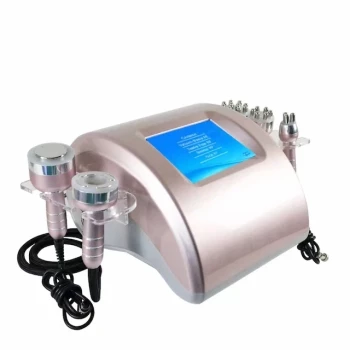
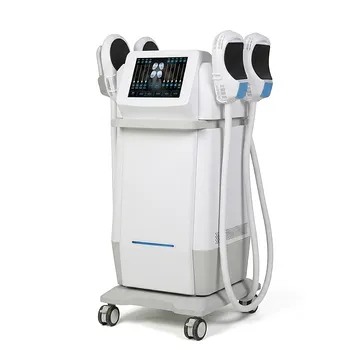
Professional RF skin-tightening treatments require layered safeguards—not just a powerful device. Essential controls include a functioning skin-contact interlock, real-time impedance monitoring, epidermal cooling, controlled energy settings, continuous handpiece movement, and active patient feedback. These must be supported by patient screening, equipment inspection, trained operation, and strict adherence to the manufacturer’s instructions for use.
The central safety principle is controlled heat delivery: the device must deliver energy only when proper contact and coupling are maintained, while the operator continuously monitors skin response, patient sensation, temperature, and treatment parameters.
The Device Controls That Must Be Present
Full-surface contact interlocks
The handpiece should prevent RF discharge unless the treatment tip is fully and evenly apposed to the skin.
Loss of contact can cause arcing, uneven energy delivery, excessive discomfort, and localized epidermal burns. Contact sensors should be tested and confirmed operational before treatment.
Real-time impedance monitoring
RF systems should measure tissue impedance before and during energy delivery.
This allows the device to adjust or interrupt output when tissue characteristics, contact quality, or coupling conditions change. Impedance monitoring improves consistency, but it does not replace direct clinical observation.
Epidermal cooling
The system should provide active cooling before, during, and/or after RF delivery, depending on its design.
Examples include contact cooling, chilled treatment windows, cryogen delivery, or cooled conductive media. Cooling protects the epidermis while allowing heat to accumulate in deeper tissue, but it cannot compensate for excessive energy, poor coupling, or prolonged stationary contact.
Temperature monitoring and automatic shutdown
Where available, integrated temperature sensors should monitor the treatment surface and interrupt delivery if temperatures exceed the device’s programmed safety limits.
Operators should not assume that one temperature range is appropriate for every RF platform. Treatment limits must come from the specific device’s validated protocol and manufacturer instructions.
Operational Controls During Treatment
Inspect the equipment before every session
Inspect the handpiece, electrodes, cooling surface, cables, connectors, and contact sensors before use.
Do not operate equipment with cracked tips, damaged insulation, malfunctioning cooling, contamination, or inconsistent contact detection. Faulty treatment surfaces can produce nonuniform heating and serious thermal injury.
Prepare the skin and establish proper coupling
The treatment area should be clean, dry, and free of products that interfere with electrical coupling.
Use only the conductive gel, oil, or interface material specified for the device. Inadequate coupling increases the risk of hot spots, discomfort, and superficial burns.
Maintain continuous, even contact
The applicator must remain flush with the skin throughout energy delivery.
On curved or irregular anatomy, the operator should position the skin and handpiece so that the treatment surface remains evenly coupled. If contact is lost, energy delivery should stop automatically—or the operator should stop immediately if the device lacks an effective interlock.
Keep the handpiece moving when required
For systems designed for dynamic treatment, use the prescribed continuous motion and treatment pattern.
Avoid holding the applicator stationary unless the device’s protocol specifically authorizes static delivery. Segmenting the area into defined zones helps prevent untreated gaps and repeated heating of the same location.
Use conservative, progressive energy settings
Energy should be increased gradually and only within the device’s validated operating range.
A lower-energy, multiple-pass approach may reduce peak heating compared with an aggressive single pass, but it is not universally appropriate. The correct fluence, pass number, pulse duration, and repetition rate are device- and indication-specific.
Monitor the patient continuously
The patient’s thermal sensation is an important real-time safety signal.
Use clear communication and ask about heat, pain, burning, or focal discomfort throughout treatment. Avoid nerve blocks or other measures that eliminate meaningful thermal feedback unless a qualified physician has determined that their use is appropriate under the device protocol.
Pain that becomes sharp, focal, rapidly increasing, or disproportionate requires immediate reassessment and usually interruption of energy delivery.
Patient Screening Before RF Treatment
Identify relevant contraindications and precautions
Screen for conditions and devices listed in the manufacturer’s labeling and applicable clinical guidance.
Common reasons to defer or avoid treatment may include:
- Active skin infection, open wounds, or herpetic lesions
- Active skin cancer in the treatment area
- Implanted electronic devices, such as pacemakers or defibrillators, where RF interference is a concern
- Significantly impaired healing or poorly controlled systemic disease
- Pregnancy, when the device labeling or clinical policy identifies it as a contraindication
- A history of abnormal scarring, including keloids, requiring individualized assessment
- Medications or conditions that may increase bruising or complicate healing
“Safe for all skin types” does not mean safe for every patient or every treatment setting. RF is generally non-chromophore-dependent, but device-specific contraindications and patient factors still apply.
Document baseline skin condition
Record the treatment area, relevant medical history, medications, implants, prior procedures, and baseline symptoms.
Photographs and consent documentation can help establish expectations and support follow-up if erythema, edema, blistering, or pigmentary changes occur.
Explain expected and warning symptoms
Patients should understand that temporary warmth, redness, swelling, and tenderness may occur.
They should also be instructed to report severe or worsening pain, blistering, persistent discoloration, erosions, or signs of infection rather than treating these as routine reactions.
Post-Treatment Controls
Cool the skin appropriately
Mild, intermittent cooling may help manage transient erythema, edema, and discomfort.
Avoid excessive or prolonged cooling that could injure numb or already-irritated skin. Use the aftercare procedure appropriate to the device and treatment intensity.
Inspect and document the treated area
Examine the skin before the patient leaves and document any unusual reaction.
Superficial erosions, blistering, marked tenderness, or rapidly increasing swelling require clinical assessment and a defined follow-up plan. Do not apply unapproved products to compromised skin.
Provide clear aftercare instructions
Patients commonly need advice on gentle cleansing, moisturization, sun protection, and avoidance of additional heat or irritation according to the device protocol.
Sun protection is particularly important when inflammation could contribute to post-inflammatory pigmentary changes.
Training, Governance, and Emergency Readiness
Use trained and authorized operators
RF equipment should be operated only by personnel trained in the specific platform, treatment indication, anatomy, contraindications, and emergency procedures.
Generic familiarity with RF is not sufficient because systems differ in electrode configuration, cooling, impedance behavior, pulse delivery, and treatment limits.
Follow the device’s instructions for use
The manufacturer’s labeling should govern permitted treatment areas, energy settings, cooling requirements, contact media, contraindications, maintenance, and fault handling.
Avoid importing numerical settings or temperature targets from another platform. A parameter that is appropriate for one RF system may be unsafe on another.
Maintain quality and maintenance records
Keep records of operator training, device servicing, calibration, tip replacement, cleaning, safety checks, treatment parameters, and adverse events.
A recurring fault, abnormal impedance reading, cooling failure, or contact-sensor error should remove the device from service until evaluated.
Have a stop-and-escalate procedure
Operators must know how to stop RF output immediately and how to respond to suspected burns, electrical arcing, severe pain, syncope, allergic reactions, or other unexpected events.
The procedure should include prompt cooling when appropriate, clinical evaluation, documentation, follow-up, and referral or escalation when the injury exceeds the operator’s scope.
Understanding the Trade-offs
Higher energy is not automatically better
Aggressive settings may increase discomfort and the risk of burns, prolonged erythema, edema, contour irregularities, or scarring.
The objective is controlled therapeutic heating, not the highest possible temperature or pain level. Treatment endpoints should be defined by the device protocol and clinical response.
Cooling can conceal a problem
Cooling protects the surface but may mask the patient’s perception of excessive heat.
Operators must continue observing contact quality, skin appearance, device readings, and patient feedback rather than relying on cooling alone.
Patient feedback is valuable but subjective
A patient may under-report discomfort, misunderstand the rating scale, or have reduced sensation.
Feedback should therefore be combined with visual inspection, device alarms, temperature or impedance data, and conservative clinical judgment.
Multiple passes require cumulative monitoring
Lower-energy passes can still create excessive cumulative heat if the same area is repeatedly treated without adequate spacing or tracking.
The operator must monitor the number of passes, treatment time, zone overlap, and tissue response rather than assessing each pulse in isolation.
Making the Right Choice for Your Goal
Safe RF administration depends on matching the device, patient, protocol, and operator capability—not on relying on one technical feature.
- If your primary focus is preventing burns: Verify contact interlocks, cooling, coupling, temperature safeguards, continuous movement, and immediate access to a stop procedure.
- If your primary focus is consistent clinical results: Use the device-specific validated protocol, impedance feedback, documented treatment zones, and controlled energy progression.
- If your primary focus is patient comfort: Establish active communication, avoid masking thermal feedback, titrate energy conservatively, and stop for abnormal or focal pain.
- If your primary focus is regulatory and clinical governance: Require trained operators, documented screening and consent, equipment checks, maintenance records, and adverse-event follow-up.
- If your primary focus is reducing complications: Screen contraindications carefully, inspect the skin and handpiece before treatment, and provide structured post-treatment monitoring.
The safest RF treatment is one in which technology, clinical judgment, patient feedback, and disciplined operating procedures continuously reinforce one another.
Summary Table:
| Safety Mechanism / Control | Purpose | Key Requirements |
|---|---|---|
| Full-surface contact interlocks | Prevent RF discharge when contact is incomplete | Test contact sensors before use |
| Real-time impedance monitoring | Adjust/interrupt output based on tissue changes | Monitor throughout treatment |
| Epidermal cooling | Protect epidermis while heating deeper tissue | Use device-specific cooling method |
| Temperature monitoring & auto-shutdown | Stop delivery if temperature exceeds limits | Follow device-specific limits |
| Equipment inspection | Ensure proper function and safety | Check handpiece, cables, sensors before each session |
| Skin preparation & coupling | Ensure proper electrical coupling | Use specified conductive media |
| Continuous, even contact | Avoid hot spots and burns | Keep handpiece flush with skin |
| Handpiece movement | Prevent excessive heating | Use prescribed continuous motion |
| Conservative energy settings | Gradual increase within validated range | Follow device protocol |
| Patient monitoring | Detect pain or discomfort | Communicate and assess feedback |
Learn how our advanced RF devices incorporate these safety features and enhance your clinic's offerings. Contact us today to schedule a demo and see how we support your practice's success. Get in touch now!
Related Products
- Ultrasonic Cavitation Radiofrecuency Machine for Body Slimming
- Ultrasonic Cavitation Machine Lipo Laser Device
- Clinic Use IPL SHR ND YAG Laser Hair Removal RF Skin Tightening Machine
- 4D 12D HIFU Machine Device for Skin Tightening
- 4D 12D HIFU Machine Device for Skin Tightening and Lifting
People Also Ask
- What are the pros and cons of the ultrasonic cavitation slimming treatment? A Guide to Painless Body Contouring
- Does an ultrasonic cavitation machine also tighten the skin? Achieve Total Body Contouring with RF Synergy
- How does radiofrequency technology in slimming machines promote fat reduction? The Science of Non-Invasive Sculpting
- How should one prepare for an ultrasonic cavitation appointment? 5 Essential Tips for Maximum Fat Loss Results
- What is an ultrasonic cavitation machine? Sculpt Your Body with Advanced Non-Invasive Fat Reduction