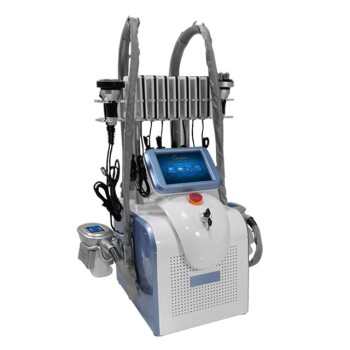
Medical air cooling acts as a vital thermal shield during high-energy laser procedures. By providing a continuous stream of cold air, these systems lower the temperature of the epidermis immediately before and during laser emission. This mechanism is essential for protecting the skin's surface from non-targeted thermal damage while simultaneously managing patient pain.
Core Takeaway The primary function of a medical air cooling system is to decouple surface safety from deep-tissue treatment intensity. It prevents surface burns and pigment changes, allowing practitioners to safely use the high-energy settings required to penetrate dense keloid tissue.
The Mechanics of Epidermal Protection
Counteracting Heat Accumulation
High-energy lasers, such as Fractional CO2 or Nd:YAG, work by delivering intense light energy into the tissue.
However, skin structures—particularly melanin—absorb this energy and convert it into heat.
A cooling system offsets this heat generation in real-time, preventing excessive temperature buildup that causes collateral damage.
Preventing Blisters and Burns
The primary reference highlights that cooling protects the epidermis from "non-targeted thermal damage."
Without this intervention, the heat meant for the keloid can destroy healthy surface tissue.
This protection is critical to preventing the formation of blisters and thermal burns during the procedure.
Mitigating Long-Term Complications
Reducing Post-Inflammatory Hyperpigmentation (PIH)
One of the most significant risks in laser therapy is Post-Inflammatory Hyperpigmentation (PIH).
Excessive heat triggers an inflammatory response that can permanently discolor the skin, a risk that is elevated in patients with darker skin tones.
By maintaining a lower epidermal temperature, the cooling system significantly reduces the likelihood of this adverse reaction.
Enhancing Treatment Efficacy
Enabling Higher Energy Parameters
Keloids are composed of hard, dense fibrotic tissue that resists penetration.
To treat them effectively, practitioners often need to use higher energy parameters to reach deeper layers.
Continuous cooling protects the surface layer, allowing the safe use of these aggressive settings without compromising the epidermis.
Improving Patient Tolerance
Beyond physical safety, cooling serves a critical analgesic role.
The continuous stream of cold air numbs the nerve endings in the treatment area.
This significantly alleviates the pain associated with the high-energy pulses required for remodeling keloid scar tissue.
Understanding the Risks of Inadequate Cooling
Thermal Spillover
If the cooling mechanism is insufficient or absent, heat does not stay confined to the target zone.
It spreads laterally to surrounding healthy tissue, leading to necrosis and delayed wound healing.
The Efficacy Compromise
Without reliable surface cooling, a practitioner is forced to lower the laser's energy output to avoid burning the patient.
This reduction often renders the treatment ineffective against thick, resistant keloids, as the laser cannot penetrate deep enough to break down the fibrosis.
Making the Right Choice for Your Goal
To ensure safe and effective keloid treatment, consider how cooling aligns with your clinical objectives:
- If your primary focus is Patient Safety: Rely on air cooling to prevent blistering and minimize the risk of post-operative hyperpigmentation, particularly in melanin-rich skin.
- If your primary focus is Treatment Depth: Utilize robust cooling to permit the higher energy fluences necessary to penetrate and remodel dense, deep fibrotic tissue.
Effective air cooling transforms a potentially hazardous high-energy procedure into a controlled, precise clinical intervention.
Summary Table:
| Feature | Role in Keloid Treatment | Benefit to Practitioner & Patient |
|---|---|---|
| Thermal Shielding | Dissipates surface heat during laser pulses | Prevents epidermal burns and blistering |
| PIH Prevention | Lowers inflammation in the skin's surface | Reduces risk of post-inflammatory hyperpigmentation |
| Analgesic Effect | Continuous cold air numbs nerve endings | Enhances patient comfort and tolerance |
| Energy Optimization | Decouples surface safety from treatment depth | Allows higher fluences to penetrate dense fibrosis |
| Tissue Preservation | Prevents lateral thermal spillover | Minimizes damage to healthy surrounding tissue |
Elevate Your Clinic’s Safety Standards with BELIS Technology
At BELIS, we specialize in professional-grade medical aesthetic equipment designed exclusively for clinics and premium salons. Our advanced laser systems—including CO2 Fractional, Nd:YAG, and Pico lasers—achieve their best results when paired with precision cooling.
We provide a comprehensive portfolio of body sculpting and skin solutions, including EMSlim, Cryolipolysis, Microneedle RF, and Hydrafacial systems, ensuring your practice delivers both safety and efficacy. Protect your patients and maximize your treatment parameters today.
Contact our experts for a custom equipment consultation
References
- Mona Soliman, Abeer Attia Tawfik. Comparative Study between Nd‐YAG laser, fractional CO2 Laser, and combined Nd‐YAG with fractional CO2 Laser in the Management of keloid: clinical and molecular Study. DOI: 10.1111/jocd.13920
This article is also based on technical information from Belislaser Knowledge Base .
Related Products
- Cryolipolysis Fat Freezing Machine Cavitation Lipo Laser Machine
- Cryolipolysis Fat Freezing Machine with Cavitation and Laser Lipolysis
- Fat Freezing Cryolipolysis Machine for Body Contouring
- Fat Freezing Cryolipolysis Machine for Body Contouring
- Cryolipolysis Fat Freezing Machine and Ultrasonic Cavitation Device
People Also Ask
- What are the main benefits of using a fat freezing machine? Achieve Permanent, Non-Surgical Body Sculpting
- What is the recommended treatment course for different body parts using the cryolipolysis machine? Expert Fat Loss Tips
- What is the recommended treatment duration for different body parts using the cryolipolysis machine? Expert Timing Tips
- What are the potential side effects and risks associated with fat freezing? Safety Profile & Rare Risks Explained
- Do fat freezing machines really work? Achieve Non-Invasive Body Contouring