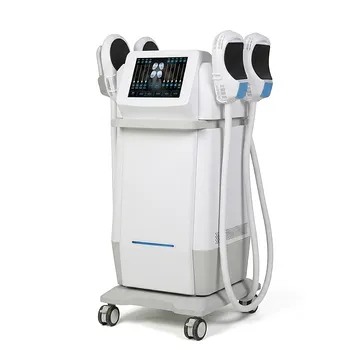
The key difference is how the electrical current travels through tissue. Monopolar RF uses one active electrode and a distant return or grounding pad, allowing broader and generally deeper volumetric heating. Bipolar RF passes current between two electrodes on the same handpiece for more localized, superficial heating, while multipolar RF uses several electrodes and controlled current pathways to distribute energy across a broader treatment area with greater control.
Monopolar RF is typically chosen for deeper, volumetric tightening; bipolar RF for localized superficial treatment; and multipolar RF for controlled, more uniform heating of superficial-to-mid-dermal tissue. Actual penetration depends on electrode geometry, power, tissue impedance, treatment technique, and built-in cooling—not the label alone.
How RF Creates Skin Tightening
RF heats tissue through electrical resistance
RF devices deliver alternating electrical energy into tissue. The tissue’s resistance converts that energy into heat, which can produce immediate collagen fiber contraction and stimulate longer-term collagen remodeling, or neocollagenesis.
RF is not a laser and does not depend primarily on melanin absorption. Its effect is governed by current distribution, tissue resistance, temperature, and treatment control.
Heating depth is the central clinical variable
The depth and volume of heating influence which concerns a device can address. Superficial heating is more relevant to fine lines and surface texture, while deeper volumetric heating is used for laxity and structural contouring.
However, “deep” and “superficial” are relative descriptions. Device frequency, electrode spacing, energy level, skin contact, tissue composition, and cooling can substantially change the treatment field.
Monopolar RF: Broad and Deep Energy Delivery
Structural configuration
A monopolar device has one active treatment electrode on the handpiece and a separate grounding or return pad placed elsewhere on the patient’s body.
The current travels through tissue between the active electrode and the distant return path. This creates a relatively broad three-dimensional heating field rather than a narrow field confined to the handpiece.
Typical tissue effect
Monopolar RF is generally capable of heating the deep dermis and collagenous fibrous septa, with some systems also affecting subcutaneous tissue. The result is volumetric thermal treatment that can support collagen contraction and deeper tissue remodeling.
The treatment is not simply a point treatment at the skin surface; the current path extends into tissue toward the return electrode.
Common clinical applications
Monopolar RF is commonly considered when the primary concern is:
- Overall skin laxity
- Jawline or submental laxity
- Deeper facial tissue tightening
- Body-area firmness or contouring
Its broader heating field can be useful when the treatment goal involves structural tightening rather than only surface refinement.
Clinical handling
Because monopolar RF can deliver substantial energy at depth, treatment parameters and temperature monitoring are important. Some systems use moving or dynamic handpiece techniques to distribute energy and improve comfort across larger areas.
The grounding pad also adds a device-specific setup and safety requirement that is not present in conventional bipolar treatment.
Bipolar RF: Localized and More Superficial
Structural configuration
A bipolar device places both electrodes on the treatment handpiece. One electrode delivers current and the other receives it, creating a closed electrical path between closely spaced poles.
Because the electrodes are near one another, the current field is more restricted than in monopolar RF.
Typical tissue effect
Bipolar RF generally concentrates heating in the superficial dermis and nearby tissue between the electrodes. A commonly used principle is that effective heating depth is related to electrode spacing, often approximated as about half the distance between the electrodes.
That approximation is not a universal measurement for every device. Actual energy distribution varies with handpiece design, electrode shape, contact, power, and tissue properties.
Common clinical applications
Bipolar RF is typically suited to concerns such as:
- Fine lines
- Superficial skin laxity
- Texture irregularity
- Delicate facial subunits
- Localized periorbital or perioral treatment, when the device is designed for those areas
Its confined energy field can make it useful where precision and limited treatment depth are more important than broad volumetric heating.
Clinical handling
Bipolar systems generally avoid the separate grounding pad and provide a more predictable current path within the treatment head. Their localized field may also support improved comfort and control, although comfort still depends on energy settings, cooling, treatment speed, and individual sensitivity.
Bipolar RF may be combined with light-based technologies or other modalities, but the safety and performance of the combination depend on the specific system and protocol.
Multipolar RF: Multiple Electrodes and Controlled Distribution
Structural configuration
Multipolar RF uses three or more electrodes, typically arranged within the same treatment handpiece. The device controls how current flows among these electrodes, often by alternating or sequencing electrode pairs.
This creates multiple overlapping or shifting electrical fields rather than the single active-to-ground path of monopolar RF or the fixed two-electrode path of bipolar RF.
Typical tissue effect
Multipolar systems are generally designed to deliver controlled heating across superficial and mid-dermal tissues. The multiple electrode arrangement can help distribute thermal energy more uniformly within the treatment area.
Multipolar does not automatically mean deeper than bipolar or equivalent to monopolar. Its practical depth depends on electrode spacing, configuration, power, sequencing, and the manufacturer’s control system.
Common clinical applications
Multipolar RF is often used for:
- General facial skin tightening
- Superficial-to-mid-dermal laxity
- Texture and fine-line improvement
- Larger treatment areas requiring even energy distribution
- Protocols emphasizing comfort and epidermal protection
It can occupy a middle position clinically: broader and more distributed than a basic bipolar field, but not necessarily as deep or volumetric as monopolar RF.
Clinical handling
Many multipolar devices use algorithms that alternate energy delivery between electrodes. This can help manage heat distribution and reduce excessive concentration at one location.
Uniformity and comfort are design goals, not guaranteed outcomes. The actual clinical experience depends on the device’s thermal monitoring, cooling, contact detection, operator technique, and treatment settings.
The Main Structural Differences at a Glance
| Feature | Monopolar RF | Bipolar RF | Multipolar RF |
|---|---|---|---|
| Electrode arrangement | One active electrode plus distant grounding pad | Two electrodes on the handpiece | Multiple electrodes on the handpiece |
| Current path | Through tissue between handpiece and distant return electrode | Directly between two nearby electrodes | Between multiple controlled electrode combinations |
| Typical heating pattern | Broad and volumetric | Localized and relatively superficial | Distributed and controlled across the treatment tip |
| Typical tissue emphasis | Deep dermis and fibrous septa; sometimes subcutaneous tissue | Superficial dermis | Superficial-to-mid-dermal tissue |
| Common clinical focus | Laxity, contouring, deeper tightening | Fine lines and localized refinement | General tightening and uniform treatment |
| Grounding pad | Usually required | Not usually required | Not usually required |
| Primary advantage | Depth and volumetric treatment | Precision and controlled superficial delivery | Distribution, coverage, and treatment comfort |
| Main limitation | Greater need for parameter and safety control | Less suited to deep structural laxity | “Multipolar” alone does not establish a specific depth or outcome |
Why Device Labels Do Not Tell the Whole Story
Electrode geometry changes the treatment field
The number of electrodes is only one part of the engineering. Their size, spacing, shape, polarity, and arrangement determine where current density and heat are concentrated.
Two devices described as bipolar or multipolar can therefore produce meaningfully different thermal patterns.
Energy and impedance affect heating
Tissue is not electrically uniform. Water content, tissue composition, contact pressure, and impedance affect how current travels and where heat accumulates.
For that reason, treatment depth should not be inferred from electrode count alone. Manufacturer specifications, independent clinical evidence, and actual temperature control are more informative.
Cooling changes the usable treatment window
Cooling can protect the epidermis while allowing energy to accumulate in deeper tissue. It may also improve comfort and reduce the risk of excessive superficial heating.
A device with more electrodes is not inherently safer; safety depends on the complete system, including cooling, monitoring, automatic shutoff, and operator technique.
Understanding the Trade-offs
Monopolar RF: greater depth, greater responsibility
The deeper and broader field of monopolar RF can be advantageous for structural laxity. The same characteristic means that excessive energy, poor contact, inadequate monitoring, or inappropriate technique can increase the risk of pain, superficial burns, or unwanted injury to deeper tissue.
A grounding pad must also be correctly placed and used according to the device’s instructions.
Bipolar RF: precision with limited depth
Bipolar RF offers a controlled and localized treatment field, which can be useful for delicate or superficial concerns. Its limitation is that it may not generate enough deep volumetric heating to address substantial laxity or deeper contour changes.
It should not be judged as inferior to monopolar RF; it is designed for a different depth and treatment objective.
Multipolar RF: balanced distribution, variable performance
Multipolar systems may offer more uniform coverage and a comfortable treatment experience. However, “multipolar” describes an electrode arrangement, not a standardized clinical result.
Performance varies widely according to the algorithm, electrode spacing, energy delivery, cooling, and protocol. Claims that every multipolar device provides the same penetration or effect should be treated cautiously.
RF does not replace structural assessment
Visible laxity can involve skin, collagen, fibrous support, fat distribution, muscle, or a combination of these factors. RF is most appropriate when thermal collagen remodeling and tissue tightening match the underlying problem.
It cannot be assumed to correct every form of sagging or produce surgical-level repositioning.
Choosing the Modality for the Clinical Goal
The appropriate modality should be selected by target depth, treatment area, laxity severity, comfort requirements, and device-specific evidence, rather than by electrode count alone.
- If your primary focus is deeper laxity or contouring: Favor a well-validated monopolar system when broad volumetric heating is clinically appropriate and robust temperature and safety controls are available.
- If your primary focus is fine lines or delicate superficial areas: Consider bipolar RF for its localized, more superficial energy delivery and controlled treatment field.
- If your primary focus is uniform facial coverage and comfort: Consider multipolar RF, while evaluating the device’s actual electrode configuration, thermal monitoring, cooling, and clinical evidence.
- If your primary focus is selecting between devices with the same label: Compare treatment depth data, electrode spacing, power control, cooling, safety systems, protocols, and published outcomes rather than relying on “mono,” “bi,” or “multi” alone.
The best RF device is the one whose current pathway and thermal profile match the tissue depth and clinical problem you need to treat.
Summary Table:
| Feature | Monopolar RF | Bipolar RF | Multipolar RF |
|---|---|---|---|
| Electrode arrangement | One active electrode plus distant grounding pad | Two electrodes on the handpiece | Multiple electrodes on the handpiece |
| Current path | Through tissue between handpiece and distant return electrode | Directly between two nearby electrodes | Between multiple controlled electrode combinations |
| Typical heating pattern | Broad and volumetric | Localized and relatively superficial | Distributed and controlled across the treatment tip |
| Typical tissue emphasis | Deep dermis and fibrous septa; sometimes subcutaneous tissue | Superficial dermis | Superficial-to-mid-dermal tissue |
| Common clinical focus | Laxity, contouring, deeper tightening | Fine lines and localized refinement | General tightening and uniform treatment |
| Grounding pad | Usually required | Not usually required | Not usually required |
| Primary advantage | Depth and volumetric treatment | Precision and controlled superficial delivery | Distribution, coverage, and treatment comfort |
| Main limitation | Greater need for parameter and safety control | Less suited to deep structural laxity | 'Multipolar' alone does not establish a specific depth or outcome |
Ready to elevate your practice with advanced RF skin tightening technology? At BELIS, we offer a comprehensive range of professional-grade aesthetic devices, including monopolar, bipolar, and multipolar RF systems, tailored for clinics and premium salons. Our equipment is designed to deliver safe, effective, and comfortable treatments for your clients. Contact our experts today to find the perfect RF solution for your specific needs and take your services to the next level. Contact Us
Related Products
- Ultrasonic Cavitation Radiofrecuency Machine for Body Slimming
- Ultrasonic Cavitation Machine Lipo Laser Device
- Clinic Use IPL SHR ND YAG Laser Hair Removal RF Skin Tightening Machine
- 4D 12D HIFU Machine Device for Skin Tightening and Lifting
- 4D 12D HIFU Machine Device for Skin Tightening
People Also Ask
- What are the pros and cons of the ultrasonic cavitation slimming treatment? A Guide to Painless Body Contouring
- Does an ultrasonic cavitation machine also tighten the skin? Achieve Total Body Contouring with RF Synergy
- How does radiofrequency technology in slimming machines promote fat reduction? The Science of Non-Invasive Sculpting
- How should one prepare for an ultrasonic cavitation appointment? 5 Essential Tips for Maximum Fat Loss Results
- What is an ultrasonic cavitation machine? Sculpt Your Body with Advanced Non-Invasive Fat Reduction