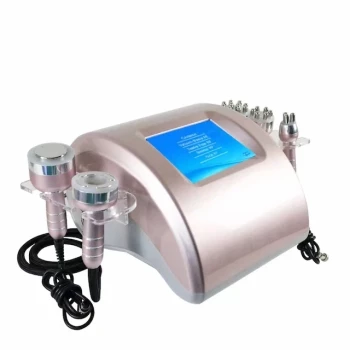
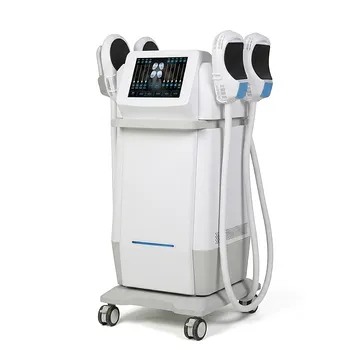
Monopolar RF generally heats deeper and more broadly, while bipolar RF concentrates energy closer to the skin surface. Monopolar systems use one treatment electrode and a distant grounding pad, allowing current to pass through a larger tissue volume. Bipolar systems place both electrodes in the handpiece, creating a more confined current path and more predictable superficial heating. These structural differences influence which type is better suited to deeper laxity, fine lines, comfort, and treatment precision.
The electrode arrangement determines the treatment depth: monopolar RF favors broad, deep volumetric heating for structural tightening, while bipolar RF favors controlled superficial dermal heating for localized rejuvenation.
How the Two RF Configurations Differ
Monopolar RF Uses a Distant Return Path
A monopolar device has one active treatment electrode in contact with the skin and a separate grounding or return pad placed elsewhere on the patient’s body.
The electrical current travels from the treatment electrode through tissue toward the grounding pad. Because the return electrode is distant, the current is distributed through a comparatively broad volume rather than remaining confined to the handpiece.
Bipolar RF Keeps Both Electrodes in the Handpiece
A bipolar device contains both the active and return electrodes within the same treatment tip. The current travels directly between these closely spaced poles.
This creates a more localized treatment field. The effective heating depth is commonly described as approximately half the distance between the electrodes, although the actual distribution depends on electrode geometry, tissue properties, device settings, and cooling.
Both Technologies Produce Thermal Collagen Remodeling
RF devices generate heat because tissue resists the passage of alternating electrical current. Therapeutic heating can produce immediate collagen fiber contraction and stimulate longer-term fibroblast activity and neocollagenesis.
The biological response is shared by both technologies. The major distinction is where and how broadly the heat is deposited.
Why Monopolar RF Reaches Deeper Tissue
Broad Volumetric Heating
Monopolar RF can heat the deep dermis, connective-tissue structures, and, depending on the device and settings, portions of the subcutaneous tissue. Its larger treatment volume makes it appropriate when laxity involves more than the superficial skin layer.
The result is often described as three-dimensional tightening or contouring, although the degree of lifting varies with tissue laxity, treatment parameters, and patient anatomy.
Typical Clinical Applications
Monopolar RF is commonly selected for:
- General facial laxity
- Jawline and submental tightening
- Broader areas of body laxity
- Structural contouring where deeper tissue heating is desired
It is generally less focused than bipolar RF, but that broader field can be useful when the treatment goal involves an entire region rather than a small wrinkle or delicate facial subunit.
Treatment Technique Matters
Because monopolar energy can reach deeper tissues, providers often use movement, pulse control, temperature monitoring, and cooling to distribute heat safely.
The grounding pad must also be positioned correctly, and treatment parameters must match the patient’s anatomy. Device design varies substantially, so “monopolar” alone does not predict an identical clinical effect across systems.
Why Bipolar RF Is More Superficially Controlled
Localized Dermal Heating
Bipolar RF confines current between two electrodes on the handpiece. This produces a relatively shallow, localized heating pattern that is easier to target to the superficial dermis.
The controlled field is useful for treating fine lines, surface texture, and areas where excessive depth or broad heating would be undesirable.
Typical Clinical Applications
Bipolar RF is commonly suited to:
- Fine lines and superficial wrinkles
- Periorbital or other delicate facial areas, when the specific device is indicated
- Localized facial texture concerns
- Superficial dermal laxity
Bipolar systems may also be integrated with optical energy or microneedling arrays. In those systems, RF is only one part of the treatment mechanism, so clinical results cannot be attributed to electrode configuration alone.
Predictable Does Not Mean Risk-Free
Bipolar RF is often more comfortable because the energy is confined to a smaller and shallower tissue volume. However, it can still cause excessive heating, burns, pigmentary changes, or other complications if settings, contact, or technique are inappropriate.
Superficial energy delivery also does not guarantee a stronger or longer-lasting result. It simply places the treatment effect in a different tissue compartment.
Comparing the Clinical Effects
Depth and Treatment Target
The clearest clinical distinction is depth. Monopolar RF is generally used when the treatment objective is broad, deep dermal or subcutaneous heating, whereas bipolar RF is generally used for more superficial dermal treatment.
This is a functional distinction rather than an absolute boundary. Some devices modify the field using multiple electrodes, cooling, pulsing, impedance feedback, or combined technologies.
Tightening Versus Surface Refinement
Monopolar RF is more aligned with structural tightening and contouring. Bipolar RF is more aligned with surface refinement and localized wrinkle softening.
Neither technology replaces surgical lifting, and neither reliably corrects substantial excess skin. Their practical value is greatest when the patient has mild to moderate laxity and realistic expectations.
Comfort and Recovery
Bipolar RF often produces a more localized and tolerable sensation because less tissue is heated at once. Monopolar RF may feel hotter or deeper, particularly when larger volumes of tissue are treated.
Both are generally nonablative approaches, so downtime is usually limited compared with procedures that remove or injure the skin surface. Actual recovery depends on energy settings, combination treatments, and individual skin response.
Skin-Tone Considerations
RF energy is not primarily absorbed by melanin in the way many light-based devices are. As a result, RF is generally considered adaptable across a broad range of skin tones.
This does not eliminate all risks. Excessive thermal exposure can still produce burns or post-inflammatory pigment changes, particularly in vulnerable patients or when treatment is poorly controlled.
Understanding the Trade-offs
Deeper Heating Increases the Need for Control
Monopolar RF can address deeper structures, but that broader and deeper energy distribution increases the importance of accurate temperature control, continuous technique where indicated, and appropriate patient selection.
Excessive or poorly distributed heating may cause burns and, in some circumstances, unwanted injury to subcutaneous fat. The risk depends on the specific system, settings, treatment technique, and anatomy.
Superficial Heating May Limit Structural Change
Bipolar RF offers precision and comfort, but its shallower treatment field may be insufficient for pronounced laxity or deeper contouring goals.
A patient seeking meaningful submental or body tightening may require a different RF configuration, a combination approach, or a treatment category with a stronger lifting effect.
Treatment Duration Is Device- and Patient-Dependent
Claims that monopolar results consistently last a fixed period, such as 1.5 to 2 years, should not be generalized to every device or patient. Durability depends on baseline laxity, age-related tissue changes, treatment course, maintenance, and the quality of clinical evidence for the particular system.
Collagen remodeling is gradual, and results should be assessed over time rather than judged solely by immediate post-treatment contraction.
“Bipolar” and “Monopolar” Are Not Complete Treatment Descriptions
The electrode configuration is important, but it is only one variable. Frequency, power, pulse duration, cooling, contact pressure, impedance feedback, treatment temperature, electrode size, and movement pattern also affect clinical performance.
Comparing devices solely by the label monopolar or bipolar can therefore lead to misleading conclusions.
Making the Right Choice for Your Goal
The appropriate option depends on the depth of laxity, treatment area, tolerance for heat, and design of the specific device.
- If your primary focus is deeper facial or body laxity: Monopolar RF is generally the more relevant configuration because it can deliver broader heating to deep dermal and selected subcutaneous structures.
- If your primary focus is fine lines or superficial texture: Bipolar RF is generally better suited to localized superficial dermal treatment.
- If your primary focus is comfort and treatment precision: Bipolar RF usually offers a more confined energy field, although safety still depends on correct technique and settings.
- If your primary focus is contouring a broader region: Monopolar RF may be more appropriate because its treatment field can encompass a larger volume of tissue.
- If your primary focus is a combined procedure: Assess the complete system, such as RF with microneedling or light energy, because the added technology changes both the mechanism and the risk profile.
Understanding the current path and heating depth allows you to match the RF technology to the tissue problem rather than choosing by device name alone.
Summary Table:
| Feature | Monopolar RF | Bipolar RF |
|---|---|---|
| Electrode placement | Active electrode + distant grounding pad | Both electrodes in handpiece |
| Current path | Broad, deep volumetric heating | Localized, superficial dermal heating |
| Typical treatment depth | Deep dermis, subcutaneous tissue | Superficial dermis |
| Clinical applications | General facial laxity, jawline, body contouring | Fine lines, superficial wrinkles, delicate areas |
| Comfort | May feel hotter or deeper | Often more comfortable due to localized heating |
| Suitable for | Structural tightening and contouring | Surface refinement and localized wrinkle softening |
| Risk profile | Higher need for temperature control | Lower risk of deep burns, but superficial burns possible |
| Outcome durability | Variable, not fixed | Variable, depends on device and patient |
| Best choice for | Deep laxity, broad contouring | Superficial texture, fine lines, precision |
Elevate Your Aesthetic Practice with BELIS
At BELIS, we specialize in professional-grade medical aesthetic equipment exclusively for clinics and premium salons. Our advanced RF systems, including both monopolar and bipolar technologies, are designed to deliver safe, effective skin tightening results for your clients. Whether your focus is deep structural lifting or superficial refinement, we provide the tools, training, and support to expand your service offerings and boost patient satisfaction.
Why choose BELIS?
- Comprehensive product range: From RF to lasers, IPL, HIFU, and body sculpting devices—covering every category in aesthetic technology.
- Uncompromising quality: Medical-grade devices that meet international safety standards.
- Business growth: Increase your clinic's revenue with high-demand treatments that attract new clients and retain existing ones.
- Expert support: We offer training, marketing materials, and after-sales service to ensure your success.
Ready to enhance your practice? Contact us today for a personalized consultation and discover how BELIS can help you achieve outstanding clinical outcomes and business growth.
Related Products
- Ultrasonic Cavitation Radiofrecuency Machine for Body Slimming
- Clinic Use IPL SHR ND YAG Laser Hair Removal RF Skin Tightening Machine
- RF Microneedling Machine Micro Needle Radio Frequency Machine
- Ultrasonic Cavitation Machine Lipo Laser Device
- 22D HIFU Machine Device Facial Machine
People Also Ask
- What are the pros and cons of the ultrasonic cavitation slimming treatment? A Guide to Painless Body Contouring
- Does an ultrasonic cavitation machine also tighten the skin? Achieve Total Body Contouring with RF Synergy
- How does radiofrequency technology in slimming machines promote fat reduction? The Science of Non-Invasive Sculpting
- How should one prepare for an ultrasonic cavitation appointment? 5 Essential Tips for Maximum Fat Loss Results
- What is an ultrasonic cavitation machine? Sculpt Your Body with Advanced Non-Invasive Fat Reduction