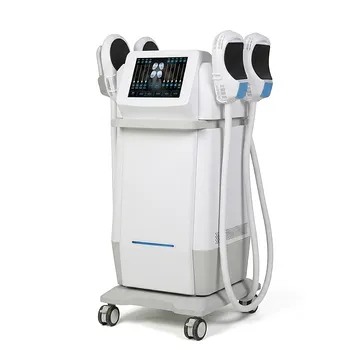
Monopolar RF reaches deeper and treats a broader tissue volume, while bipolar RF concentrates energy more superficially and locally. Structurally, monopolar devices use one active electrode in the handpiece plus a separate grounding pad, whereas bipolar devices place both electrodes in the handpiece. That electrode arrangement determines the current path, heating depth, treatment coverage, and typical clinical applications.
Monopolar RF is generally selected for broader, deeper volumetric heating and tissue remodeling. Bipolar RF is generally selected when controlled, localized heating of the superficial dermis is more important than deep penetration.
How the Electrode Structures Differ
Monopolar RF Uses a Remote Return Path
A monopolar RF handpiece contains one treatment electrode. A separate grounding or return pad is placed elsewhere on the patient’s body, completing the electrical circuit.
Current travels from the active electrode through the tissue toward the grounding pad. Because the return electrode is distant, the treatment field can extend through a relatively broad volume of tissue.
Bipolar RF Keeps Both Electrodes in the Handpiece
A bipolar RF handpiece contains both the active and return electrodes within the treatment tip. No separate grounding pad is required for the RF circuit.
Current travels between the closely spaced electrodes, producing a more confined field. The effective heating depth is commonly described as approximately half the electrode spacing, although actual distribution depends on electrode geometry, tissue impedance, contact, and device settings.
How the Current Paths Affect Heating
Monopolar RF Produces Broader, Deeper Heating
The distant return pad allows RF energy to pass through the deep dermis and, depending on the device, into subcutaneous tissue and fibrous septa. The result is volumetric heating rather than a narrowly defined superficial band.
This configuration can support collagen contraction, longer-term collagen remodeling, and tightening of tissue with deeper structural laxity. Some systems are also designed to affect subcutaneous adipose tissue, but the clinical effect depends on energy delivery, temperature control, treatment technique, and patient selection.
Bipolar RF Produces More Predictable Localized Heating
Because both electrodes are close together, bipolar RF concentrates the current field between them. Heating is therefore more restricted and easier to localize within the superficial or mid-dermal layers.
This makes bipolar RF useful when the treatment goal is controlled dermal heating rather than broad subcutaneous remodeling. Actual depth is device-specific; “bipolar” alone does not guarantee a particular millimeter range.
Clinical Differences in Treatment Use
Monopolar RF for Deeper Laxity and Larger Areas
Monopolar systems are commonly considered for overall skin laxity, submental tightening, jawline definition, and selected body areas. Their broader heating pattern is suited to treating a larger tissue volume in a single treatment field.
The clinical objective is often structural firming: heating deeper collagen-containing tissue and supporting gradual remodeling over time. Monopolar RF is not automatically a fat-reduction treatment, however, and it should not be presented as equivalent to a dedicated adipose-reduction procedure.
Bipolar RF for Superficial Dermal Concerns
Bipolar RF is commonly used for fine lines, superficial laxity, and texture-related concerns, particularly on delicate facial subunits. Its localized field can be advantageous around areas where precise energy placement matters.
Bipolar RF may also be incorporated into systems that combine RF with optical energy or microneedling. In those devices, the needles or additional energy source materially change the treatment mechanism, so the clinical behavior cannot be inferred from the bipolar RF configuration alone.
Both Modes Rely on Controlled Thermal Injury
RF devices convert delivered electrical energy into heat within tissue. Controlled heating can cause immediate collagen fiber contraction and stimulate longer-term fibroblast activity and neocollagenesis.
The visible result depends on reaching an appropriate therapeutic effect while avoiding excessive heating. Electrode configuration influences energy distribution, but treatment settings, cooling, motion, contact pressure, tissue thickness, and operator technique also matter.
Understanding the Trade-offs
Depth Versus Precision
Monopolar RF offers broader and generally deeper penetration, which can be valuable for three-dimensional tightening and larger treatment zones. The same broad field makes exact control of the deepest heating less direct than with a closely spaced bipolar configuration.
Bipolar RF provides more localized energy delivery and predictable electrode-to-electrode heating. Its principal limitation is that it usually does not create the same deep, volumetric treatment field as monopolar RF.
Coverage Versus Comfort
Monopolar treatments may involve greater patient sensation because more tissue is heated and the energy can reach deeper structures. Devices often use temperature monitoring, cooling, controlled motion, or other safeguards to manage comfort and reduce the risk of excessive heating.
Bipolar RF is often more comfortable because its energy is more confined, but comfort is not guaranteed. Higher settings, thin tissue, sensitive anatomical regions, and combination technologies can still produce substantial heat.
Grounding Requirements and Treatment Control
Monopolar RF requires correct placement and reliable contact of the grounding pad. The pad is part of the electrical circuit, so its position and contact quality are important to device operation and treatment safety.
Bipolar RF avoids that separate return-pad requirement. Its electrode spacing and handpiece contact help define the treatment field, but they do not eliminate the need for appropriate settings, coupling, skin assessment, and temperature control.
Do Not Infer Results From the Mode Alone
A monopolar device is not necessarily more effective for every patient, and a bipolar device is not necessarily safer or weaker in every situation. Device power, waveform, electrode design, cooling, treatment protocol, and the anatomical target can substantially change the outcome.
Claims about guaranteed fat reduction, fixed treatment depths, or specific result duration should therefore be evaluated against the particular device’s clinical evidence rather than the RF label alone.
Common Pitfalls to Avoid
Treating “Deeper” as Automatically “Better”
Deep heating is useful when the treatment target is deep dermal or subcutaneous laxity. It is less relevant when the concern is confined to superficial fine lines or texture.
The correct question is whether the device’s heating field matches the depth of the tissue problem.
Treating “Bipolar” as a Fixed Depth Specification
The approximate half-distance rule is a useful conceptual model, not a universal measurement. Current distribution changes with electrode shape, spacing, tissue properties, contact, and device controls.
Manufacturers and clinicians should rely on validated device-specific data when making precise depth claims.
Confusing RF Configuration With the Entire Treatment Modality
Microneedling RF places electrodes or RF energy at a controlled needle depth, while surface bipolar RF delivers energy through a contact tip. These are clinically different approaches even though both may be described as bipolar RF.
Likewise, combining RF with light, vacuum, cooling, or other technologies changes both the treatment experience and the risk profile.
Making the Right Choice for Your Goal
The appropriate mode should be selected according to the target tissue depth, treatment area, device design, and patient-specific risk factors.
- If your primary focus is deep tissue tightening or broader body contouring: Consider a clinically validated monopolar system capable of controlled volumetric heating into the deep dermis or selected subcutaneous tissues.
- If your primary focus is superficial fine lines or localized facial laxity: Consider a bipolar system that provides controlled, localized dermal heating appropriate to the treatment area.
- If your primary focus is comfort and precise energy placement: Favor a system with a confined bipolar field, reliable temperature monitoring, and settings appropriate for delicate anatomy.
- If your primary focus is subcutaneous fat reduction: Verify that the specific device has evidence for that indication rather than assuming that all monopolar RF systems produce meaningful adipose reduction.
- If your primary focus is selecting a combined RF platform: Evaluate the electrode configuration, needle depth, cooling, energy controls, and clinical evidence as a complete system.
The most defensible choice is the RF configuration whose actual heating field matches the depth and clinical objective of the tissue being treated.
Summary Table:
| Feature | Monopolar RF | Bipolar RF |
|---|---|---|
| Electrode arrangement | One active electrode + separate grounding pad | Both electrodes in handpiece |
| Current path | Distant return pad, broad and deep | Confined between closely spaced electrodes |
| Heating depth | Deeper, volumetric (up to subcutaneous) | Superficial to mid-dermal, localized |
| Clinical applications | Deep laxity, larger areas, submental/jawline | Fine lines, superficial laxity, delicate areas |
| Grounding pad required | Yes | No |
| Comfort | Potentially more sensation, deeper heat | Usually more comfortable, confined energy |
| Precision | Less direct control of deepest heating | More predictable, localized heating |
Ready to offer your clients the most effective RF skin tightening solutions? Contact our team today at Contact Us to explore our advanced RF platforms, designed for professional clinics and salons. Our expert consultants can help you choose the right device—monopolar or bipolar—based on your treatment goals and client needs. Elevate your practice with BELIS's cutting-edge technology and comprehensive support. Get Your Free Consultation now!
Related Products
- Ultrasonic Cavitation Radiofrecuency Machine for Body Slimming
- Ultrasonic Cavitation Machine Lipo Laser Device
- Clinic Use IPL SHR ND YAG Laser Hair Removal RF Skin Tightening Machine
- 4D 12D HIFU Machine Device for Skin Tightening and Lifting
- 4D 12D HIFU Machine Device for Skin Tightening
People Also Ask
- What are the pros and cons of the ultrasonic cavitation slimming treatment? A Guide to Painless Body Contouring
- Does an ultrasonic cavitation machine also tighten the skin? Achieve Total Body Contouring with RF Synergy
- How does radiofrequency technology in slimming machines promote fat reduction? The Science of Non-Invasive Sculpting
- How should one prepare for an ultrasonic cavitation appointment? 5 Essential Tips for Maximum Fat Loss Results
- What is an ultrasonic cavitation machine? Sculpt Your Body with Advanced Non-Invasive Fat Reduction