
While often marketed as a gentle, universal solution for skin health, a HydraFacial is not without its potential negatives. The primary risks include skin irritation, redness, and post-treatment breakouts, particularly for those with sensitive or acne-prone skin. In scenarios involving improper application or excessive frequency, there is a risk of more significant, long-term effects.
The central issue is that a HydraFacial's combination of chemical exfoliation and physical suction is not suitable for every skin type. While beneficial for some, it can easily overstimulate sensitive, reactive, or severely acneic skin, leading to unwanted side effects and potentially compromising the skin's protective barrier over time.
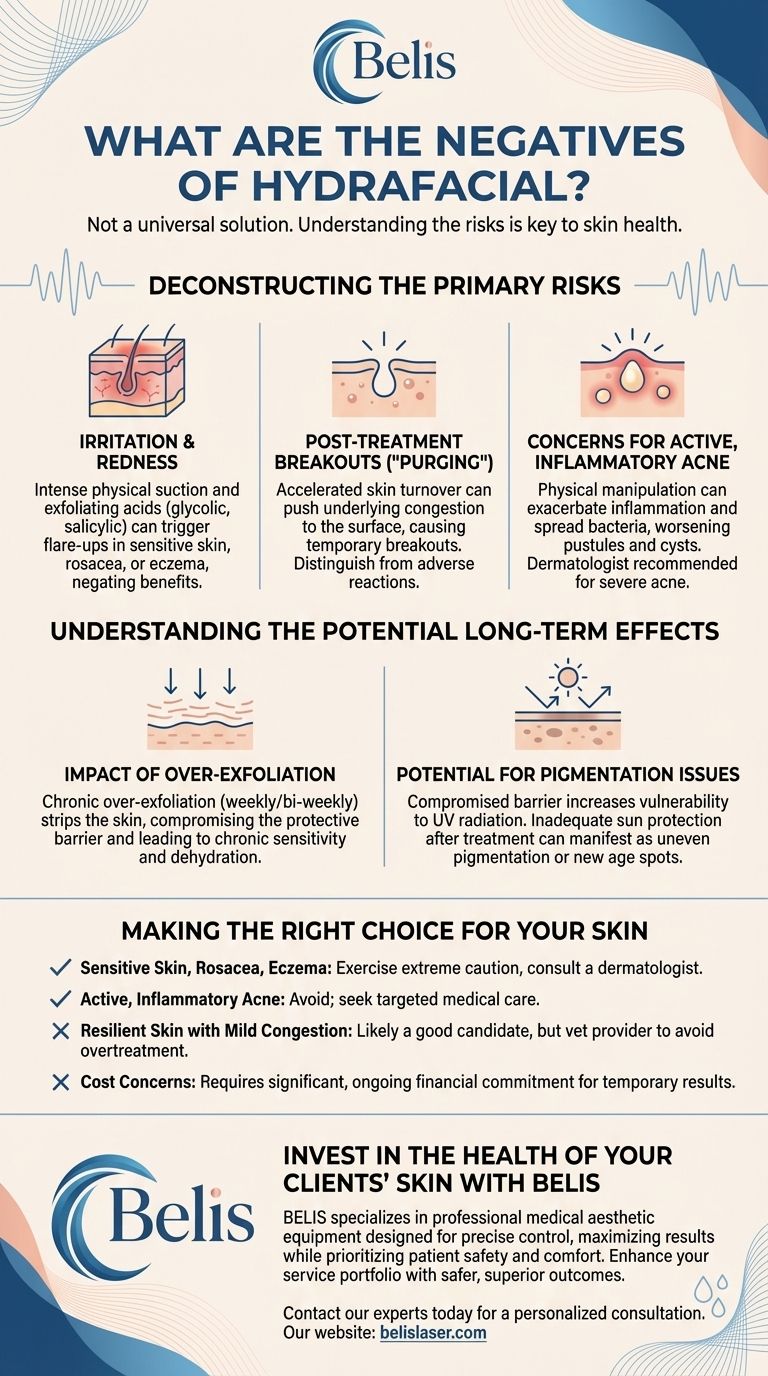
Deconstructing the Primary Risks
A HydraFacial is an active, multi-step treatment. Understanding where issues can arise in that process is key to assessing if it is right for you.
The Risk of Irritation and Redness
The treatment uses a vortex-like suction tip to both exfoliate and infuse serums. This physical manipulation, combined with exfoliating acids like glycolic and salicylic acid, can be too intense for certain individuals.
Those with pre-existing conditions like rosacea, eczema, or general skin sensitivity are most at risk. For these skin types, the procedure can trigger flare-ups, leading to prolonged redness and irritation that negates the intended benefits.
Post-Treatment Breakouts ("Purging")
It is not uncommon to experience breakouts after a HydraFacial. This is often referred to as skin purging, where the deep cleansing and exfoliation accelerate the skin's turnover, pushing underlying congestion to the surface.
While this is typically temporary, it's a significant drawback if you're seeking a "glow" for an immediate event. It's crucial to distinguish this from an adverse reaction, which might involve rashes, persistent redness, or breakouts in areas where you don't normally get them.
Concerns for Active, Inflammatory Acne
While a HydraFacial can help with mild congestion and blackheads, it should be avoided by those with active, inflammatory acne (pustules and cysts).
The physical manipulation and suction can exacerbate inflammation and potentially spread bacteria across the face, worsening the condition. A board-certified dermatologist is the appropriate expert for managing moderate to severe acne.
Understanding the Potential Long-Term Effects
The most serious concerns, while less common, are tied to the frequency and intensity of treatments over a long period. These risks are not typically associated with a single, properly administered session.
The Impact of Over-Exfoliation
The reference to "skin thinning" points to the danger of chronic over-exfoliation. A HydraFacial is a powerful exfoliating treatment.
When performed too frequently (e.g., weekly or bi-weekly), it can strip the skin and compromise its natural protective barrier. A weakened barrier can lead to chronic sensitivity, dehydration, and a reduced ability to protect itself from environmental damage.
Potential for Pigmentation Issues
A compromised skin barrier is also more vulnerable to UV radiation. If you receive aggressive or overly frequent HydraFacials and are not diligent with sun protection, your skin may become more susceptible to sun damage.
This can potentially manifest as uneven skin pigmentation or new age spots, as the skin's inflammatory response can trigger melanin production. This is an indirect risk related to improper frequency and aftercare, not a direct result of the machine itself.
Making the Right Choice for Your Skin
To determine if a HydraFacial is appropriate, you must weigh its benefits against the specific needs and resilience of your skin.
- If you have sensitive skin, rosacea, or eczema: You should exercise extreme caution. A consultation with a dermatologist before proceeding is the safest path.
- If you have active, inflammatory acne: You should avoid this treatment and seek targeted medical care from a dermatologist.
- If you are concerned about cost: Recognize that maintaining results requires a significant and ongoing financial commitment, as one treatment provides only temporary benefits.
- If you have resilient skin with mild congestion: You are likely a good candidate, but you must still vet your provider and ensure they do not overtreat your skin.
Ultimately, understanding these potential drawbacks empowers you to make a decision that prioritizes the long-term health and stability of your skin.
Summary Table:
| Potential Negative Effect | Key Risk Factors |
|---|---|
| Irritation & Redness | Sensitive skin, rosacea, eczema |
| Post-Treatment Breakouts | Acne-prone skin, accelerated skin purging |
| Worsening of Acne | Active inflammatory acne (pustules, cysts) |
| Long-Term Barrier Damage | Over-exfoliation from excessive treatment frequency |
| Pigmentation Issues | Compromised barrier with inadequate sun protection |
Invest in the Health of Your Clients' Skin with BELIS
Understanding the potential downsides of popular treatments like HydraFacial is crucial for building a reputable and safe practice. For medical aesthetics clinics and premium beauty salons, offering effective, reliable, and safe treatments is non-negotiable.
BELIS specializes in professional medical aesthetic equipment designed with advanced technology to maximize results while prioritizing patient safety and comfort. Our devices are engineered for precise control, allowing you to tailor treatments to individual skin types and minimize risks.
Ensure your clinic offers the highest standard of care. Let's discuss how BELIS equipment can enhance your service portfolio and provide safer, superior outcomes for your clients.
Contact our experts today for a personalized consultation
Visual Guide
Related Products
- Hydrofacial Machine Facial Clean Face and Skin Care Machine
- Hydrafacial Machine with Facial Skin Analyzer Skin Tester
- Hydrofacial Machine with Facial Skin Analyzer and Skin Tester
- Cryolipolysis Fat Freezing Machine and Ultrasonic Cavitation Device
- Cryolipolysis Fat Freezing Machine Cavitation Lipo Laser Machine
People Also Ask
- What is the first step of a hydro-facial treatment? Master the Art of Professional Cleansing & Exfoliation
- What is a HydroFacial treatment? Discover the Secret to Instant, Radiant Skin with Vortex-Fusion Technology
- How are extractions performed with a hydro-facial machine? Discover the Power of Vacuum Suction & Nutrient Infusion
- How can a hydro-facial treatment be customized? Maximize Results with Tailored Professional Protocols
- What should be done if no water comes out from the handle tips of a hydro-facial machine? Expert Repair Guide













