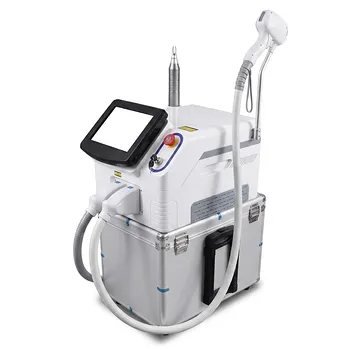
Solar lentigines can be treated with targeted aesthetic devices, resurfacing procedures, chemical peels, cryotherapy, and topical pigment-lightening agents. Q-switched or picosecond lasers are commonly used to fragment epidermal melanin, while resurfacing lasers promote epidermal renewal. Topicals such as hydroquinone, kojic acid, and phytic acid may reduce pigment gradually, but treatment should begin only after a clinician confirms that the lesion is benign.
The most effective approach depends on lesion number, location, skin type, recurrence risk, and tolerance for downtime. Devices generally provide faster clearance of discrete spots, while topical agents and sun protection support gradual improvement and help limit new pigmentation.
Establishing the Diagnosis Before Treatment
Solar lentigines Are Usually Benign
Solar lentigines are flat, well-defined brown macules caused by cumulative ultraviolet exposure. The excess melanin is primarily located in the epidermis, making it accessible to pigment-targeting treatments.
Suspicious Lesions Require Assessment
A changing, irregular, multicolored, bleeding, or symptomatic lesion should not be treated cosmetically without medical evaluation. A clinician may need to examine or biopsy it to exclude melanoma or another pigmented skin condition.
Skin Type Changes the Risk Profile
Darker skin types and recently tanned skin have a higher risk of post-inflammatory hyperpigmentation or hypopigmentation after energy-based treatment. Conservative settings, test spots, and careful aftercare may be appropriate.
Aesthetic Device Treatments
Q-Switched and Picosecond Lasers
Q-switched lasers deliver short, high-energy pulses that fragment concentrated melanin within the epidermis. Picosecond systems use even shorter pulses and may provide effective pigment disruption with limited surrounding tissue injury.
These treatments are best suited to discrete, clearly defined lesions. The treated pigment may temporarily darken, crust, or shed before the area gradually returns closer to the surrounding skin tone.
Green-Wavelength Pigment Lasers
Green-wavelength systems, including devices operating near 532 nm, are strongly absorbed by epidermal melanin. This allows the treatment to focus energy on superficial pigment while limiting exposure to deeper tissue when appropriate settings are used.
A correctly treated lesion may develop mild gray discoloration followed by light crusting. Healing commonly takes approximately 5 to 7 days on the face and 10 to 14 days on the hands and forearms, although individual recovery varies.
Fractional CO2 and Erbium Lasers
Fractional CO2 and Erbium lasers remove or remodel microscopic columns of epidermal tissue, encouraging epidermal renewal. They may be considered when lentigines occur alongside textural irregularity, fine lines, or broader photodamage.
Because resurfacing lasers generally create more tissue injury than highly selective pigment lasers, they can involve greater downtime and a higher risk of prolonged redness or pigmentary change.
Intense Pulsed Light
Intense pulsed light, or IPL, uses a broad range of light wavelengths rather than a single laser wavelength. It can address multiple sun-related pigment spots and background redness across larger areas.
IPL is not suitable for every skin tone or for recently tanned skin. Careful patient selection and appropriate filtering are important because melanin in the surrounding skin can also absorb the treatment energy.
Cryotherapy
Liquid nitrogen cryotherapy destroys the superficial pigmented area through controlled freezing. It can be practical for a small number of isolated lesions, but treatment depth is less precisely controlled than with some laser systems.
Blistering, temporary soreness, prolonged discoloration, scarring, or permanent lightening can occur. It should be performed by a trained clinician, particularly on cosmetically sensitive areas or darker skin.
Topical Pigment-Lightening Agents
Hydroquinone
Hydroquinone reduces melanin production and is commonly used for localized hyperpigmentation. Depending on the formulation and jurisdiction, it may be available by prescription or in regulated over-the-counter strengths.
It works gradually rather than instantly and can irritate the skin. Prolonged, unsupervised use increases the risk of ochronosis, a difficult-to-treat blue-gray discoloration, so duration and concentration should be medically supervised.
Kojic Acid
Kojic acid helps reduce pigment formation by interfering with tyrosinase, an enzyme involved in melanin synthesis. It is often used in creams, serums, or combination formulations.
Irritant or allergic contact dermatitis is possible. A lower-frequency introduction and consistent moisturization may improve tolerability.
Phytic Acid
Phytic acid is a milder pigment-modulating ingredient used in some topical products and professional peel formulations. It may be useful when a patient cannot tolerate stronger agents.
Results are typically gradual and variable. It should be combined with daily photoprotection because continued ultraviolet exposure can counteract treatment.
Combination Topicals
Clinicians may combine pigment-modulating agents with retinoids, azelaic acid, or other products when broader photodamage or post-inflammatory pigmentation is also present. The more active ingredients used, the greater the need for a structured regimen.
Combining irritating products without supervision can cause dermatitis, and inflammation itself may worsen pigmentation. A simple regimen that the patient can use consistently is usually more useful than an aggressive one that causes repeated irritation.
Why Sun Protection Is Part of Treatment
Ultraviolet Exposure Drives Recurrence
Removing visible pigment does not eliminate the underlying effect of cumulative sun exposure. New lentigines may develop, and treated lesions may darken again with ongoing ultraviolet exposure.
Broad-spectrum sunscreen, protective clothing, shade, and avoidance of intentional tanning are therefore essential. Daily sunscreen use is particularly important after lasers, IPL, peels, or cryotherapy.
Protection Must Continue After Healing
Sun protection is needed after the skin appears healed, not only while crusting or redness is present. Repeated exposure during recovery can increase the likelihood of persistent post-treatment pigmentation.
Understanding the Trade-offs
Faster Clearance Usually Means More Downtime
Pigment lasers can produce faster improvement in individual spots, but they may cause temporary darkening, crusting, redness, and a short period of visible healing. Topicals involve less procedural downtime but usually require weeks to months of consistent use.
Pigment Changes Can Go in Either Direction
Post-inflammatory hyperpigmentation is more likely in susceptible or recently tanned skin. Overtreatment can also produce transient or, less commonly, persistent hypopigmentation.
Excessive Energy Increases Complications
The goal is to affect superficial melanin while preserving surrounding tissue. Excessive energy or repeated passes can extend healing, increase inflammation, and raise the risk of scarring or unwanted pigment loss.
Recurrence Is Expected
Solar lentigines reflect chronic photodamage, so treatment is cosmetic correction rather than a permanent cure for the tendency to form new spots. Maintenance sun protection and periodic reassessment are part of long-term management.
Not Every Brown Spot Is a Lentigo
Seborrheic keratoses, melasma, post-inflammatory hyperpigmentation, and melanocytic lesions can resemble solar lentigines. Treating an incorrectly identified lesion can delay diagnosis or produce an unexpected result.
Making the Right Choice for Your Goal
The most appropriate plan should be selected after confirming the diagnosis, reviewing skin type and tanning history, and discussing acceptable downtime.
- If your primary focus is rapid treatment of a few distinct spots: Discuss a targeted Q-switched, picosecond, or suitable green-wavelength laser with a qualified clinician.
- If your primary focus is broader sun damage and uneven texture: Ask whether IPL or fractional CO2 or Erbium resurfacing is appropriate for your skin type and overall photodamage.
- If your primary focus is minimal procedural downtime: Consider a supervised topical regimen containing hydroquinone, kojic acid, phytic acid, or another appropriate pigment-modulating agent.
- If your primary focus is treating a small number of lesions without laser access: Cryotherapy may be an option, provided the diagnosis is secure and the risks of pigment change are acceptable.
- If your primary focus is preventing recurrence: Use consistent broad-spectrum sun protection and avoid tanning throughout and after treatment.
The safest effective strategy combines diagnostic confirmation, appropriately selected treatment, realistic expectations, and lifelong protection from further ultraviolet exposure.
Summary Table:
| Treatment | Key Features | Considerations |
|---|---|---|
| Q-Switched/Picosecond Lasers | High-energy pulses fragment epidermal melanin | Effective for discrete spots; may cause temporary darkening and crusting |
| Green-Wavelength Lasers | Strongly absorbed by melanin; limits deeper tissue exposure | Healing 5-7 days (face), 10-14 days (hands/forearms) |
| Fractional CO2/Erbium Lasers | Remodel skin, address texture and photodamage | Greater downtime, risk of prolonged redness or pigment changes |
| Intense Pulsed Light (IPL) | Broad spectrum targets multiple spots and redness | Not for all skin types; avoid on tanned skin |
| Cryotherapy | Freezing destroys pigmented cells | Risk of blistering, scarring, or hypopigmentation; less precise |
| Topical Agents (Hydroquinone, Kojic Acid, Phytic Acid) | Reduce melanin production gradually | Minimal downtime; requires weeks to months; risk of irritation |
| Sun Protection | Prevents recurrence and post-treatment pigmentation | Essential before, during, and after all treatments |
Elevate your clinic's solar lentigines treatments with BELIS's advanced aesthetic devices—laser systems, IPL, and more. Our professional-grade equipment ensures effective, safe outcomes. Contact us today to discuss your needs and enhance your practice. Contact us
Related Products
- Multifunctional Laser Hair Growth Machine Device for Hair Growth
- Multifunctional Laser Hair Growth Machine Device for Hair Growth
- Ultrasonic Cavitation Machine Lipo Laser Device
- 12D HIFU Machine Device for Facial HIFU Treatment
- Professional IPL SHR Hair Removal Machine for Laser and IPL Hair Removal
People Also Ask
- Why do professional-grade laser hair growth devices integrate LCD displays? Achieve Clinical Precision in Every Session
- What is a typical treatment schedule when using a laser hair growth device? Maximize Results with the Proven Protocol
- How do professional-grade laser stimulation devices contribute to improving hairline morphology? Revitalize Growth & Symmetry
- For which conditions have laser hair growth treatment devices been approved? Targeted Solutions for Androgenic Alopecia
- How do the biological phases of the hair growth cycle inform the clinical application of specialized hair growth devices for treating androgenetic alopecia? Insights for Clinics & Salons