In office-based aesthetic practice, surgical fat removal is generally limited to less than 5,000 mL of total aspirate, while office-based anesthesia is typically reserved for patients with a BMI below 30. Patients with BMI above 35 face substantially greater risks of perioperative morbidity, hypoxemia, and airway complications. These thresholds do not make BMI a complete measure of candidacy, but they provide important screening boundaries that help clinics determine when non-invasive body sculpting is more appropriate than surgery.
The central distinction is between localized contouring and systemic weight reduction. Non-invasive technologies such as cryolipolysis, selected radiofrequency systems, and electromagnetic muscle stimulation can address discrete fat deposits without aspirate-volume limits or surgical anesthesia, but they are not substitutes for obesity treatment or bariatric care.
What the Surgical Limits Mean
The 5,000 mL aspirate threshold
Clinical safety guidance for office-based liposuction commonly limits total supernatant fat and fluid aspirate to below approximately 5,000 mL in a single session. Some guidance describes the upper range as 4,500 to 5,000 mL, reflecting the increased risk associated with larger-volume procedures.
As aspirate volume rises, so do concerns about fluid shifts, fluid overload, systemic toxicity, and thromboembolic events. Patients requiring substantial reduction across multiple body regions may need staged surgical procedures rather than one extensive office-based session.
Why BMI affects office-based anesthesia
Office-based procedures involving anesthesia generally require more conservative patient selection. A BMI below 30 is often used as a practical threshold for considering office-based surgical treatment, subject to the patient’s broader medical assessment.
A BMI above 35 is associated with increased risk of airway complications, rapid oxygen desaturation, and perioperative morbidity. BMI alone does not measure fat distribution, muscle mass, or cardiometabolic health, so it should be treated as one component of a structured evaluation rather than an automatic approval or rejection.
These are clinical boundaries, not universal laws
Specific limits vary according to jurisdiction, facility accreditation, anesthesia plan, procedure type, surgeon judgment, and the patient’s health status. Clinics should therefore apply current local regulations and specialty-society guidance rather than treating the stated values as universally applicable rules.
How Patient Stratification Guides Non-Invasive Treatment
Separate weight management from contouring
Non-invasive body sculpting is designed for modest, localized fat reduction, not generalized weight loss. Patients with obesity or diffuse adiposity generally require lifestyle, medical, or bariatric interventions before contouring becomes the primary objective.
The strongest candidates are usually near their target weight, medically appropriate for treatment, and concerned about discrete fat pockets that have not responded adequately to diet and exercise.
Use non-invasive treatment when surgery is disproportionate
Patients who exceed a clinic’s safe surgical BMI threshold, require only moderate contour improvement, or prefer to avoid anesthesia may be candidates for non-invasive treatment. These technologies can reduce or remodel localized subcutaneous tissue without creating a surgical aspirate burden.
This makes them useful for office-based treatment plans involving areas such as the abdomen, flanks, thighs, or other appropriately selected regions. They can also support staged or maintenance-based care when a patient’s contour changes over time.
Match the modality to the clinical objective
Cryolipolysis is used for localized fat reduction through controlled cooling. It is best considered when the treatment area contains a suitable, discrete subcutaneous fat deposit.
Radiofrequency-based systems, including some RF cavitation platforms, apply controlled energy and heating to targeted tissue. Their suitability depends on the device, treatment parameters, tissue characteristics, and the intended contouring objective.
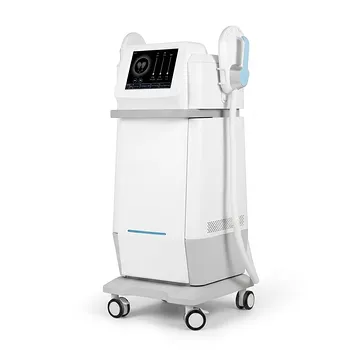
High-intensity electromagnetic muscle stimulation, such as EMSlim-type technology, is aimed primarily at muscle stimulation and shaping. It should not be presented as a replacement for fat-loss treatment or as a therapy for obesity.
What a Proper Assessment Should Include
Evaluate more than BMI
BMI should be considered alongside fat distribution, metabolic health, skin quality, and the patient’s treatment goals. Hyperglycemia, dyslipidemia, cardiovascular risk, and other relevant medical conditions may affect whether treatment is appropriate.
A patient with a BMI below 30 may still be a poor candidate if the clinical problem is primarily excess skin, severe muscle-wall laxity, or an unrecognized medical condition.
Assess skin elasticity and muscle-wall laxity
Non-invasive contouring is most appropriate when the patient has reasonable skin elasticity and limited musculoaponeurotic laxity. These treatments may reduce localized fat, but they do not reliably correct substantial skin redundancy or major fascial weakness.
Marked skin excess or significant rectus diastasis may require a surgical consultation rather than repeated energy-based treatments.
Confirm adequate tissue thickness
For ultrasound-based body sculpting, the reference material identifies a minimum targeted subcutaneous fat thickness of approximately 1.5 cm in areas such as the abdomen, flanks, and outer thighs. Treating thinner areas may increase the risk of pain or skin injury because acoustic energy can reflect from underlying bone.
This measurement should be confirmed during an in-person examination and interpreted according to the specific device’s validated indications and manufacturer instructions.
Why Non-Invasive Does Not Mean Risk-Free
There is no aspirate limit, but there are treatment limits
Non-invasive procedures do not remove liters of fat and therefore do not carry the same aspirate-volume problem as liposuction. However, they still require device-specific limits for energy, treatment area, spacing, and session frequency.
“Unlimited” multi-area treatment would be an unsafe interpretation. Clinics must control the total treatment burden and monitor tissue response.
Avoid over-treatment
Removing or reducing too much fat from a small region can produce surface irregularities, contour steps, or loss of tissue harmony. Because treated adipose cells may not simply regenerate in the same pattern, conservative planning is essential.
Energy delivery should be directed toward the intended deep subcutaneous layer while minimizing unnecessary disruption of superficial tissues, including lymphatic structures. Treatment plans should preserve gradual transitions between adjacent body regions.
Screen for long-term expectations
Non-invasive contouring does not prevent future weight gain. When patients gain weight after treatment, fat may accumulate in untreated areas, potentially producing an uneven or less harmonious contour.
Clinics should discuss weight stability, realistic endpoints, possible multi-area planning, and maintenance protocols before treatment begins.
Understanding the Trade-offs
Non-invasive treatment reduces some risks, not all risks
Avoiding surgery and general anesthesia can reduce exposure to surgical blood loss, aspirate-related fluid shifts, airway management, and postoperative downtime. It does not eliminate the need for medical screening, informed consent, appropriate contraindication checks, or emergency planning.
Device-related adverse effects and poor aesthetic outcomes remain possible, particularly when treatment is applied to unsuitable tissue or when conservative limits are ignored.
Results are more limited than surgical reduction
Liposuction can remove a larger volume of fat in a single procedure, subject to safety limits and appropriate surgical conditions. Non-invasive approaches are generally better suited to incremental, localized improvement rather than dramatic whole-body change.
Patients seeking major weight reduction or correction of extensive skin excess may be dissatisfied if non-invasive contouring is presented as an equivalent alternative to surgery.
Patient selection determines value
A device cannot compensate for an incorrect diagnosis of the contour problem. Treating diffuse obesity, severe skin redundancy, or muscle-wall separation with localized fat-reduction technology addresses the wrong clinical target.
Structured screening allows the clinic to refer patients toward weight-management care, surgical evaluation, or non-invasive contouring as appropriate.
Making the Right Choice for Your Goal
The practical decision should be based on the patient’s health, anatomy, treatment area, and expected degree of change.
- If your primary focus is significant overall weight reduction: Address obesity through lifestyle, medical, or bariatric pathways; non-invasive contouring should not be used as the primary weight-loss treatment.
- If your primary focus is localized fat reduction with BMI below 30: Consider a device-appropriate non-invasive treatment after confirming stable weight, adequate tissue thickness, skin elasticity, and limited muscle-wall laxity.
- If your primary focus is large-volume surgical fat removal: Apply the relevant aspirate limits, anesthesia requirements, facility standards, and staged-procedure principles rather than attempting to complete excessive reduction in one office session.
- If your primary focus is avoiding anesthesia and downtime: Non-invasive body sculpting may provide a lower-burden option, provided expectations remain modest and the patient is medically and anatomically suitable.
- If your primary focus is correcting loose skin or marked abdominal-wall weakness: Obtain a surgical assessment, because fat-reduction devices do not reconstruct redundant skin or significantly weakened fascia.
The safest body-contouring strategy matches the treatment modality to the patient’s actual clinical problem, not merely to a device’s availability.
Summary Table:
| Guideline | Clinical Threshold | Implication for Practice |
|---|---|---|
| Aspirate Volume | < 5,000 mL per session | Limits office-based liposuction to avoid fluid shifts and complications; staged procedures may be needed |
| BMI for office-based anesthesia | < 30 | Conservative screening for anesthesia safety; >35 increases risks |
| BMI and obesity | > 35 | Higher perioperative risk; prioritize weight management before contouring |
| Non-invasive candidacy | Near ideal weight, stable | Localized fat reduction; not for generalized weight loss |
| Tissue thickness | ≥ 1.5 cm for ultrasound | Ensures appropriate target depth and reduces risk of injury |
Explore how BELIS medical aesthetic devices can enhance your practice's body sculpting capabilities, ensuring safe and effective treatments for your clients. Our portfolio includes advanced cryolipolysis, RF, EMSlim, and more, designed for clinics and premium salons. Contact us today to learn more and schedule a consultation: Contact Us.
Related Products
- EMS Body Sculpting Machine for Body Slimming and Sculpting
- EMSlim RG Laser Body Sculpting and Slimming Machine
- EMSlim Neo Nova Body Sculpting EMS Sculpting Machine
- EMS Body Sculpting Slimming Machine EMSlim Body Slimming Machine
- EMSlim Body Slimming Machine for Muscle Building and Beauty
People Also Ask
- Does EMS sculpting really work? Achieve Clinically-Proven Body Contouring
- Why is it important for practitioners to avoid over-promising body sculpting results? Ensure Trust and Clinic Success.
- What are the technical advantages of professional body sculpting? Non-Invasive vs. Invasive Liposuction Explained
- Does EMS actually work for weight loss? A Realistic Look at Muscle Building and Metabolism
- What patient selection criteria and evaluation protocols should aesthetic clinics implement to optimize outcomes with non-invasive body sculpting devices?