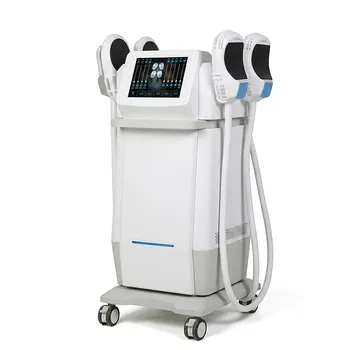
RF devices generally offer greater operational simplicity and deeper, chromophore-independent heating, while aesthetic lasers remain superior for precise superficial resurfacing. RF can heat dermal and subdermal tissue volumetrically without removing the epidermis, making it well suited to collagen remodeling, skin tightening, and selected contouring applications. Ablative lasers such as fractional CO2 and Er:YAG are more effective when the objective is controlled micro-ablation, textural refinement, pigment correction, or mucosal resurfacing.
The better technology depends on the treatment objective: RF usually provides a broader operational and skin-type advantage for non-ablative tightening, whereas lasers provide greater precision for surface-level correction.
Where RF Has the Clinical Advantage
Deeper volumetric heating
RF generates thermal energy through tissue electrical resistance and ionic movement rather than photon absorption by a specific chromophore. This allows appropriately configured devices to deliver heat into deeper dermal and subdermal layers, supporting collagen contraction and longer-term remodeling.
The result is particularly relevant for skin laxity, fine lines, and selected contouring goals, where surface ablation is not necessary.
Reduced dependence on skin pigmentation
Lasers and other optical systems may be absorbed by melanin or hemoglobin, depending on the wavelength and treatment objective. That interaction can affect treatment parameters and complication risk, particularly in darker skin types.
RF is chromophore-independent, so its energy delivery is not governed by epidermal melanin concentration. This can expand treatment options across Fitzpatrick skin types and reduce, though not eliminate, concern about pigmentary complications.
Preservation of the epidermal surface
Many RF systems are non-ablative and heat tissue beneath the surface without intentionally removing the epidermis. This can mean less surface disruption and a more practical recovery profile than aggressive ablative resurfacing.
The distinction is important, however: not every RF device is non-ablative. Fractional, microneedling, and other RF platforms may intentionally create controlled dermal or epidermal injury.
Flexible treatment depth and modality
RF technology is available in non-ablative, volumetric, fractional, micro-invasive, and other configurations. This gives clinicians options ranging from deep tightening to more localized tissue remodeling.
That flexibility can make RF useful when a practice wants to address multiple indications without relying exclusively on aggressive surface resurfacing.
Where Lasers Retain the Clinical Advantage
More precise superficial resurfacing
Ablative lasers remove controlled portions of the epidermis and superficial dermis. Fractional CO2 and Er:YAG systems therefore remain strong choices for surface texture, fine lines, acne scarring, and other conditions requiring precise micro-ablation.
Their ability to target the surface directly is an advantage when RF heating alone cannot produce the desired textural change.
Pigment and vascular targeting
Specific laser wavelengths can interact with chromophores such as melanin and hemoglobin. This enables targeted treatment of selected pigmentary and vascular concerns that are not directly addressed by general RF heating.
The same chromophore dependence that creates this precision also requires careful patient selection, parameter setting, and management of pigmentary risk.
Mucosal and tissue resurfacing
Ablative lasers can provide controlled mucosal resurfacing and tissue restructuring in appropriate clinical settings. RF may offer non-ablative or deeper thermal effects, but it does not automatically replace the precision of laser ablation for every mucosal indication.
The correct comparison must therefore consider the specific tissue, indication, depth, and treatment endpoint.
Operational Advantages of RF
Lower entry and ownership burden
RF equipment typically has a lower initial acquisition cost than many advanced laser systems. Maintenance requirements are also often less demanding, although costs vary substantially by manufacturer, handpiece, consumable model, and device complexity.
The relevant business question is total cost of ownership, including service contracts, disposable components, training, room requirements, and expected treatment volume.
Fewer environmental safety concerns
Laser procedures can generate surgical plume when tissue is vaporized. That may require plume evacuation, appropriate ventilation, respiratory protection, and additional procedural controls.
Non-ablative RF generally does not create laser plume because it does not vaporize tissue at the treatment surface. Ablative or invasive RF procedures can still create smoke, aerosols, heat, or other hazards, so the specific modality determines the required controls.
Broader workflow suitability
RF treatments that preserve the epidermis may require less downtime and can fit more readily into practices focused on repeated tightening or remodeling procedures. Integrated temperature monitoring and cooling features on some platforms can also support treatment consistency.
These benefits depend on appropriate operator training and device-specific safety systems. They should not be treated as substitutes for clinical judgment.
Potentially broader patient eligibility
Because RF does not rely on melanin absorption, it can be attractive for practices treating a diverse range of skin phototypes. This may reduce the need to exclude patients solely because of pigmentation-related laser risk.
It does not remove all contraindications or complications. Thermal injury, pain, burns, scarring, pigment alteration, and uneven results remain possible when energy delivery is excessive or poorly controlled.
Understanding the Trade-offs
RF is not a universal replacement for lasers
RF is strongest when the goal is deep heating, tightening, and remodeling. It is generally less capable than ablative laser resurfacing for removing damaged surface tissue and producing highly controlled textural correction.
Selecting RF solely because it is operationally simpler can produce a mismatch between the technology and the clinical objective.
Lasers involve greater procedural complexity
Ablative lasers can require more extensive training, eye protection, plume management, patient preparation, and post-treatment care. Recovery may also be longer because the epidermal barrier has been intentionally disrupted.
These burdens are balanced by the laser’s ability to deliver precise and often more pronounced surface correction.
RF outcomes depend heavily on technique
RF treatment results vary with electrode configuration, impedance, tissue contact, temperature control, treatment depth, energy settings, and the patient’s anatomy. Uneven coupling or excessive heating can lead to inconsistent outcomes or thermal injury.
A device with built-in monitoring and cooling improves control, but it does not eliminate the need for a trained operator and a standardized protocol.
Capital cost does not determine return on investment
A lower purchase price may improve accessibility, but financial performance also depends on utilization, pricing, consumables, staffing, treatment time, service costs, and patient demand. A more expensive laser may be commercially justified when its resurfacing capabilities support a high-value treatment program.
Operational comparison should therefore include clinical demand and workflow economics, not equipment price alone.
Making the Right Choice for Your Goal
The most defensible choice follows the intended treatment endpoint rather than the technology label.
- If your primary focus is non-ablative tightening: Choose an RF platform capable of controlled dermal or subdermal heating, with appropriate temperature monitoring and cooling.
- If your primary focus is surface texture and acne scarring: Choose an ablative or fractional laser when precise micro-ablation and resurfacing are central to the treatment plan.
- If your primary focus is treating diverse skin phototypes: RF may offer a practical chromophore-independent option, while laser protocols require careful wavelength selection and pigment-risk management.
- If your primary focus is operational simplicity: RF may provide lower acquisition and maintenance demands and fewer plume-related requirements, subject to the specific device and procedure.
- If your primary focus is pigment or vascular correction: A wavelength-specific laser may be more appropriate because it can target the relevant chromophore directly.
RF is usually the stronger choice for accessible, deeper, non-ablative remodeling, while lasers remain the stronger choice for precise surface correction.
Summary Table:
| Aspect | RF Devices | Aesthetic Lasers |
|---|---|---|
| Mechanism | Resistive heating, chromophore-independent | Photon absorption by chromophores (melanin, hemoglobin) |
| Treatment Depth | Deeper dermal/subdermal volumetric heating | Precise superficial ablation |
| Skin Types | Works across diverse Fitzpatrick types | Higher risk for darker skin types |
| Epidermal Impact | Often non-ablative, preserves epidermis | Ablative lasers remove epidermis |
| Key Indications | Skin tightening, collagen remodeling, contouring | Surface resurfacing, pigment/vascular correction |
| Operational Complexity | Lower entry cost, less plume, shorter downtime | Requires more training, plume management, longer recovery |
| Best For | Non-ablative tightening, operational simplicity | Precise textural and pigmentary correction |
Ready to enhance your practice with advanced aesthetic technology? At BELIS, we offer a comprehensive range of professional-grade RF and laser systems, including state-of-the-art microneedle RF, fractional CO2, and Er:YAG lasers, tailored for clinics and premium salons. Our solutions combine clinical efficacy with operational efficiency to help you deliver outstanding results and grow your business. Contact our experts today to find the perfect device for your needs and discover why leading practitioners trust BELIS.
Contact us now for a personalized consultation!
Related Products
- Ultrasonic Cavitation Radiofrecuency Machine for Body Slimming
- IPL SHR+Radio frecuency machine
- Ultrasonic Cavitation Machine Lipo Laser Device
- RF Microneedling Machine Micro Needle Radio Frequency Machine
- RF Microneedling Machine Micro Needle Radio Frequency Machine
People Also Ask
- What are the pros and cons of the ultrasonic cavitation slimming treatment? A Guide to Painless Body Contouring
- Does an ultrasonic cavitation machine also tighten the skin? Achieve Total Body Contouring with RF Synergy
- How does radiofrequency technology in slimming machines promote fat reduction? The Science of Non-Invasive Sculpting
- How should one prepare for an ultrasonic cavitation appointment? 5 Essential Tips for Maximum Fat Loss Results
- What is an ultrasonic cavitation machine? Sculpt Your Body with Advanced Non-Invasive Fat Reduction