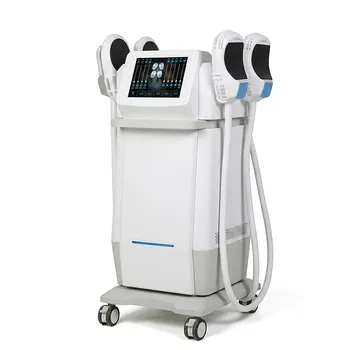
Radiofrequency equipment generally offers a broader safety profile than optical lasers for non-ablative skin tightening. RF heats the dermis through electrical resistance and ionic movement, rather than depending on melanin, hemoglobin, or another optical chromophore. This chromophore-independent mechanism can reduce the risk of pigmentary complications and allow treatment across a wider range of skin phototypes, while still stimulating collagen contraction and remodeling.
The central clinical advantage of RF is predictable dermal heating with less dependence on epidermal pigmentation. This makes RF especially useful for treating skin laxity in patients with darker skin tones or a higher risk of post-inflammatory hyperpigmentation, although treatment safety still depends on device settings, cooling, technique, and patient selection.
Why RF Is Clinically Different From Optical Lasers
RF Uses Electrical Resistance Instead of Selective Light Absorption
Optical lasers deliver photons that are preferentially absorbed by target chromophores. Depending on the wavelength and treatment parameters, those targets may include melanin, hemoglobin, or water.
RF generates heat as electrical energy encounters tissue impedance. Because this process does not require melanin or hemoglobin to absorb the energy, RF is less affected by variations in epidermal pigmentation.
RF Can Deliver Volumetric Dermal Heating
Many RF systems are designed to heat a broader volume of the dermis rather than concentrating energy only at a superficial optical target. This can support treatment of laxity by affecting collagen fibers and the surrounding dermal matrix.
The actual depth and distribution depend on the system. Monopolar, bipolar, multipolar, and microneedle RF devices deliver energy differently, so “RF” should not be treated as a single uniform technology.
Both Modalities Can Preserve the Epidermis
Non-ablative lasers and RF systems are intended to heat or remodel tissue while preserving the skin surface. Controlled thermal injury can cause short-term collagen contraction and initiate a longer wound-healing response involving fibroblast activity and new collagen formation.
RF is therefore not inherently more effective simply because it is non-optical. Its principal distinction is how thermal energy is delivered and how much the treatment depends on optical absorption.
The Main Clinical Advantages of RF
Lower Dependence on Skin Pigmentation
Because RF does not target melanin, it can be used more predictably across a broad range of skin phototypes. This is particularly relevant for patients with darker skin, in whom pigment-containing epidermis can compete for laser energy.
The risk of post-inflammatory hyperpigmentation is not eliminated. Excessive heating, inflammation, infection, inadequate cooling, and poor aftercare can still produce dyschromia after RF treatment.
Reduced Risk of Melanin-Related Epidermal Injury
With some optical systems, epidermal melanin can absorb energy intended for deeper tissue. That competition can increase the risk of epidermal overheating, burns, or pigmentary change, especially when fluence and pulse duration are not appropriately matched to the patient’s skin type.
RF’s chromophore-independent mechanism avoids this specific interaction. This can simplify treatment planning when the clinical goal is dermal tightening rather than targeting superficial pigment or vascular lesions.
Useful Treatment of Deeper Dermal Laxity
RF can be configured to produce heating within deeper dermal tissue, where collagen fibers and the extracellular matrix contribute to firmness and structural support. This makes it useful for non-surgical treatment of selected facial and body laxity.
However, RF should not be described as universally deeper than every laser. Optical penetration varies substantially by wavelength, pulse structure, tissue composition, and delivery method, and some non-ablative lasers also affect the deeper dermis.
Broad Anatomical Versatility
RF systems are used for areas such as the face, neck, jawline, abdomen, arms, and other regions with mild to moderate laxity. Contact-based delivery and adjustable applicators can make RF practical for both facial and body treatment.
The appropriate device depends on the target depth, tissue thickness, laxity pattern, pain tolerance, and whether the treatment involves needles. A superficial contact RF system and a fractional microneedle RF system should be evaluated as different clinical tools.
Minimal Surface Disruption
Since non-ablative RF does not intentionally remove the epidermis, patients generally experience less surface disruption than with ablative resurfacing. Many treatments involve temporary erythema, warmth, swelling, or tenderness rather than prolonged wound care.
Recovery is not necessarily zero. The duration and intensity of downtime vary with energy level, treatment technique, needle penetration, and the patient’s inflammatory response.
How RF Produces Skin Tightening
Immediate Collagen Contraction
Controlled heating can alter the structure of existing collagen fibers, producing an early tightening effect. This response is usually subtle to moderate and should not be equated with surgical lifting.
Target temperatures are device- and tissue-dependent. A commonly cited collagen-denaturation range near 60 to 65°C describes a thermal phenomenon, not a universal treatment setting or a guarantee of clinical improvement.
Delayed Collagen Remodeling
After treatment, the controlled thermal response can activate a wound-healing process. Fibroblast activity and subsequent extracellular-matrix remodeling may gradually improve dermal thickness, elasticity, and firmness.
Visible results therefore often develop over weeks to months and may require a series of treatments. Patient expectations should account for the difference between temporary thermal contraction and longer-term remodeling.
Potential Improvement in Texture
Some RF systems, particularly fractional or microneedle configurations, can also improve selected textural concerns such as fine lines and acne-scar irregularity. Their benefit comes from a combination of controlled thermal delivery and, in needle-based systems, precisely placed dermal injury.
This does not make every RF device an equivalent substitute for a resurfacing laser. The expected texture response depends on the device design and the condition being treated.
Understanding the Trade-offs
RF Does Not Remove All Treatment Risk
RF can cause excessive heating, pain, burns, prolonged inflammation, swelling, fat-volume changes, or contour irregularity when energy is delivered too aggressively or to unsuitable tissue. Device-specific training and temperature or impedance monitoring are important risk controls.
The absence of chromophore targeting reduces one category of risk but does not remove the need for careful patient assessment, conservative parameter selection, and appropriate cooling.
Lasers Offer Capabilities RF May Not Match
Optical lasers can selectively address pigment, vascular lesions, photodamage, and certain textural abnormalities. RF is generally less suitable when the primary objective is removal of a superficial chromophore-based target.
A laser may therefore be the better choice for a patient whose main concern is dyschromia or vascular redness rather than laxity.
Results Are Usually More Modest Than Surgical Lifting
Non-ablative RF is intended for gradual improvement in mild to moderate laxity. It cannot reproduce the degree of tissue repositioning achieved through surgery, and it may have limited impact on substantial skin excess or advanced structural ptosis.
Clear communication about the likely scale and timeline of improvement is part of responsible treatment planning.
Device Categories Are Not Interchangeable
Monopolar RF may deliver energy through a larger tissue volume, while bipolar and multipolar systems use different electrode arrangements. Microneedle RF introduces energy at selected dermal depths and may involve more downtime than external contact systems.
Comparisons should therefore be made between specific devices and protocols, not between the labels “RF” and “laser” alone.
Making the Right Choice for Your Goal
The most appropriate technology depends on the treatment objective, skin type, anatomy, and tolerance for downtime.
- If your primary focus is treating laxity across diverse skin phototypes: RF is a strong option because its dermal heating does not depend on melanin absorption.
- If your primary focus is minimizing pigmentary risk: RF may offer an advantage over chromophore-sensitive laser protocols, while still requiring careful thermal control.
- If your primary focus is superficial pigmentation or vascular redness: An appropriately selected optical laser may be more suitable because it can target those chromophores directly.
- If your primary focus is gradual, non-surgical tightening: Choose a modality and protocol designed for controlled dermal heating, with expectations centered on progressive rather than surgical-level lifting.
- If your primary focus is treating complex laxity and surface concerns together: A combination approach may be appropriate, provided each energy source is selected and sequenced according to its specific risk profile.
RF is most valuable when the clinical priority is controlled dermal remodeling with broad skin-type compatibility, not when one technology is assumed to be superior for every aesthetic indication.
Summary Table:
Comparison: RF vs. Optical Lasers for Non-Ablative Skin Tightening
| Aspect | RF (Radiofrequency) | Optical Lasers |
|---|---|---|
| Mechanism | Electrical resistance & ionic movement | Selective light absorption by chromophores |
| Dependence on melanin | Low | High (risk of pigmentary complications) |
| Skin type suitability | Broad range, including darker skin | Limited for darker skin types |
| Heating pattern | Volumetric dermal heating | Depends on wavelength & target |
| Primary indications | Laxity, mild to moderate skin tightening | Pigment, vascular lesions, photodamage |
| Risk of post-inflammatory hyperpigmentation | Lower (if carefully controlled) | Higher in darker skin |
| Clinical results | Gradual tightening over weeks-months | Varies; may target specific issues |
Enhance Your Practice with Advanced RF Technology
At BELIS, we provide state-of-the-art RF systems designed for safe, effective skin tightening across all skin types. Our professional-grade equipment includes multipolar and microneedle RF devices, ideal for clinics and premium salons seeking to expand their non-invasive offerings. Partner with us to deliver superior patient satisfaction and grow your business.
Contact us today to learn more about our RF solutions and how they can benefit your practice!
Related Products
- RF Microneedling Machine Micro Needle Radio Frequency Machine
- RF Microneedling Machine Micro Needle Radio Frequency Machine
- IPL SHR+Radio frecuency machine
- Ultrasonic Cavitation Radiofrecuency Machine for Body Slimming
- EMSlim Neo Nova Body Sculpting EMS Sculpting Machine
People Also Ask
- How does Microneedling RF differ from standard microneedling? Advanced Scars Treatment for Clinic Results
- How does Microneedling assist in drug absorption for vitiligo? Boost Treatment Efficacy with Enhanced Micro-channels
- What is the function of applying high-concentration topical anesthetic cream? Unlock Deeper Results in Microneedling
- Why is evaluating localized skin thickness essential when setting needle depth and energy parameters for microneedling RF and microdermabrasion devices? Achieve Safe and Effective Treatments
- Why is a 2.5mm needle depth typically selected for deep scars? Unlock Professional Microneedling Results