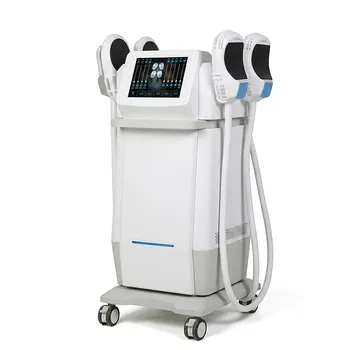
RF skin tightening has a key clinical advantage over many optical laser treatments: it heats the dermis without depending on melanin or other light-absorbing chromophores. This makes RF broadly suitable across Fitzpatrick skin phototypes, including darker skin tones that may be more vulnerable to laser-induced epidermal heating and post-inflammatory hyperpigmentation. RF can also deliver volumetric heat to deeper tissue, supporting collagen remodeling and skin tightening with little to no downtime.
The central advantage of RF is chromophore-independent, dermal heating. Because RF energy is generated by tissue resistance rather than absorbed light, it can target deeper collagen-rich layers while reducing—but not completely eliminating—the risk of pigmentary complications associated with some optical treatments.
Why RF Performs Consistently Across Skin Phototypes
RF Does Not Target Melanin
Optical lasers deliver photons that are absorbed by chromophores such as melanin, hemoglobin, or water. Melanin is concentrated in the epidermis, so darker skin can absorb more energy than intended during treatments that interact strongly with pigment.
RF current generates heat through ionic movement and electrical resistance within tissue. Its effect is therefore less dependent on epidermal pigmentation, allowing the same basic treatment principle to be applied across a wider range of skin tones.
Lower Risk of Pigmentary Complications
Laser-induced epidermal heating can contribute to burns, prolonged inflammation, or post-inflammatory hyperpigmentation, particularly when treatment parameters are poorly matched to a patient’s phototype. This concern is clinically important for patients with Fitzpatrick IV to VI skin.
RF generally reduces this specific risk because it bypasses melanin as the primary energy target. However, RF is not risk-free: excessive energy, poor electrode contact, inadequate cooling, or inappropriate treatment technique can still cause burns or inflammation.
Broader Patient Eligibility
RF is often attractive when skin tightening is the primary objective and the patient has substantial epidermal pigmentation. It can be considered for a broad range of ethnicities and phototypes without requiring the same degree of concern about melanin absorption that applies to some lasers.
This does not mean that all lasers are unsuitable for darker skin. Certain wavelengths, pulse durations, cooling systems, and conservative treatment protocols can be used safely, but the margin for error may be narrower.
How RF Reaches Deeper Tissue
Volumetric Dermal Heating
Many optical lasers concentrate their effects near the skin surface or within selected optical targets. RF can generate volumetric heating through the dermis, depending on the frequency, electrode configuration, depth, and delivery system.
This deeper thermal effect is relevant to laxity because collagen remodeling must occur in the structural layers that contribute to skin support, not only at the surface.
Collagen Contraction and Remodeling
When tissue reaches an appropriate therapeutic temperature, collagen fibers can contract and undergo controlled denaturation. This may create an initial tightening effect.
The longer-term benefit comes from neocollagenesis and tissue remodeling. As the body produces and reorganizes collagen, improvements in laxity, texture, and fine lines may continue to develop over several months.
Treatment of Structural Concerns
Because RF can affect deeper dermal tissue, it may be useful for concerns such as:
- Mild to moderate skin laxity
- Fine lines and wrinkles
- Reduced elasticity
- Acne-scar texture
- Selected body-contouring or cellulite concerns
The extent of improvement depends on the device, treatment depth, energy delivery, baseline laxity, and patient biology. RF should not be presented as equivalent to a surgical facelift for advanced tissue descent.
The Role of Surface Protection
Cooling Helps Protect the Epidermis
Some RF platforms use contact cooling, cryogen cooling, temperature monitoring, or other controls to protect the epidermis while heating deeper tissue. This creates a thermal gradient: the treatment aims to deliver therapeutic heat below while keeping the surface within a safer range.
Cooling is an important safety feature, but it does not compensate for incorrect settings or poor technique.
Controlled Temperature Matters
A temperature near 65°C is commonly discussed in relation to collagen denaturation, but it should not be interpreted as a universal target for every RF device or treatment area. Actual tissue temperature depends on the technology, measurement method, exposure time, tissue properties, and treatment protocol.
Clinical outcomes depend on controlled energy delivery rather than simply reaching the highest possible temperature.
RF Compared With Optical Laser Treatments
RF Is Better Suited to Pigment-Independent Tightening
The most direct comparison is the energy mechanism. RF heats tissue through electrical resistance, while lasers rely on selective absorption of light.
For patients with darker phototypes, RF can therefore offer a more straightforward path to dermal heating with less concern about melanin acting as an unintended absorber.
Lasers May Offer Different Surface Benefits
Lasers are not inherently inferior; they are designed for different clinical purposes. Depending on the wavelength and modality, optical treatments may provide stronger effects for resurfacing, pigment irregularities, vascular lesions, acne activity, or precise superficial textural correction.
RF is usually most compelling when the main goal is tightening and deeper collagen stimulation rather than controlled epidermal resurfacing.
RF Can Reduce Downtime
Many non-invasive RF treatments do not require incisions, significant anesthesia, skin peeling, or prolonged recovery. Patients may often return to normal activities promptly, although temporary redness, swelling, warmth, or tenderness can occur.
Laser downtime varies widely. Non-ablative lasers may require little recovery, while ablative resurfacing can involve substantial erythema, peeling, wound care, and a longer risk period for pigmentary changes.
Understanding the Trade-offs
RF Is Not Risk-Free
Chromophore independence lowers the risk associated with melanin absorption, but it does not remove the possibility of thermal injury. Burns, pain, fat atrophy, contour changes, prolonged inflammation, and pigment changes can occur when treatment is poorly selected or delivered.
Patient assessment, device-specific training, appropriate energy settings, and reliable temperature control remain essential.
Results Are Usually Gradual
RF may produce some immediate contraction, but the principal remodeling response develops gradually as new collagen forms. Patients should expect progressive rather than instant transformation.
Several sessions may be recommended depending on the device and treatment objective. Maintenance treatments may also be needed because natural aging continues.
Device Categories Are Not Interchangeable
Monopolar, bipolar, multipolar, fractional microneedling RF, and other RF systems differ substantially in how they deliver energy. Microneedling RF, for example, introduces electrodes into the skin and has a different risk profile from fully surface-applied non-invasive RF.
Comparisons should therefore be made between specific technologies and protocols, not between “RF” and “laser” as if each were a single standardized treatment.
RF May Not Replace Surgery
RF is most appropriate for patients with mild to moderate laxity who want improvement without surgery. Significant excess skin or advanced structural sagging may require surgical evaluation because non-invasive heating cannot remove redundant tissue.
Claims of results comparable to a facelift should be treated cautiously and understood as referring to selected patients and limited degrees of improvement.
Laser Safety Depends on Protocol
Darker skin is not automatically contraindicated for laser treatment. Experienced clinicians can often reduce risk through wavelength selection, lower fluence, longer pulse durations, cooling, test spots, and careful patient preparation.
The practical advantage of RF is that its core mechanism is less dependent on melanin, not that every RF treatment is automatically safer than every laser treatment.
Making the Right Choice for Your Goal
The appropriate technology depends on the treatment objective, skin phototype, degree of laxity, tolerance for downtime, and clinician expertise.
- If your primary focus is skin tightening across darker or highly pigmented phototypes: RF is often advantageous because it heats the dermis without relying primarily on melanin absorption.
- If your primary focus is deeper collagen remodeling: Choose an RF platform and protocol capable of controlled volumetric or fractional dermal heating rather than assuming all RF devices have the same depth.
- If your primary focus is resurfacing, pigmentation, or vascular correction: An appropriately selected laser may offer more targeted treatment than conventional RF.
- If your primary focus is minimal downtime: Non-invasive RF commonly allows faster return to daily activities, although temporary redness, swelling, or tenderness remains possible.
- If your primary focus is substantial facial lifting: Seek an assessment that compares RF with surgical and non-surgical options realistically, because advanced laxity may not respond adequately to energy-based treatment alone.
For patients across diverse skin phototypes, RF is valuable because it combines pigment-independent energy delivery with controlled dermal heating, but safe and effective results still depend on the specific device, protocol, and clinician.
Summary Table:
| Aspect | RF Skin Tightening | Optical Laser Treatments |
|---|---|---|
| Energy mechanism | Tissue resistance (chromophore-independent) | Light absorption by melanin, hemoglobin, or water |
| Suitability for diverse phototypes | High; reduced risk of hyperpigmentation | Varies; higher risk in darker skin |
| Depth of heating | Volumetric dermal heating | Surface or targeted depths |
| Primary indications | Tightening, collagen remodeling | Resurfacing, pigment, vascular lesions |
| Downtime | Generally minimal | Ranges from minimal to significant |
Elevate Your Aesthetic Practice with Advanced RF Solutions
At BELIS, we specialize in professional-grade medical aesthetic equipment exclusively for clinics and premium salons. Our portfolio includes cutting-edge RF skin tightening devices, along with a comprehensive range of laser systems (Diode, Alexandrite, CO2 Fractional, Erbium, Nd:YAG, Pico), IPL, PDT, HIFU, Microneedle RF, body sculpting, and more. Whether you're seeking to expand your services with safe and effective RF treatments for diverse skin types or need a reliable partner for OEM/ODM support and certifications, our team is ready to help you grow your business.
Contact us today to discover how BELIS can empower your clinic with advanced technology, exceptional support, and profitable solutions. Get in touch now!
Related Products
- Ultrasonic Cavitation Radiofrecuency Machine for Body Slimming
- RF Microneedling Machine Micro Needle Radio Frequency Machine
- Ultrasonic Cavitation Machine Lipo Laser Device
- Clinic Use IPL SHR ND YAG Laser Hair Removal RF Skin Tightening Machine
- 4D 12D HIFU Machine Device for Skin Tightening
People Also Ask
- What are the pros and cons of the ultrasonic cavitation slimming treatment? A Guide to Painless Body Contouring
- Does an ultrasonic cavitation machine also tighten the skin? Achieve Total Body Contouring with RF Synergy
- How does radiofrequency technology in slimming machines promote fat reduction? The Science of Non-Invasive Sculpting
- How should one prepare for an ultrasonic cavitation appointment? 5 Essential Tips for Maximum Fat Loss Results
- What is an ultrasonic cavitation machine? Sculpt Your Body with Advanced Non-Invasive Fat Reduction