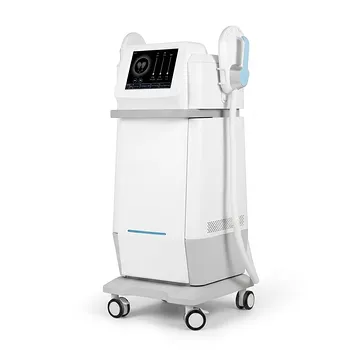
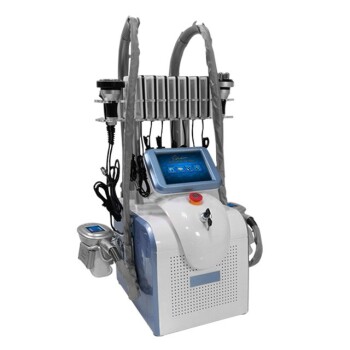
Surgical autologous fat transfer is the appropriate tool for restoring a true lower-limb volume deficit, while non-invasive body sculpting devices are better suited to refining surrounding contours, reducing localized fat, or improving muscle definition. Fat transfer can directly augment an underdeveloped or scarred calf, but it requires donor-site liposuction, carries surgical risks, and has variable graft retention. Devices such as EMS, cryolipolysis, and radiofrequency-based systems can reshape existing tissue without incisions or surgical downtime, but they cannot reliably replace missing subcutaneous volume.
The central distinction is augmentation versus contour modification: fat transfer adds tissue to correct structural deficiency; non-invasive devices modify muscle, fat, or skin that is already present.
What Problem Is Being Treated?
Structural volume loss requires augmentation
Lower-limb deficits may result from congenital underdevelopment, trauma, surgery, scarring, neuromuscular atrophy, or localized soft-tissue loss. When the goal is to increase the circumference or projection of a deficient calf, the treatment must add volume to the relevant subcutaneous or deeper soft-tissue plane.
Autologous fat transfer addresses that need by harvesting the patient’s own adipose tissue and reinjecting it into carefully selected anatomical regions, including the medial or lateral calf. It is therefore closer to soft-tissue reconstruction than ordinary body contouring.
Calf asymmetry may have several causes
Asymmetry is not always caused by a lack of fat. One calf may have reduced muscle bulk, excess fat, a scar depression, skeletal asymmetry, edema, or a combination of these factors.
A clinical assessment should establish whether the dominant problem is volume deficiency, muscle imbalance, localized adiposity, skin laxity, or an underlying medical condition. Device-based treatment is poorly matched to a deficit that has not been anatomically characterized.
How Autologous Fat Transfer Works
It directly restores missing volume
Fat transfer uses liposuction to obtain adipose tissue from a donor area, followed by processing and reinjection into the deficient calf. Multi-plane placement can be used to address contour depression and improve the transition between the calf and adjacent structures.
This makes the technique capable of correcting deficits that non-invasive devices cannot address. It can add projection where tissue is absent rather than merely altering the appearance of existing tissue.
Results depend on graft survival
Not all transferred fat survives permanently. The retained volume varies with factors such as harvesting and processing technique, injection plane, vascular integration, tissue tension, and the size of the recipient defect.
Because the final result is not fully predictable, clinicians may use planned overcorrection or staged sessions. A patient may require between one and several procedures to achieve the intended correction, particularly when the deficit is substantial or the two calves require different treatment volumes.
Donor-site assessment is part of the procedure
The patient must have sufficient suitable donor fat, and the donor area must be evaluated separately from the calf. Liposuction creates its own recovery period and can produce edema, contour irregularity, pain, or asymmetry.
A patient with minimal donor reserves may not be a good candidate for autologous augmentation, even when the calf deficit is clinically significant.
What Non-Invasive Devices Can Do
EMS can influence muscle definition
High-intensity focused electromagnetic muscle-stimulation systems are intended to produce repeated muscle contractions. In an appropriately selected patient, this may improve muscle conditioning or visible definition over time.
EMS is not equivalent to calf augmentation. It cannot reliably replace subcutaneous tissue lost through trauma, scarring, or atrophy, and its effect depends on the presence and responsiveness of the underlying muscle.
Cryolipolysis and RF-based systems reduce or remodel tissue
Cryolipolysis targets localized subcutaneous fat through controlled cooling. Radiofrequency and related energy-based systems may be used for localized contour refinement, tissue heating, or skin-tightening effects, depending on the specific platform and treatment parameters.
These modalities can be useful when asymmetry is caused by excess tissue on one side, rather than a true deficiency on the other. They may also help refine residual contour irregularities after a broader treatment plan.
Devices are outpatient contouring tools
Non-invasive systems generally avoid incisions, donor-site surgery, sutures, and the recovery associated with liposuction and graft placement. They are therefore practical for patients seeking modest contour change, muscle conditioning, localized fat reduction, or gradual tissue remodeling.
Their benefits are greatest when the treatment objective is reduction or refinement. They should not be presented as a substitute for structural volume reconstruction.
Comparing the Approaches in Clinic Practice
Indications
Autologous fat transfer is principally indicated for:
- Structural calf volume deficiency
- Scar depressions and post-traumatic contour loss
- Significant medial or lateral calf asymmetry
- Soft-tissue reconstruction requiring added projection
Non-invasive devices are principally indicated for:
- Localized fat reduction
- Circumference refinement
- Muscle conditioning or visible tone enhancement
- Skin tightening or gradual tissue remodeling
- Minor contour adjustment where adequate tissue already exists
Procedural burden
Fat transfer involves donor-site liposuction, anesthesia or sedation planning, sterile surgical technique, post-operative monitoring, compression or wound care as appropriate, and recovery. It also introduces risks associated with both harvesting and reinjection.
Non-invasive treatments are usually delivered in an outpatient setting with minimal interruption to normal activity. The lower procedural burden does not mean the treatment is risk-free, and device-specific contraindications and adverse effects still require screening.
Magnitude and speed of correction
Fat transfer can produce a visible increase in volume during a single procedure, although the early result changes as swelling resolves and some grafted fat is resorbed. The final outcome must therefore be assessed after adequate healing rather than immediately after treatment.
Non-invasive treatments generally produce more gradual and limited changes. Multiple sessions may be needed, and their effects are better measured as contour improvement than as precise replacement of a defined tissue deficit.
Precision and predictability
Surgical grafting allows the clinician to target specific anatomical axes and adjust the volume delivered to each calf. However, long-term retention remains biologically variable, and overcorrection or undercorrection is possible.
Energy-based devices offer standardized treatment parameters and repeatable coverage of accessible areas. Their predictability applies mainly to the delivery of the treatment, not necessarily to an exact final change in calf circumference or symmetry.
Understanding the Trade-offs
Non-invasive does not mean equivalent
The principal limitation of device-based sculpting is anatomical. A device that reduces fat or conditions muscle cannot create the same kind of volume as a graft, implant, or other augmentation procedure.
Using a fat-reduction device on the fuller calf may worsen the visual imbalance if the actual problem is deficiency in the smaller calf. Treatment selection must follow the cause of asymmetry, not simply the side that appears different.
Fat transfer is not a one-step guarantee
Fat grafting offers direct augmentation but not perfectly predictable permanence. Resorption, uneven integration, contour irregularity, and the need for revision or staged treatment must be included in the consent discussion.
Injection into a tight or poorly vascularized recipient bed can also compromise the result. Careful plane selection and conservative, anatomically controlled placement are essential.
Device outcomes have practical limits
Cryolipolysis and RF-based treatments are designed for localized contour changes, not major limb reconstruction. EMS may improve conditioning without producing the degree of enlargement required for a marked calf deficit.
Patients should also understand that device outcomes can vary with tissue thickness, muscle condition, treatment settings, and individual response. Claims of exact symmetry or guaranteed permanent correction are not clinically defensible.
Medical causes must be excluded
New, progressive, painful, or swollen unilateral calf enlargement or wasting should not be treated as a routine cosmetic problem until medical causes have been evaluated. Vascular, neurological, muscular, lymphatic, or orthopedic conditions may require diagnosis and treatment before aesthetic intervention.
Building a Combined Treatment Strategy
Correct the deficit before refining the contour
When the smaller calf has a genuine structural deficit, augmentation should be considered before any reduction-based treatment. Once the main volume problem is addressed, non-invasive methods may help refine adjacent fat deposits or improve overall definition.
This sequence prevents a contour-refinement treatment from masking or aggravating the underlying asymmetry.
Match the device to the tissue target
EMS is most relevant when muscle conditioning is the objective. Cryolipolysis is more relevant to localized fat reduction, while RF-based systems may be considered for tissue tightening or contour remodeling according to the device’s validated indications.
The terms “RF cavitation” and “body sculpting” cover different technologies, so the clinic should assess the actual mechanism, regulatory status, treatment parameters, and evidence for the specific platform rather than relying on the category name alone.
Set measurable expectations
Baseline photographs, circumference measurements, and three-dimensional or standardized anatomical assessment can help distinguish meaningful improvement from changes caused by posture, swelling, or lighting. The treatment plan should define whether success means increased projection, reduced excess tissue, improved muscle definition, or improved proportionality.
Making the Right Choice for Your Goal
The most defensible approach is to classify the patient’s presentation before choosing the technology.
- If your primary focus is correcting a true calf volume deficit: Consider surgical autologous fat transfer when sufficient donor tissue exists and the patient accepts operative recovery, variable graft retention, and the possibility of staged treatment.
- If your primary focus is reducing localized fat: Consider cryolipolysis or an appropriate energy-based contouring system when the patient has a discrete, treatable fat deposit and does not require added volume.
- If your primary focus is improving muscle tone or definition: Consider EMS when the underlying muscle is present and the goal is conditioning rather than reconstruction.
- If your primary focus is minor contour refinement or skin tightening: Consider a validated RF or comparable energy-based system when the tissue target and expected degree of improvement are clearly defined.
- If your primary focus is correcting unexplained unilateral calf change: Arrange medical assessment before proceeding with aesthetic treatment.
The right choice follows the anatomy of the deficit: surgery restores missing volume, while non-invasive devices refine tissue that is already present.
Summary Table:
| Aspect | Autologous Fat Transfer | Non-Invasive Devices |
|---|---|---|
| Primary indication | Structural volume deficit, scar depression, significant asymmetry | Localized fat reduction, muscle conditioning, skin tightening, minor contour refinement |
| Mechanism | Adds volume via grafted adipose tissue | Modifies existing tissue (fat, muscle, skin) |
| Procedure burden | Surgical, requires donor-site liposuction, anesthesia, recovery | Outpatient, minimal downtime, no incisions |
| Result magnitude | Visible increase in volume, but variable graft retention | Gradual, limited changes; multiple sessions often needed |
| Predictability | Biologically variable, over/undercorrection possible | Delivery predictable, final change variable |
| Best suited for | Correcting genuine tissue deficit | Refining contours when adequate tissue exists |
Ready to refine your approach? Contact us today!
At BELIS, we equip clinics and premium salons with professional-grade aesthetic technology. Whether you need advanced laser systems, IPL, or body sculpting solutions, our portfolio covers every category in the aesthetic spectrum. Partner with us to enhance your practice's offerings and deliver exceptional outcomes for your patients. Contact us now to learn more about our cutting-edge devices and how we can support your success.
Related Products
- EMS Body Sculpting Machine for Body Slimming and Sculpting
- EMS Body Sculpting Slimming Machine EMSlim Body Slimming Machine
- EMSlim Neo Nova Body Sculpting EMS Sculpting Machine
- EMSlim RG Laser Body Sculpting and Slimming Machine
- EMSlim Body Slimming Machine for Muscle Building and Beauty
People Also Ask
- Does EMS sculpting really work? Achieve Clinically-Proven Body Contouring
- Why is it important for practitioners to avoid over-promising body sculpting results? Ensure Trust and Clinic Success.
- What are the technical advantages of professional body sculpting? Non-Invasive vs. Invasive Liposuction Explained
- Does EMS actually work for weight loss? A Realistic Look at Muscle Building and Metabolism
- What patient selection criteria and evaluation protocols should aesthetic clinics implement to optimize outcomes with non-invasive body sculpting devices?