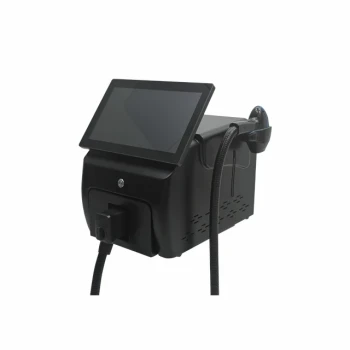
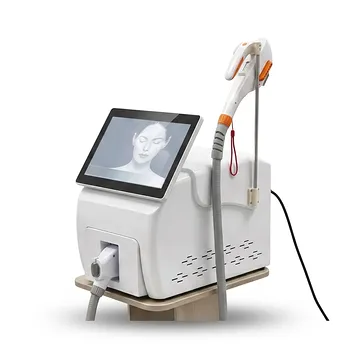
For Fitzpatrick skin types V–VI, diode laser hair removal should begin conservatively: use a longer pulse duration, lower fluence, and active epidermal cooling. For many 800–810 nm diode systems, a practical starting range is approximately 10–20 J/cm², with pulse durations around 30–200 ms and, on some devices, longer settings up to 200–450 ms. Parameters must be adjusted to the device, hair characteristics, treatment area, and patient response rather than copied as a universal protocol.
Darker skin contains more epidermal melanin, which competes with the hair follicle for diode laser energy. The safest strategy is to reduce peak epidermal heating through longer pulses, conservative fluence, effective contact cooling, and incremental endpoint-based adjustments.
Why Darker Skin Requires Different Parameters
Epidermal Melanin Competes for Laser Energy
Melanin in Fitzpatrick V–VI skin absorbs part of the diode laser energy before it reaches the follicle. This increases the risk of epidermal burns, blistering, post-inflammatory hyperpigmentation, and hypopigmentation.
The objective is to deliver sufficient thermal energy to the follicle while limiting heat accumulation in the epidermis.
Longer Wavelengths Improve Depth
An 800–810 nm diode laser is generally more appropriate for darker skin than shorter-wavelength systems because it penetrates more deeply and has less epidermal melanin absorption than shorter wavelengths.
A long-pulsed 1064 nm Nd:YAG laser is often considered the most forgiving laser option for Fitzpatrick V–VI skin because its longer wavelength further reduces epidermal melanin absorption. However, when a diode system is used, wavelength alone does not remove the need for conservative settings and cooling.
How to Customize Diode Laser Parameters
Start With a Lower Fluence
For Fitzpatrick V–VI skin, an initial fluence of approximately 10–20 J/cm² is a conservative reference range for many 800–810 nm systems. Some devices and treatment areas may support higher values, but escalation should occur only after assessing the response to test pulses and prior sessions.
Fluence should be selected with regard to hair diameter, density, color, anatomical site, and recent tanning. Fine hair may require a different strategy from coarse terminal hair, but darker skin should not be exposed to unnecessarily high starting energy.
Use Extended Pulse Durations
Pulse durations of 30 ms or longer are generally preferable for darker phototypes. Many clinicians begin in the 100–200 ms range for higher-risk patients or areas, while some diode platforms offer super-long pulses up to 200–450 ms.
Longer pulses reduce peak power and distribute energy over a longer interval. This can limit rapid epidermal temperature rise while allowing heat to accumulate in the follicle.
Match the Pulse to the Hair and Device
The longest available pulse is not automatically the best setting. Excessively long pulses may reduce follicular heating or require treatment strategies that are less effective for certain hair types.
Use the device manufacturer's validated treatment protocol as the operating boundary, then individualize within that protocol based on hair thickness, skin response, and treatment history.
Prioritize Active Contact Cooling
Active epidermal cooling is essential for Fitzpatrick V–VI patients treated with a diode laser. Cooling should be applied before, during, and immediately after the pulse when supported by the system.
Integrated sapphire or other contact-cooling systems can reduce epidermal temperature and help protect melanin-rich skin. Cooling performance should be verified rather than assumed; inadequate contact, poor coupling, or interrupted cooling can materially increase risk.
Use Clinical Endpoints, Not Numbers Alone
Test an Inconspicuous Area First
Perform test pulses before treating a larger area, particularly when the patient is new to the device, recently exposed to the sun, or has a history of pigmentary complications.
Observe both the immediate response and delayed response according to the clinic's safety protocol. A test area that appears acceptable immediately can still develop inflammation or pigmentary change later.
Look for a Controlled Follicular Response
The desired endpoint is usually mild perifollicular erythema and edema, without excessive pain, whitening, blistering, or diffuse epidermal erythema.
Immediate whitening, intense burning pain, blistering, erosions, or marked diffuse redness indicates excessive epidermal injury. Treatment should be stopped and the patient assessed rather than compensated for by changing only one parameter.
Increase Energy Gradually
If the initial treatment produces inadequate follicular response without concerning epidermal findings, adjust fluence or another validated parameter incrementally at a subsequent pulse or session.
Do not raise fluence aggressively to compensate for poor technique, inadequate cooling, incorrect spot placement, or hair that is not an appropriate target.
Patient and Treatment Preparation
Confirm the Current Skin State
Recently tanned or sun-exposed skin has increased epidermal melanin activity and may require postponement, further conservatism, or an alternative treatment plan.
Document the patient's Fitzpatrick type, current tanning status, prior laser response, history of post-inflammatory hyperpigmentation, and any medications or conditions that may affect healing or photosensitivity.
Avoid Treating Over Active Inflammation
Do not treat skin with active dermatitis, infection, open lesions, or significant irritation. Inflammation can increase the risk of pigmentary change and make laser endpoints more difficult to interpret.
Optimize Technique
Use the correct spot size, consistent contact, appropriate overlap, and reliable skin cooling. Avoid excessive overlap and repeated passes, both of which can create cumulative epidermal heating even when individual pulses appear conservative.
Understanding the Trade-offs
Lower Fluence Can Reduce Efficacy
Conservative fluence improves the safety margin but may require more sessions or slower hair reduction. The solution is controlled, progressive treatment rather than starting with high energy to achieve rapid results.
Longer Pulses Are Not Risk-Free
Longer pulse durations can reduce peak heating, but they still deliver thermal energy to the skin. If total energy, repetition rate, overlap, or cooling is poorly controlled, epidermal injury can still occur.
Cooling Does Not Replace Appropriate Settings
Cooling protects the epidermis but cannot reliably compensate for excessive fluence, unsuitable wavelength, recent tanning, or repeated passes. It should be treated as one part of the safety protocol.
Device Settings Are Not Interchangeable
A fluence and pulse duration that are safe on one diode platform may not produce the same tissue effect on another. Spot size, pulse profile, cooling method, handpiece design, and calibration all influence the delivered treatment.
How to Apply This Safely
The following principles provide a conservative framework, but treatment should follow the specific laser manufacturer's protocol and the operator's clinical training.
- If your primary focus is epidermal safety: Start with approximately 10–20 J/cm², use an extended pulse duration, and maintain continuous, effective contact cooling.
- If your primary focus is progressive hair reduction: Begin conservatively, confirm a controlled perifollicular endpoint, and increase energy gradually only when the skin response remains safe.
- If your primary focus is treating recently tanned or highly pigment-prone skin: Postpone treatment when appropriate, use test pulses, and consider whether a long-pulsed 1064 nm Nd:YAG system offers a wider safety margin.
- If your primary focus is preventing pigmentary complications: Document baseline skin findings, enforce sun avoidance, avoid excessive overlap, and monitor for delayed hyperpigmentation or hypopigmentation.
Safe treatment of Fitzpatrick V–VI skin depends on balancing follicular heating with epidermal protection through conservative settings, robust cooling, careful testing, and gradual clinical adjustment.
Summary Table:
| Parameter | Recommended settings for Fitzpatrick V–VI skin |
|---|---|
| Wavelength | 800–810 nm diode laser (or 1064 nm Nd:YAG if available) |
| Fluence | 10–20 J/cm² (start low) |
| Pulse duration | 30–200 ms (up to 450 ms on some devices) |
| Cooling | Active contact cooling, applied before/during/after |
| Endpoint | Mild perifollicular erythema/edema, no epidermal whitening or blistering |
| Test pulse | Always perform in an inconspicuous area first |
To optimize your diode laser protocols for all skin types, trust BELIS—a leading manufacturer of professional medical aesthetic equipment. Our advanced diode systems feature validated safety protocols and superior cooling. Contact our experts today to enhance your clinic's results and patient safety: Contact Us.
Related Products
- 808nm Diode Laser Hair Removal Machine 755+808+1064nm Mixed Wavelength Professional Equipment
- 808nm Diode Laser Hair Removal Machine and Equipment with Picolaser Arm
- Tri Laser Diode Hair Removal Machine Professional Beauty Equipment
- Clinic Diode Laser Hair Removal Machine with SHR and Trilaser Technology
- Diode Laser SHR Trilaser Hair Removal Machine for Clinic Use
People Also Ask
- How do 800/810 nm diode hair removal lasers compare to 1064 nm long-pulsed Nd:YAG lasers? Discover the Best for Your Patients
- How do broad-spectrum noncoherent light sources compare to single-wavelength diode lasers in aesthetic hair removal applications? Find the best fit for your clinic.
- How can aesthetic practitioners prevent side effects like paradoxical hair regrowth and thermal burns when performing diode laser hair removal on dark skin? Master safe protocols for Fitzpatrick IV–VI skin.
- What is the recommended treatment interval for diode laser hair removal? Achieve Max Hair Reduction with 45-Day Sessions
- Why is monitoring the revenue rate per hour per physician essential when deciding to invest in high-throughput aesthetic technology like diode hair removal lasers or multi-applicator body sculpting machines? Optimize your practice's profitability