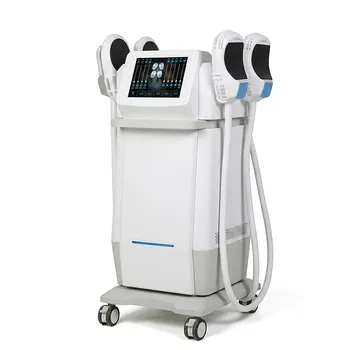
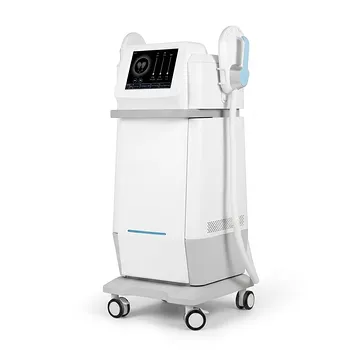
For patients with body-contouring goals and noticeable skin laxity, RF is generally the preferred first choice over fat-focused HIFU. RF directly heats the dermis and deeper connective tissues, supporting collagen remodeling and skin contraction. HIFU is more appropriate when the dominant problem is a discrete, sufficiently thick subcutaneous fat deposit and skin elasticity is relatively good.
The decision should separate two problems: excess fat and loose skin. Perform a pinch test and assess skin elasticity before treatment. Choose RF when laxity is clinically significant; choose HIFU when deep, localized fat is the primary concern and the skin has adequate recoil.
Start With the Patient’s Tissue Profile
Confirm that sufficient subcutaneous fat is present
A skin pinch test helps determine whether the patient has enough subcutaneous tissue for a fat-reduction procedure. The practitioner should evaluate the thickness and distribution of the tissue rather than treating visible fullness alone.
A thin tissue fold may represent skin redundancy, muscle, or structural contour rather than a suitable fat target. Treating without adequate fat thickness can produce limited benefit and may make laxity more apparent.
Assess elasticity separately from fat volume
Fat volume and skin laxity are related but distinct findings. Assess how the skin and underlying tissue move upward when the patient is standing, and evaluate whether the skin demonstrates reasonable recoil.
This distinction is central to device selection:
- Predominant fat with good elasticity: Consider a fat-reduction modality such as fat-focused HIFU.
- Fat combined with mild-to-moderate laxity: Favor an RF modality capable of dermal and subdermal heating.
- Predominant laxity with little fat: A fat-reduction device may be the wrong treatment category; use a skin-tightening strategy or consider whether a non-invasive approach is sufficient.
Identify the main aesthetic endpoint
Ask whether the patient primarily wants a smaller fat bulge, firmer skin, or both. A device selected for fat reduction should not be presented as an equivalent substitute for a device designed to stimulate tightening.
The treatment plan should match the dominant anatomical problem rather than the marketing label attached to the technology.
When RF Is the Better Choice
RF directly addresses dermal laxity
RF delivers electromagnetic energy that heats deeper skin layers without intentionally ablating the epidermis. The resulting thermal stimulus can promote collagen remodeling and tissue contraction.
That direct skin-tightening capability makes RF the more logical choice when laxity is a meaningful component of the patient’s presentation.
RF is useful when fat and laxity coexist
Some patients have a moderate fat deposit with reduced skin elasticity. In these cases, reducing the fat alone may leave residual redundancy or make loose skin more visible.
RF is better aligned with the combined objective because it can address dermal firmness while contributing to localized body contouring, depending on the specific system and protocol.
Match the RF device to the required depth
“RF” is not a single treatment. Device design, delivery method, treatment depth, and energy distribution determine whether the clinical effect is primarily superficial, dermal, or deeper.
Practitioners should therefore select an RF platform whose treatment parameters are appropriate for the patient’s tissue thickness and degree of laxity. Microneedle RF and non-invasive volumetric RF are not interchangeable, even though both use radiofrequency energy.
When HIFU Is the Better Choice
HIFU is suited to focal, deeper fat targets
HIFU concentrates ultrasonic energy at defined depths within subcutaneous tissue. In fat-focused applications, this creates localized thermal injury and coagulative necrosis of targeted adipocytes.
It is therefore most suitable when the patient has a discrete fat bulge, sufficient tissue thickness, and relatively preserved skin elasticity.
HIFU is less reliable for loose body skin
Fat-focused HIFU should not be selected on the assumption that fat reduction will automatically tighten lax skin. Its primary action is deep adipose targeting, while its direct skin-tightening capability is limited in this body-contouring context.
If skin laxity is the dominant concern, RF generally offers a more appropriate mechanism.
Do not treat all HIFU devices as equivalent
Focused ultrasound systems may use different protocols and target different tissue layers. Some are designed primarily for adipose reduction, while other focused-ultrasound applications are intended to stimulate tightening at deeper structural levels.
The practitioner must verify the device’s intended indication, focal depth, and treatment objective rather than generalizing from the term HIFU alone.
Understanding the Trade-offs
The main risk is treating the wrong tissue problem
A patient with loose skin may not improve meaningfully from a fat-reduction procedure, even if a small amount of fat is present. Conversely, a patient with a substantial, well-defined fat deposit may not obtain adequate contour change from a tightening-focused treatment alone.
Separating fat volume from laxity prevents a technically successful procedure from producing a disappointing aesthetic result.
More energy is not a substitute for correct selection
Increasing treatment intensity or repeating sessions does not correct a mismatch between the device and the tissue target. Energy must be delivered at an appropriate depth and within a protocol suitable for the patient’s anatomy.
Treatment planning should prioritize tissue diagnosis, not simply the maximum available energy.
Severe laxity may exceed the capability of either device
RF and HIFU are most useful when laxity and fat excess are mild to moderate and the patient has realistic expectations. Marked skin redundancy or substantial structural volume loss may require a broader treatment plan, and non-invasive contouring alone may not provide the desired result.
The consultation should make this limitation clear before treatment begins.
Combined treatment may be appropriate
When both fat reduction and tightening are needed, practitioners may consider sequential or combined protocols, provided the devices, treatment areas, timing, and safety parameters are compatible.
The rationale should be anatomical: one component addresses adipose volume, while the other addresses dermal or connective-tissue laxity.
A Practical Selection Framework
Step 1: Examine the patient standing
Evaluate the distribution of the fat deposit, the degree of tissue descent, and the mobility of the skin and subcutaneous tissue while the patient is upright. This provides a more realistic view of the contour problem than examination in a non-weight-bearing position alone.
Step 2: Perform the pinch test
Confirm that the proposed treatment area contains sufficient subcutaneous fat for a fat-reduction procedure. Document the location and approximate thickness of the tissue being considered.
Step 3: Classify the dominant problem
Use the examination to classify the patient as having:
- Fat-dominant contour excess
- Laxity-dominant skin redundancy
- Combined fat excess and skin laxity
This classification should drive the treatment recommendation.
Step 4: Select the modality by mechanism
Use the following principle:
- HIFU: Primarily for focal, deeper adipose targets with adequate skin elasticity.
- RF: Primarily for skin laxity, particularly when dermal tightening is needed alongside body contouring.
- Combined or alternative plan: For mixed or severe presentations that are unlikely to respond adequately to one modality.
Making the Right Choice for Your Goal
Begin with the patient’s tissue assessment, then choose the device whose primary biological effect matches the dominant clinical problem.
- If your primary focus is reducing a discrete fat bulge: Select fat-focused HIFU when the pinch test confirms adequate subcutaneous thickness and skin elasticity is reasonably preserved.
- If your primary focus is improving skin laxity: Prefer RF because its dermal and subdermal heating directly supports collagen remodeling and tissue tightening.
- If your primary focus is treating both fat and laxity: Consider an RF-centered plan or a carefully designed combination protocol, depending on the device capabilities and the patient’s tissue profile.
- If your primary focus is managing severe redundancy or poor elasticity: Set realistic expectations and assess whether non-invasive contouring alone can achieve the patient’s desired result.
The right choice is determined less by the device label than by whether its treatment depth and biological effect match the patient’s fat volume, skin elasticity, and aesthetic goal.
Summary Table:
| Factor | HIFU | RF |
|---|---|---|
| Primary Target | Deep, localized fat | Skin laxity and dermal tightening |
| Skin Elasticity | Requires good elasticity | Suitable for mild-to-moderate laxity |
| Tissue Thickness | Must have adequate subcutaneous fat | Can address various depths with different devices |
| Main Mechanism | Coagulative necrosis of fat cells | Collagen remodeling and tissue contraction |
| Best for | Focal fat bulges with minimal laxity | Laxity with or without fat excess |
| Limitation | Limited direct skin tightening | Less effective for deep fat reduction |
Discover the ideal HIFU or RF device for your practice. At BELIS, we offer a comprehensive range of professional-grade aesthetic equipment, including advanced HIFU and RF systems, to help you achieve superior patient outcomes. Whether you are a clinic or premium salon, our experts can guide you in selecting the right technology for your patients' needs. Contact us today to schedule a personalized consultation and explore our cutting-edge solutions.
Related Products
- 22D HIFU Machine Device Facial Machine
- 7D 12D 4D HIFU Machine Device
- 12D HIFU Machine Device for Facial HIFU Treatment
- Ultrasonic Cavitation Radiofrecuency Machine for Body Slimming
- 4D 12D HIFU Machine Device for Skin Tightening
People Also Ask
- Is swelling a frequent side effect after a HIFU facial? Expert Insights on HIFU Recovery and Safety
- What is the mechanism of action of High-Intensity Focused Ultrasound (HIFU) devices in noninvasive body sculpting, and how is surrounding tissue protected?
- How do High-Intensity Focused Ultrasound (HIFU) devices function? Master Non-Invasive Face Lifting Technology
- Are home-use HIFU devices a recommended alternative? Why Clinical Safety Beats At-Home Risks
- What are the main functions of a High Intensity Focused Ultrasound (HIFU) machine? Advanced Skin Lifting and Sculpting