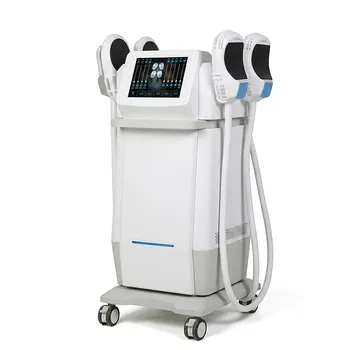
Non-ablative RF firms tissue by controlled heating of dermal collagen. Radiofrequency energy encounters electrical resistance in the tissue, converting electromagnetic energy into volumetric heat. At sufficiently high temperatures, collagen’s non-covalent bonds are disrupted, the triple-helix structure partially unwinds, and the fibers contract, becoming shorter and thicker. This produces immediate tightening, followed by fibroblast-driven collagen remodeling that supports longer-term firmness.
The core mechanism is a two-stage response: heat contracts existing collagen for an immediate effect, then controlled thermal stimulation initiates wound-healing processes that produce and reorganize new connective tissue over time.
How RF Energy Heats the Dermis
Tissue resistance converts RF energy into heat
RF devices deliver high-frequency electrical energy through electrodes or an applicator. Because dermal and subcutaneous tissues have electrical impedance, the tissue resists current flow and converts part of the RF energy into heat.
The result is bulk volumetric heating, rather than removal or vaporization of the skin surface. The treatment is therefore described as non-ablative.
Heating is targeted below the epidermis
The therapeutic objective is to raise the temperature of the dermal or deeper soft-tissue target while limiting excessive heating at the epidermis.
In practice, the biological response depends on both temperature and exposure time. A higher temperature reached briefly can produce a similar collagen effect to a lower temperature maintained for longer, although treatment safety depends on precise thermal control.
What Heat Does to Collagen Structure
Collagen normally has a triple-helix configuration
Collagen is formed from protein chains arranged in a relatively ordered triple-helix structure. Non-covalent bonds help maintain this configuration and stabilize the collagen fibril.
This organized structure gives connective tissue much of its tensile strength and mechanical support.
Thermal energy disrupts stabilizing bonds
When collagen is exposed to sufficient heat, the non-covalent bonds holding the triple helix together are disrupted. The protein chains lose their orderly arrangement and become more randomly coiled.
This is called thermal denaturation. It does not mean the collagen is immediately removed; rather, its molecular structure has been altered.
Denatured collagen contracts and thickens
As the collagen chains reorganize, the treated fibers become shorter and thicker. The contraction reduces slack within the dermal collagen network and creates an immediate tightening effect as the tissue cools.
The commonly cited collagen denaturation point is approximately 65°C for multi-second exposure, but the exact response varies with exposure duration, tissue composition, and treatment parameters. Lower therapeutic temperatures can also stimulate fibroblast activity and remodeling without producing the same degree of acute denaturation.
How Immediate Firming Becomes Long-Term Remodeling
Initial contraction provides the early tightening effect
The first phase is mechanical. Existing collagen fibrils contract, producing a rapid but variable improvement in tissue firmness.
This effect is partly analogous to tightening a loose mesh: the existing support network becomes more compact, even before new structural material is produced.
Fibroblasts respond to the thermal stimulus
Controlled heating creates a localized biological stress response in the dermis. Dermal fibroblasts—the cells responsible for producing extracellular-matrix proteins—are stimulated during the subsequent repair process.
This response can increase the synthesis and organization of new collagen, commonly referred to as neocollagenesis.
New collagen improves structural support
Over time, newly synthesized collagen and remodeled connective tissue can increase dermal density and improve the organization of the supporting matrix.
The delayed effect is therefore not simply continued shrinkage of the original fibers. It is a combination of existing collagen contraction, new collagen formation, and soft-tissue remodeling.
Why the Epidermis Can Remain Intact
Non-ablative treatment preserves the skin surface
Unlike ablative lasers or other surface-resurfacing methods, non-ablative RF is intended to heat tissue without removing the epidermis.
This allows RF to produce dermal thermal effects while generally involving limited downtime, provided the device is used within appropriate safety parameters.
Thermal control determines the treatment margin
The epidermis is not automatically protected from all RF-related heat. Excessive temperature, prolonged exposure, poor coupling, or inadequate cooling can cause pain or thermal injury.
Effective systems therefore rely on controlled energy delivery, monitoring, applicator design, and—in some devices—surface cooling to maintain the desired temperature gradient.
Understanding the Trade-offs
More heat is not always better
Increasing RF energy can intensify collagen contraction, but excessive heating raises the risk of irreversible protein damage, discomfort, burns, and unwanted tissue injury.
The therapeutic objective is controlled thermal remodeling, not indiscriminate heating.
Temperature must be interpreted with exposure time
A single temperature threshold does not fully predict the biological outcome. Collagen response depends on the interaction between temperature, duration, treatment area, and the tissue’s thermal properties.
For this reason, treatment protocols typically balance energy, contact time, number of passes, and cooling rather than relying on maximum temperature alone.
Multiple moderate passes may improve control
The supplementary evidence indicates that repeated passes at moderate energy settings can promote collagen contraction while limiting discomfort and adverse effects compared with aggressive single-pass heating.
However, the appropriate protocol is device-specific and should follow validated manufacturer parameters and clinical safety procedures.
RF does not reproduce a surgical lift
RF can improve mild to moderate laxity by tightening and remodeling dermal and supporting connective tissue. It cannot reliably replicate the repositioning and removal of excess tissue achieved through surgery.
The magnitude and duration of improvement also depend on age, baseline laxity, tissue thickness, treatment settings, and the individual healing response.
Making the Right Choice for Your Goal
RF tightening works best when the desired outcome is gradual improvement in firmness through controlled collagen contraction and remodeling.
- If your primary focus is immediate tightening: Understand that the early effect comes mainly from heat-induced contraction and thickening of existing collagen fibers.
- If your primary focus is long-term firmness: Allow time for fibroblast activity, neocollagenesis, and connective-tissue remodeling to develop over subsequent weeks or months.
- If your primary focus is treatment safety: Prioritize controlled temperature, adequate epidermal protection, and validated protocols rather than the highest available energy setting.
- If your primary focus is substantial skin repositioning: Recognize that non-ablative RF is a tissue-remodeling treatment, not a substitute for surgical lifting.
In short, RF firms tissue by converting dermal collagen from an organized, relaxed structure into a contracted network, then stimulating the body to reinforce that network with newly formed connective tissue.
Summary Table:
| Mechanism | Effect |
|---|---|
| Volumetric heating | Raises dermal temperature via tissue resistance |
| Collagen denaturation | Disrupts bonds, unwinds triple helix at ~65°C |
| Immediate contraction | Fibers shorten and thicken for rapid tightening |
| Fibroblast stimulation | Triggers neocollagenesis and remodeling |
| Epidermal preservation | Non-ablative, minimal downtime with controlled cooling |
Ready to elevate your clinic with advanced RF skin tightening? BELIS offers professional-grade aesthetic devices trusted by clinics and premium salons worldwide. Our RF systems provide precise thermal control for safe, effective collagen remodeling. Contact us today to learn how our technology can expand your service menu and boost client satisfaction. Contact us now.
Related Products
- Ultrasonic Cavitation Radiofrecuency Machine for Body Slimming
- 22D HIFU Machine Device Facial Machine
- 4D 12D HIFU Machine Device for Skin Tightening and Lifting
- 4D 12D HIFU Machine Device for Skin Tightening
- 12D HIFU Machine Device for Facial HIFU Treatment
People Also Ask
- What are the pros and cons of the ultrasonic cavitation slimming treatment? A Guide to Painless Body Contouring
- Does an ultrasonic cavitation machine also tighten the skin? Achieve Total Body Contouring with RF Synergy
- How does radiofrequency technology in slimming machines promote fat reduction? The Science of Non-Invasive Sculpting
- How should one prepare for an ultrasonic cavitation appointment? 5 Essential Tips for Maximum Fat Loss Results
- What is an ultrasonic cavitation machine? Sculpt Your Body with Advanced Non-Invasive Fat Reduction