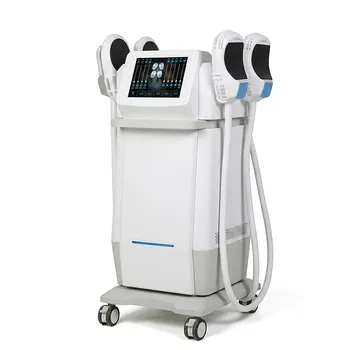
RF and optical devices remodel acne scars through different energy pathways: radiofrequency converts electrical energy into controlled heat within the dermis, while optical devices deliver light that is absorbed by specific skin chromophores such as melanin, hemoglobin, or water. RF is therefore less dependent on pigmentation and is particularly useful when the treatment goal is deeper, non-ablative dermal remodeling rather than surface vaporization.
The central difference is energy targeting: RF heats tissue according to its electrical properties, whereas optical devices rely on wavelength-specific light absorption. RF can reach deeper dermal structures with relatively limited epidermal disruption, while optical devices may offer more selective or surface-intensive treatment depending on the wavelength and delivery mode.
How RF Creates Dermal Remodeling
Electrical energy becomes controlled tissue heat
RF devices deliver a high-frequency electrical current through the skin. Tissue resistance, or impedance, converts that current into thermal energy within the dermis and sometimes the deeper dermal–subcutaneous interface.
This differs from a laser or intense pulsed light device, which delivers photons that must be absorbed by a target chromophore to produce heat.
Heat contracts and reorganizes collagen
Controlled dermal heating can cause immediate contraction of existing collagen fibers. It also activates a longer remodeling response involving fibroblast activity, collagen regeneration, and reorganization of the supporting dermal matrix.
The result is gradual thickening and restructuring of the tissue rather than an instant correction of the scar surface.
RF can affect deeper scar architecture
Atrophic acne scars are influenced not only by the epidermal surface but also by the underlying dermal matrix and fibrous attachments. RF-induced heating can remodel collagen and, in some systems, soften or contract fibrous septae that contribute to uneven skin texture.
This is especially relevant to rolling and some boxcar scars, where the structural defect extends into the dermis.
How RF Systems Deliver Energy
Monopolar and bipolar RF
Monopolar RF generally uses a treatment electrode and a return pathway to direct energy through a larger volume of tissue. It is commonly associated with deeper, broader heating.
Bipolar RF confines the electrical pathway between electrodes in the treatment handpiece. This can provide more localized energy delivery, with depth influenced by the electrode arrangement and treatment parameters.
The actual treatment effect depends on frequency, power, pulse duration, tissue impedance, cooling, and electrode configuration—not simply on whether the device is labeled monopolar or bipolar.
Fractional RF and microneedle RF
Fractional RF creates small, separated columns or zones of thermal injury rather than heating the entire treatment surface uniformly. In microneedle RF, insulated or non-insulated needles deliver energy at selected dermal depths.
This approach can concentrate remodeling beneath the surface while leaving surrounding tissue relatively intact. It is useful when the objective is to treat localized scar depressions and stimulate repair with less broad epidermal injury.
RF does not require a chromophore
Because RF is driven by electrical resistance rather than optical absorption, its fundamental heating mechanism is not determined by epidermal melanin. This makes RF less vulnerable to the pigment-related limitations that can affect some light-based treatments.
However, RF is not risk-free for darker skin. Excessive heating, poor coupling, inappropriate settings, or epidermal injury can still produce burns or post-inflammatory pigmentation.
How Optical Devices Remodel Acne Scars
Light is absorbed by specific targets
Optical devices use wavelengths selected for their interaction with particular chromophores:
- Water absorbs certain laser wavelengths and can be used to heat or ablate tissue.
- Melanin absorbs light in treatments that target pigmentation or pigmented structures.
- Hemoglobin absorbs wavelengths used for vascular effects.
The depth and selectivity of treatment depend on the wavelength, pulse duration, energy density, spot size, and whether the device is ablative or non-ablative.
Ablative optical resurfacing treats the surface more aggressively
Ablative lasers remove or vaporize controlled portions of the epidermis and dermis. This produces stronger resurfacing and wound-healing responses, which can improve the appearance of some boxcar and rolling scars.
The trade-off is greater epidermal disruption, longer recovery, and increased risk of prolonged redness, infection, or pigmentary changes.
Non-ablative optical devices heat without removing the surface
Non-ablative lasers heat the dermis while preserving the epidermis more fully. They can stimulate collagen remodeling with less downtime than ablative resurfacing, but the improvement may be more gradual or less pronounced for deeper structural scars.
Fractional optical systems create microscopic treatment zones, much like fractional RF, but their effect remains dependent on how the selected wavelength is absorbed and distributed in the tissue.
RF Compared With Optical Treatment
Energy mechanism
RF uses electrical current and tissue impedance to generate heat. Optical devices use light absorption to create thermal or photochemical effects.
This distinction determines how each technology interacts with pigmentation, tissue depth, and the epidermis.
Depth and targeting
RF can produce dermal heating without requiring melanin or another optical chromophore. Its depth is controlled primarily by the device’s electrical configuration, electrode design, needle depth, and treatment settings.
Optical depth is governed largely by wavelength and tissue absorption. This can provide highly selective targeting, but it also means that epidermal melanin or other chromophores may absorb part of the delivered energy.
Epidermal disruption
Many RF treatments are non-ablative, meaning they heat the dermis while limiting direct removal of the epidermis. Fractional and microneedle RF can further concentrate injury into discrete dermal zones.
Optical devices range from non-ablative treatments with limited surface disruption to ablative resurfacing that intentionally removes portions of the epidermis and superficial dermis.
Suitability across skin types
RF is generally less dependent on epidermal melanin and may offer a broader treatment window across different skin tones. Optical devices that interact strongly with melanin require more careful parameter selection because of the risk of unwanted epidermal heating.
This does not make RF universally safer. The treatment’s risk depends on the device, operator technique, cooling, skin condition, and energy settings.
Scar-specific effects
RF primarily addresses the dermal structure and collagen framework beneath the scar. Fractional RF may be useful for selected atrophic scars, particularly when controlled dermal remodeling is preferred.
Optical resurfacing can address both surface texture and dermal remodeling. It may be more suitable when irregular epidermal relief is a major concern, although deeper or tethered scars may require additional structural techniques.
Understanding the Trade-offs
RF is not a universal solution for every acne scar
Acne scars are structurally different. Rolling scars, shallow boxcar scars, deep boxcar scars, and ice-pick scars do not respond identically to the same energy source.
RF can improve dermal texture, but a deep, narrow ice-pick scar may not be adequately corrected by generalized collagen remodeling alone. Treatment selection must match the scar’s depth, width, tethering, and surface characteristics.
“Non-ablative” does not mean risk-free
Non-ablative RF and optical treatments can still cause excessive thermal injury. Possible complications include prolonged erythema, swelling, burns, textural changes, infection in selected circumstances, and post-inflammatory hyperpigmentation or hypopigmentation.
The risk is influenced by energy density, pulse duration, treatment overlap, needle depth, cooling, and the patient’s tendency toward abnormal pigmentation or scarring.
More heat is not automatically better
Dermal remodeling depends on controlled thermal dosing. Excessive energy can increase tissue injury without producing proportionally better collagen formation.
Effective treatment is therefore based on predictable temperature control and appropriate spacing of treatment zones, not simply maximum device power.
Combination treatment may be necessary
Some scars contain both surface irregularity and subsurface tethering. In those cases, a single RF or optical session may not address the entire problem.
A treatment plan may need to combine energy-based remodeling with procedures that release tethered scars or directly correct narrow scar channels. The appropriate combination depends on clinical assessment rather than on the device category alone.
Making the Right Choice for Your Goal
The best technology depends on whether the primary need is deep remodeling, surface resurfacing, pigment safety, or treatment of a specific scar architecture.
- If your primary focus is deeper, non-ablative dermal remodeling: RF is often attractive because it generates heat through tissue impedance and is less dependent on epidermal melanin.
- If your primary focus is aggressive surface resurfacing: Ablative optical treatment may provide stronger correction of selected textural irregularities, with greater downtime and pigmentary risk.
- If your primary focus is treating acne scars across a broad range of skin tones: RF may offer a wider pigment-related safety margin, although careful thermal control remains essential.
- If your primary focus is a specific scar type: Choose the energy source and delivery method according to whether the scar is rolling, boxcar, ice-pick, superficial, deep, or tethered.
- If your primary focus is minimizing epidermal disruption: Fractional or microneedle RF can provide targeted dermal injury while preserving more of the surrounding surface than ablative resurfacing.
RF is best understood as a controlled deep-heating technology, while optical devices are chromophore-directed tools whose effects range from selective heating to full resurfacing.
Summary Table:
| Feature | RF (Radiofrequency) | Optical (Light-based) |
|---|---|---|
| Energy Mechanism | Converts electrical energy into heat via tissue impedance | Light absorbed by chromophores (melanin, hemoglobin, water) |
| Depth Control | Controlled by electrode design, needle depth, and settings | Determined by wavelength, energy density, and delivery method |
| Epidermal Disruption | Often non-ablative; fractional/microneedle can be deeper | Ranges from non-ablative to ablative (surface removal) |
| Pigment Dependence | Less dependent on melanin; suitable for more skin types | Absorption by melanin can affect treatment safety and efficacy |
| Key Advantages | Good for deep remodeling; less pigment risk | Can target specific chromophores; effective for surface resurfacing |
| Common Risks | Burns, PIH, swelling | Prolonged redness, infection, pigmentation changes |
Looking to integrate advanced RF or optical devices into your practice? At BELIS, we offer a comprehensive range of professional-grade aesthetic equipment, including fractional RF, microneedle RF, and laser systems designed for optimal dermal remodeling and acne scar treatment. Our solutions are tailored for clinics and premium salons, with OEM/ODM support and full certifications to ensure you stay ahead in the aesthetic technology spectrum. Contact us today to discover how our devices can enhance your treatment outcomes and boost your business growth — Get in touch now!
Related Products
- Ultrasonic Cavitation Radiofrecuency Machine for Body Slimming
- IPL SHR+Radio frecuency machine
- RF Microneedling Machine Micro Needle Radio Frequency Machine
- RF Microneedling Machine Micro Needle Radio Frequency Machine
- EMS Body Sculpting Slimming Machine EMSlim Body Slimming Machine
People Also Ask
- What are the pros and cons of the ultrasonic cavitation slimming treatment? A Guide to Painless Body Contouring
- Does an ultrasonic cavitation machine also tighten the skin? Achieve Total Body Contouring with RF Synergy
- How does radiofrequency technology in slimming machines promote fat reduction? The Science of Non-Invasive Sculpting
- How should one prepare for an ultrasonic cavitation appointment? 5 Essential Tips for Maximum Fat Loss Results
- What areas of the body are targeted for ultrasonic cavitation? Best Zones for Effective Body Contouring