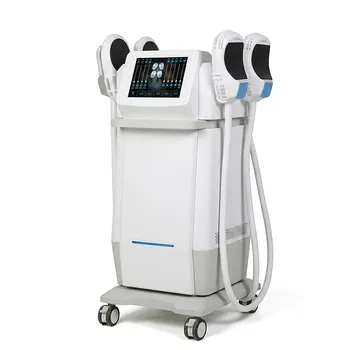
RF energy supports acne-scar improvement by heating the dermis in a controlled, targeted way. This thermal effect contracts existing collagen, modifies fibrous scar attachments, and stimulates neocollagenesis—the formation of new collagen during the healing process. As a result, depressed scars can become less tethered and the surrounding skin can develop improved firmness, elasticity, and texture without necessarily removing the superficial epidermal barrier.
The central benefit of RF is controlled dermal remodeling rather than surface resurfacing: it creates heat at targeted depths, contracts and reorganizes collagen, and promotes new collagen formation over time. This makes RF particularly useful for textural irregularities and selected depressed acne scars, especially when delivered through fractional RF or RF microneedling.
How RF Creates Dermal Remodeling
Controlled heat reaches the dermis
RF devices deliver high-frequency electrical energy through the skin. Tissue resistance converts this energy into heat within the targeted dermal layers.
Monopolar and bipolar systems use different electrode configurations to control how the energy travels, but both aim to produce a therapeutic thermal response below the skin surface.
Collagen contracts immediately
When collagen is exposed to sufficient controlled heat, its existing fibers contract and tighten. This can produce an early improvement in skin firmness and may help reduce the appearance of lax, uneven scar tissue.
The immediate contraction is only one part of the effect. The longer-term benefit depends on the tissue-repair response that follows.
New collagen develops over time
Thermal stimulation activates a wound-healing cascade that encourages fibroblasts to produce new collagen. This process, known as neocollagenesis, gradually improves dermal support and skin texture.
Because collagen remodeling is biological rather than instantaneous, results typically develop progressively rather than appearing fully after one treatment.
How RF Addresses Acne Scar Structure
It can modify fibrous scar attachments
Many depressed acne scars are connected to deeper tissue by fibrous septae or tethering bands. RF-induced thermal remodeling can shrink and reorganize these structures, helping release some of the downward pull on the skin.
This mechanism is particularly relevant to rolling scars and other depressed scars with a tethered component. RF alone may not fully release severe or extensive tethering.
It can elevate depressed scar contours
As the dermis contracts and produces new collagen, the tissue surrounding a depressed scar may gain additional support. This can make the transition between the scar and normal skin less abrupt.
The goal is usually reduced depth and improved blending, not complete erasure of every scar.
It can improve overall texture
RF also treats the broader dermal environment around individual scars. Increased firmness and collagen organization can make uneven texture, enlarged pores, and mild laxity less visually prominent.
This makes RF useful when acne scarring is accompanied by general skin laxity or textural aging.
Why Fractional RF Is Important
Energy can be delivered at selected depths
Fractional RF systems use small treatment points, electrode arrays, or microneedles to create localized zones of thermal injury. This allows practitioners to target the mid-to-deep dermis while leaving untreated tissue between treatment zones.
The untreated areas support healing and can help reduce recovery compared with fully ablative surface procedures.
RF microneedling combines two mechanisms
RF microneedling combines mechanical needle penetration with controlled thermal delivery. The needle action can help disrupt superficial scar-related tissue, while RF heat stimulates contraction and collagen remodeling deeper in the dermis.
This combination is often considered for rolling and boxcar-type scars, although the appropriate treatment depends on scar depth, tethering, skin condition, and device settings.
Difficult scars may require combination treatment
Deep, narrow ice-pick scars often extend too far into the skin for RF alone to correct reliably. They may require a different technique or a staged combination approach selected by an experienced clinician.
RF should therefore be viewed as one tool within acne-scar management, not a universal treatment for every scar morphology.
Why RF Can Be Useful Across Skin Tones
RF does not depend primarily on melanin absorption
Unlike many light-based treatments, RF creates its principal effect through electrical energy and tissue resistance rather than absorption by epidermal melanin. This means skin color is generally less central to energy absorption.
That characteristic can make RF an attractive option for patients with darker skin types who are concerned about pigmentary complications from aggressive epidermal heating.
The epidermis can be relatively preserved
Nonablative RF heats deeper tissue without intentionally removing the epidermal surface. Fractional delivery further limits the treatment to discrete zones.
This can reduce downtime and the likelihood of widespread surface injury, but it does not eliminate the risk of burns, post-inflammatory hyperpigmentation, infection, or other complications.
What Patients Should Expect
Improvement is gradual
The initial tightening effect is followed by a longer remodeling phase as new collagen forms. Multiple treatment sessions are commonly used when treating acne-scar texture, although the number and interval depend on the device, settings, scar pattern, and patient response.
A realistic objective is visible improvement in depth, firmness, and texture rather than guaranteed scar elimination.
Downtime depends on the technique
Non-microneedling nonablative RF may cause temporary warmth, redness, or swelling. Fractional RF microneedling can produce more noticeable redness, pinpoint marks, swelling, and short-term sensitivity because it adds controlled needle penetration.
The depth, energy, needle design, and treatment intensity strongly influence recovery.
Understanding the Trade-offs
RF is not the same as resurfacing or subcision
RF primarily remodels dermal tissue through heat. It does not remove scar tissue in the same way as an ablative resurfacing procedure, and it may not mechanically release substantial tethering as directly as subcision.
Choosing RF because it is lower downtime can be reasonable, but it may be insufficient when scars are deep, sharply edged, or strongly tethered.
More heat is not automatically better
Excessive energy or poor depth control can cause unwanted thermal injury. Possible complications include prolonged redness, burns, infection, textural changes, and pigment alteration.
Safe treatment depends on appropriate device selection, conservative parameter adjustment, cooling or contact technique where applicable, and careful patient selection.
Darker skin still requires expertise
RF is less dependent on melanin than many laser systems, but darker skin is not risk-free. Inflammation and thermal injury can still trigger post-inflammatory hyperpigmentation or, in susceptible individuals, abnormal scarring.
Treatment should be performed by a qualified practitioner who understands both RF physics and acne-scar biology.
Results vary by scar type
Rolling, shallow boxcar, and laxity-associated textural irregularities may respond more predictably than deep ice-pick scars. Active acne, ongoing inflammation, poor wound healing, and unrealistic expectations can also limit outcomes.
A careful assessment should identify the dominant scar patterns before selecting RF or combining it with other procedures.
Making the Right Choice for Your Goal
RF is most effective when the treatment plan matches the underlying scar structure and the patient’s tolerance for downtime.
- If your primary focus is mild-to-moderate depressed or rolling scars: Consider fractional RF or RF microneedling to combine dermal heating with targeted mechanical remodeling.
- If your primary focus is overall skin tightening and texture: Nonablative RF may provide gradual firmness and collagen remodeling with relatively limited surface disruption.
- If your primary focus is deep ice-pick scars: Do not assume RF alone will be sufficient; seek an assessment for scar-specific or combination treatment.
- If your primary focus is minimizing pigmentary risk: RF may be preferable to some epidermally absorbed light treatments, but experienced settings and monitoring remain essential.
- If your primary focus is rapid, dramatic correction: Recognize that RF is generally a gradual remodeling treatment, and more aggressive or combined procedures may be discussed when clinically appropriate.
RF works by converting controlled electrical energy into dermal heat, using collagen contraction and long-term neocollagenesis to improve scar structure, firmness, and skin texture.
Summary Table:
| Aspect | RF Energy Mechanism | Clinical Relevance |
|---|---|---|
| Collagen contraction | Immediate tightening of existing collagen upon heating | Early improvement in firmness |
| Neocollagenesis | Heat triggers wound healing, promoting new collagen over weeks | Progressive texture improvement |
| Scar tethering | Thermal remodeling of fibrous attachments | Reduced depth of tethering scars |
| Skin tone suitability | Less dependent on melanin absorption than light-based treatments | Safe option for darker skin when parameters are adjusted |
Elevate your clinic's acne scar treatments with BELIS's advanced RF systems. Our professional-grade devices offer controlled dermal heating for safe, effective collagen remodeling—ideal for diverse skin types. Partner with us to enhance patient outcomes and grow your practice. Contact our experts today to learn more about our RF solutions.
Related Products
- RF Microneedling Machine Micro Needle Radio Frequency Machine
- RF Microneedling Machine Micro Needle Radio Frequency Machine
- IPL SHR+Radio frecuency machine
- Ultrasonic Cavitation Radiofrecuency Machine for Body Slimming
- Ultrasonic Cavitation Machine Lipo Laser Device
People Also Ask
- How does Microneedling RF differ from standard microneedling? Advanced Scars Treatment for Clinic Results
- What is the function of applying high-concentration topical anesthetic cream? Unlock Deeper Results in Microneedling
- How does Microneedling assist in drug absorption for vitiligo? Boost Treatment Efficacy with Enhanced Micro-channels
- Why is a 2.5mm needle depth typically selected for deep scars? Unlock Professional Microneedling Results
- Why is evaluating localized skin thickness essential when setting needle depth and energy parameters for microneedling RF and microdermabrasion devices? Achieve Safe and Effective Treatments