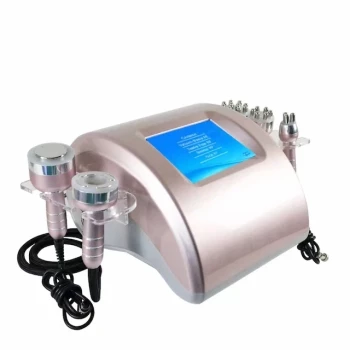
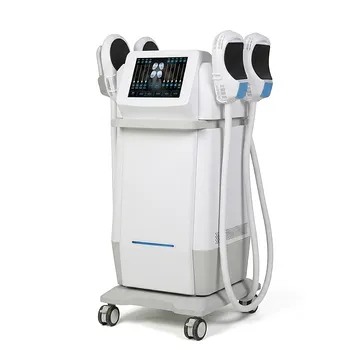
RF tightening works by converting electrical energy into controlled heat within the dermis and, depending on the device, subcutaneous tissue. The resulting thermal exposure contracts and partially denatures existing collagen, producing an early tightening effect. It also activates a wound-healing response involving fibroblasts, which gradually increases new collagen production and remodels the dermal matrix over the following weeks to months.
The key mechanism is two-stage: controlled deep heating creates immediate collagen contraction, while the subsequent tissue-repair response drives neocollagenesis and longer-term dermal strengthening.
How RF Energy Reaches and Heats the Dermis
RF creates an alternating electric field
RF devices deliver high-frequency electrical energy through the skin. As the alternating field passes through tissue, charged particles and polar molecules oscillate, creating resistance-related heat within the targeted tissue.
This differs from a laser, which relies on optical absorption by specific chromophores. RF heating is primarily determined by the tissue’s electrical properties, the electrode configuration, energy level, and treatment technique.
Heating can occur below the surface
Because RF energy can generate heat within the dermis and, with suitable device designs, deeper tissue, it is not limited to the epidermal surface. Monopolar, bipolar, multipolar, and other RF configurations distribute energy differently and therefore produce different heating patterns and depths.
The objective is controlled volumetric heating rather than simply making the skin surface hot. Treatment systems use applicator design, contact cooling, impedance monitoring, and energy modulation to manage the temperature delivered to tissue.
Thermal targets must be controlled precisely
The primary reference identifies a treatment range of approximately 65°C to 75°C for controlled collagen denaturation. However, actual therapeutic temperatures vary by device, treatment depth, pulse duration, tissue composition, and whether the stated temperature refers to the target tissue or the skin surface.
These temperatures are near the range at which thermal injury can occur. Effective RF treatment therefore depends on delivering sufficient heat to the intended tissue while protecting the epidermis and avoiding excessive exposure.
Why Existing Collagen Contracts
Heat changes collagen’s structure
Collagen has an organized triple-helix structure stabilized by molecular bonds. Sufficient thermal energy disrupts some of these bonds and causes the collagen fibers to shorten and thicken.
This produces immediate mechanical contraction of the treated collagen network. Clinically, that contraction may contribute to an early perception of firmer or tighter skin.
Immediate tightening is not the same as new collagen
The initial tightening effect largely reflects modification and contraction of collagen that already exists. It should not be interpreted as instantaneous production of large amounts of new collagen.
Neocollagenesis is a slower biological process that develops after treatment as tissue responds to the controlled thermal stress.
How RF Stimulates Neocollagenesis
Controlled heat initiates a repair response
Thermal exposure creates a carefully controlled injury or stress response in the dermis. This activates inflammatory and repair signaling rather than relying only on the immediate physical contraction of collagen.
The response can include heat-stress signaling and release of mediators that influence fibroblast activity. The extent of this response depends on the delivered temperature, exposure time, treatment depth, and individual tissue biology.
Fibroblasts produce new collagen
Fibroblasts are the principal dermal cells responsible for producing extracellular-matrix components, including collagen. Following RF exposure, their activity can increase, including expression and synthesis of Type I collagen, the dominant structural collagen in mature skin.
New collagen is deposited and progressively reorganized within the dermis. This process is called neocollagenesis, and it is responsible for much of the delayed improvement in firmness and dermal density.
Remodeling develops gradually
Newly formed collagen does not immediately behave like mature, organized dermal tissue. It undergoes maturation and remodeling over subsequent weeks and, in many cases, longer.
This explains why RF results may continue to develop after the treatment session. The visible outcome reflects both early collagen contraction and slower restructuring of the dermal matrix.
How These Processes Produce Skin Tightening
The dermis becomes mechanically stronger
Collagen provides much of the dermis’s tensile strength and structural support. Contracting existing fibers and adding newly synthesized collagen can increase the organization and density of this supporting network.
As the dermal matrix remodels, the skin may appear firmer, smoother, and less lax. The effect is generally a gradual improvement rather than the immediate repositioning achieved by surgical lifting.
Skin surface and deeper tissue are related but distinct
The visible result appears at the skin surface, but the biological changes primarily involve the dermis and, for some systems, deeper connective or adipose tissue. RF should therefore be understood as a treatment that affects underlying support structures rather than merely polishing the epidermis.
Claims that RF exclusively targets the epidermis are misleading. The intended mechanism of aesthetic tightening is controlled heating beneath the surface, with epidermal protection remaining an important safety requirement.
Understanding the Trade-offs
More heat is not automatically better
Higher temperatures or longer exposure can increase collagen denaturation, but they also increase the risk of pain, burns, prolonged inflammation, pigmentary change, or unwanted tissue damage. The therapeutic goal is an adequate thermal dose, not the maximum possible temperature.
A device’s reported temperature alone is therefore insufficient for judging effectiveness. Exposure time, treatment depth, energy delivery, cooling, and real-time monitoring are equally important.
Immediate results can be overinterpreted
Early tightening may be partly due to collagen contraction, temporary tissue changes, or swelling. It does not necessarily represent the final degree of neocollagenesis.
A realistic assessment should account for the delayed remodeling phase rather than judging the treatment solely by its immediate appearance.
Outcomes vary between patients
Age, baseline laxity, collagen quality, skin thickness, treatment area, and individual healing response influence the result. RF can improve laxity and texture, but it cannot reproduce the degree of lifting or tissue repositioning provided by surgery.
Treatment claims should also distinguish between different RF platforms, since electrode geometry and energy delivery can substantially alter the depth and distribution of heating.
Safety depends on technique
RF is often described as non-invasive, but it still delivers meaningful thermal energy to living tissue. Appropriate patient selection, device settings, coupling, cooling, and operator technique are necessary to maintain the balance between therapeutic heating and thermal injury.
How to Apply This to Your Treatment Goal
The most useful way to evaluate RF is to separate the immediate contraction effect from the delayed collagen-remodeling effect.
- If your primary focus is immediate firmness: Expect the early effect to come mainly from thermal contraction of existing collagen, with the result potentially changing as post-treatment tissue settles.
- If your primary focus is long-term neocollagenesis: Evaluate the outcome over the following weeks to months, when fibroblast activity and collagen remodeling become more apparent.
- If your primary focus is treatment safety: Confirm how the device controls tissue temperature, protects the epidermis, and monitors energy delivery rather than relying only on a headline temperature.
- If your primary focus is correction of substantial laxity: Treat RF as a non-surgical tightening and remodeling approach, not as an equivalent substitute for surgical tissue lifting.
RF achieves deep dermal tightening by combining controlled thermal collagen contraction with a delayed fibroblast-driven process of neocollagenesis and matrix remodeling.
Summary Table:
| Aspect | Description |
|---|---|
| Mechanism | RF converts electrical energy into heat within the dermis, causing collagen contraction and a wound-healing response. |
| Immediate Effect | Existing collagen contracts, providing early tightening. |
| Long-term Effect | Fibroblasts produce new collagen over weeks to months, remodeling the dermal matrix. |
| Target Temperature | Around 65-75°C for collagen denaturation, but varies by device and depth. |
| Key Difference from Laser | RF heats via electrical resistance, not chromophore absorption. |
| Result Timeline | Gradual improvement; final results evident after several months. |
| Safety Considerations | Requires precise temperature control, epidermal cooling, and monitoring to avoid burns. |
| Expectations vs Surgery | RF is non-surgical and does not lift like surgery, but improves firmness and texture. |
Elevate your practice with BELIS's advanced RF platforms, delivering controlled deep dermal heating for safe and effective skin tightening. Our medical-grade devices are trusted by clinics and premium salons worldwide. Partner with us to enhance patient satisfaction and expand your aesthetic offerings. Contact us today to discuss your needs and explore OEM/ODM options, certifications, and dedicated support tailored to your business.
Related Products
- Ultrasonic Cavitation Radiofrecuency Machine for Body Slimming
- RF Microneedling Machine Micro Needle Radio Frequency Machine
- Clinic Use IPL SHR ND YAG Laser Hair Removal RF Skin Tightening Machine
- Ultrasonic Cavitation Machine Lipo Laser Device
- EMS Body Sculpting Slimming Machine EMSlim Body Slimming Machine
People Also Ask
- What are the pros and cons of the ultrasonic cavitation slimming treatment? A Guide to Painless Body Contouring
- Does an ultrasonic cavitation machine also tighten the skin? Achieve Total Body Contouring with RF Synergy
- How does radiofrequency technology in slimming machines promote fat reduction? The Science of Non-Invasive Sculpting
- How should one prepare for an ultrasonic cavitation appointment? 5 Essential Tips for Maximum Fat Loss Results
- What is an ultrasonic cavitation machine? Sculpt Your Body with Advanced Non-Invasive Fat Reduction