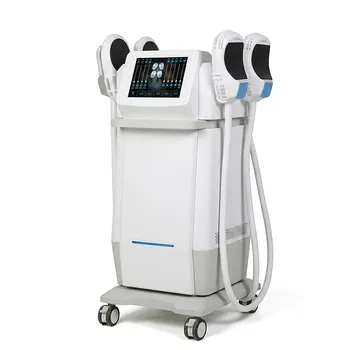
At the tissue level, monopolar radiofrequency (RF) tightening works by converting electrical energy into controlled heat within the dermis and subcutaneous tissue. That heat temporarily contracts existing collagen and initiates a wound-healing response in fibroblasts. The result is an immediate tightening effect followed by months of collagen remodeling, which supports longer-term firmness and skin rejuvenation.
Monopolar RF uses tissue impedance to create volumetric heat rather than mechanically pulling the skin tight. Controlled thermal exposure produces immediate collagen contraction, while delayed fibroblast activity reorganizes and replenishes the dermal matrix.
How Monopolar RF Delivers Energy Into Tissue
The electrical circuit
A monopolar RF system typically uses an active treatment electrode and a larger return electrode. High-frequency alternating current travels through the body between these electrodes, with the treatment area receiving the intended thermal effect.
Unlike laser energy, RF does not depend primarily on a skin chromophore such as melanin or water. Its heating effect is generated by the electrical resistance, or impedance, of the tissue.
How impedance creates heat
As RF current passes through tissue, electrical energy is dissipated as heat. The amount of heating depends on factors including current, tissue impedance, treatment time, electrode design, and energy delivery.
This produces volumetric heating: tissue beneath the surface warms through a three-dimensional region rather than only at the epidermal surface.
Why monopolar RF can reach deeper layers
Monopolar RF generally allows energy to penetrate more deeply than systems in which the electrical path is confined between closely spaced electrodes. The precise depth is not fixed; it varies with device design, tissue composition, electrode contact, and treatment settings.
Energy can reach the dermis and, in some protocols, the superficial subcutaneous tissue. Treatment planning must therefore account for both the desired target and structures that should be protected.
How Heat Produces Immediate Tissue Contraction
Collagen’s triple-helix structure
Dermal collagen is organized as a triple-helix protein structure assembled into fibrils and larger fibers. These fibers provide much of the skin’s tensile strength and mechanical support.
When collagen is exposed to sufficient thermal energy for an appropriate duration, some of its molecular bonds are disrupted. The organized helix partially denatures into a less ordered configuration.
Shortening and thickening of collagen
Thermal denaturation changes the physical dimensions and tension of collagen fibers. Existing fibrils can become shorter, thicker, and more contracted, producing an immediate increase in tissue tension.
This is not the same as creating new skin instantly. It is a physical rearrangement of pre-existing collagen that can make treated tissue appear firmer or more compact shortly after treatment.
Heating must be controlled
The biological effect depends on both temperature and exposure time. A higher temperature may require less exposure time, while a lower temperature may require longer exposure to produce a comparable effect.
There is no single universal “correct” temperature for every monopolar RF device or treatment area. Clinical systems use calibrated energy delivery, temperature monitoring, treatment passes, and endpoint assessment to balance collagen remodeling against the risk of excessive heating.
How RF Produces Long-Term Rejuvenation
Fibroblast activation
Controlled thermal stress initiates a localized wound-healing response without requiring removal of the skin surface. This response can stimulate dermal fibroblasts, the cells responsible for producing and organizing extracellular-matrix proteins.
The subsequent remodeling process is more important for durable improvement than the initial contraction alone.
Neocollagenesis and matrix remodeling
Over the following weeks and months, fibroblasts can increase production of new collagen and reorganize existing dermal fibers. This process is commonly described as neocollagenesis and dermal remodeling.
The resulting matrix may improve dermal density, mechanical support, and the appearance of fine lines and laxity. Changes develop gradually rather than appearing entirely at the time of treatment.
Elastic fibers and skin quality
Some clinical findings associate monopolar RF treatment with improved elastic-fiber density or organization. However, the strength and consistency of this response can vary by device, protocol, treatment area, and patient.
The most defensible explanation is that RF primarily induces thermal collagen contraction and remodeling, with broader extracellular-matrix changes contributing to improvements in firmness and elasticity.
The typical time course
The immediate effect comes mainly from contraction of existing collagen and thermally affected connective tissue. Longer-term improvement develops as fibroblasts synthesize and reorganize matrix components.
Visible remodeling is commonly assessed over several weeks to several months, with some references describing a three- to six-month period for maturation of the response.
The Role of Subcutaneous Fibrous Septa
What fibrous septa are
Fibrous septa are connective-tissue bands that extend through subcutaneous fat and help anchor the skin to deeper structures. They contribute to the mechanical framework of the soft tissues.
When monopolar RF energy reaches appropriate subcutaneous regions, these collagen-rich bands may also undergo thermal contraction.
How septal contraction adds to tightening
Contraction of the fibrous septa can increase tension within the superficial soft-tissue framework. This may add a deeper component to the visible tightening effect beyond contraction of dermal collagen alone.
The degree of this effect depends on how much energy reaches the subcutaneous layer. It should not be interpreted as a guaranteed lifting of deeper facial structures equivalent to surgery.
Why the Epidermis Can Remain Intact
The treatment target is below the surface
Monopolar RF is designed to heat deeper tissue while limiting injury to the epidermis. The epidermis does not need to be removed or intentionally ablated for dermal remodeling to occur.
Many systems use surface temperature monitoring, cooling, controlled pulse delivery, or other safeguards to manage the epidermal temperature.
Energy control determines safety
Safe treatment requires control of energy density, contact, coupling, duration, and temperature. Poor contact or excessive energy can create uneven heating and increase the risk of burns or unwanted tissue injury.
“Noninvasive” describes the absence of an incision or deliberate surface ablation; it does not mean that the energy is biologically inactive.
Understanding the Trade-offs
Immediate tightening is not the whole result
The initial tightening effect can be noticeable, but it does not represent the full remodeling process. Longer-term changes depend on the patient’s fibroblast response, baseline skin condition, treatment parameters, and time.
Expectations should therefore distinguish between early contraction and delayed rejuvenation.
More heat is not automatically better
Increasing energy does not guarantee a proportionally better outcome. Excessive or uneven heating can cause pain, burns, inflammation, pigmentary changes, fat alteration, or other tissue damage.
Effective treatment is a controlled thermal dose, not simply the highest tolerable setting.
Results vary between patients
Skin thickness, collagen quality, age, laxity, hydration, subcutaneous anatomy, and prior treatments all influence the response. A protocol that is appropriate for the lower face may not be appropriate for the neck, eyelids, or thinner skin.
Device settings and clinical endpoints must be adapted to the treatment area rather than transferred mechanically from one protocol to another.
RF does not replace structural surgery
RF can improve skin laxity and texture through dermal and connective-tissue remodeling. It cannot reliably reproduce the degree of repositioning or tissue removal achieved by a surgical facelift or other structural procedure.
Its value is strongest when the goal is noninvasive or minimally invasive improvement in firmness, not correction of major tissue descent.
How to Apply This to Your Treatment Goal
The tissue-level mechanism helps set realistic expectations and supports safer treatment planning.
- If your primary focus is immediate tightening: Understand that the early effect mainly comes from thermal contraction of existing collagen and, where reached, subcutaneous fibrous septa.
- If your primary focus is long-term rejuvenation: Evaluate results over several months because fibroblast-driven collagen remodeling develops gradually.
- If your primary focus is safety: Prioritize systems and protocols with controlled energy delivery, reliable tissue-temperature management, appropriate coupling, and trained operators.
- If your primary focus is facial lifting: Treat monopolar RF as a method for improving skin and superficial soft-tissue firmness, not as an equivalent substitute for surgical repositioning.
- If your primary focus is treatment selection: Match the device, energy level, and treatment area to tissue thickness, laxity, anatomy, and the desired endpoint rather than assuming one setting suits every patient.
Monopolar RF achieves durable rejuvenation by pairing immediate thermal collagen contraction with a slower, biologically driven process of dermal and connective-tissue remodeling.
Summary Table:
| Mechanism | Tissue Effect | Timeframe |
|---|---|---|
| Resistive heating | Volumetric dermal heating | Immediate |
| Collagen contraction | Immediate tightening | Days to weeks |
| Fibroblast activation | Neocollagenesis and remodeling | Weeks to months |
| Septal contraction | Deeper tissue support | Immediate to progressive |
Elevate your clinic's offerings with BELIS's advanced monopolar RF systems, designed for safe, effective skin tightening. Partner with us to access cutting-edge technology, comprehensive training, and reliable support. Contact us today to learn how we can enhance your aesthetic practice.
Related Products
- Ultrasonic Cavitation Radiofrecuency Machine for Body Slimming
- 4D 12D HIFU Machine Device for Skin Tightening and Lifting
- Clinic Use IPL SHR ND YAG Laser Hair Removal RF Skin Tightening Machine
- 4D 12D HIFU Machine Device for Skin Tightening
- Ultrasonic Cavitation Machine Lipo Laser Device
People Also Ask
- What are the pros and cons of the ultrasonic cavitation slimming treatment? A Guide to Painless Body Contouring
- Does an ultrasonic cavitation machine also tighten the skin? Achieve Total Body Contouring with RF Synergy
- How does radiofrequency technology in slimming machines promote fat reduction? The Science of Non-Invasive Sculpting
- How should one prepare for an ultrasonic cavitation appointment? 5 Essential Tips for Maximum Fat Loss Results
- What areas of the body are targeted for ultrasonic cavitation? Best Zones for Effective Body Contouring