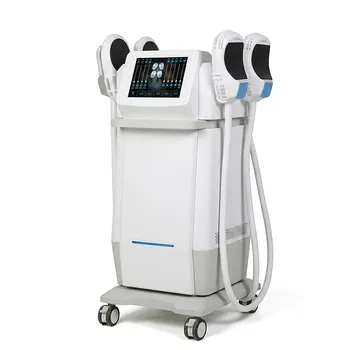
RF skin tightening complements periorbital and facial rejuvenation by improving skin laxity and collagen support without replacing surgery or volume restoration. Monopolar RF delivers controlled heat into the dermis to contract existing collagen and stimulate longer-term remodeling, while microneedle RF combines thermal energy with precisely placed needle-based delivery. Used appropriately, these modalities can refine mild-to-moderate laxity, improve fine lines and elasticity, and create a firmer foundation for treatments such as blepharoplasty or dermal fillers.
RF is best viewed as a tissue-quality and skin-tightening treatment within a layered rejuvenation plan. It addresses laxity and collagen remodeling, while surgery, fillers, neuromodulators, and resurfacing address different anatomical problems.
What RF Adds to a Rejuvenation Protocol
It targets dermal laxity
RF heats the deeper dermis in a controlled manner. This produces immediate contraction of existing collagen fibers and activates fibroblasts involved in longer-term collagen production.
The resulting improvement is generally gradual and relates primarily to skin firmness, elasticity, and fine-line appearance, rather than dramatic removal of excess tissue.
It complements facial contouring
On the face, volumetric RF can establish a tighter cutaneous foundation across areas such as the malar and submalar regions. This may improve the appearance of early laxity and provide a more supported surface for subsequent contouring.
RF does not replace structural volume. If a patient has a tear-trough deformity, deep static rhytid, or localized volume deficit, a targeted filler or surgical approach may still be necessary.
It is useful around the periorbital area
The periorbital region is delicate and requires conservative energy delivery, appropriate device selection, and careful protection of the eye and surrounding tissues. Within those limits, RF may improve mild eyelid and periocular laxity, fine lines, and reduced elasticity.
The treatment is most appropriate when the concern is skin quality or mild laxity, not substantial fat prolapse or extensive excess skin.
How RF Fits With Common Treatments
Before or alongside dermal fillers
RF can improve the firmness of the skin envelope before fillers are used to address focal volume loss or deep static lines. A tighter tissue foundation may allow the clinician to use filler more selectively rather than attempting to compensate for generalized laxity with additional volume.
When RF and filler are combined, treatment planning and sequencing matter. The clinician must account for tissue swelling, heat exposure, product placement, and the specific device and filler used.
After surgical rejuvenation
Following procedures such as blepharoplasty, RF may serve as a refinement treatment for residual skin laxity or texture concerns. It is not a substitute for removing significant excess skin or correcting substantial structural issues.
Treatment should begin only after the surgical site has adequately healed and the operating clinician has confirmed that the tissue is ready for additional energy-based treatment.
With neuromodulators and resurfacing
Neuromodulators reduce dynamic muscle activity, while RF primarily addresses dermal laxity and collagen remodeling. These mechanisms are complementary, but neither treatment addresses every component of facial aging.
Resurfacing procedures may target epidermal texture, pigmentation, or more pronounced photodamage. RF can contribute deeper dermal tightening, creating a multilayered protocol when the patient’s skin condition and recovery capacity support combination treatment.
Choosing Between Monopolar and Microneedle RF
Monopolar RF for noninvasive tightening
Monopolar RF delivers thermal energy through the skin without intentionally puncturing it. It is therefore suited to patients seeking minimal disruption and limited recovery, particularly those with mild-to-moderate laxity.
The degree of improvement depends on energy delivery, tissue characteristics, treatment area, and the patient’s baseline laxity. Results should be presented as progressive refinement rather than a surgical lift.
Microneedle RF for more targeted delivery
Microneedle RF uses insulated or non-insulated needles to deliver RF energy at selected dermal depths. Because the needles penetrate the skin, it is not accurately described as completely noninvasive, although the treatment can be precisely controlled and may limit superficial thermal exposure compared with some surface-delivery approaches.
Microneedle RF may be useful when the protocol requires localized dermal remodeling or simultaneous attention to texture and laxity. Around the eyelids, however, anatomical expertise and conservative settings are especially important.
Device choice should follow the clinical problem
The decision should be based on the degree and location of laxity, skin thickness, prior procedures, recovery tolerance, and the intended treatment endpoint. Device labels alone do not determine suitability.
A periorbital protocol should be designed around safety margins and tissue anatomy rather than simply applying the same facial settings near the eyes.
Building a Layered Treatment Plan
Start with the dominant cause of aging
Assessment should distinguish among skin laxity, volume loss, dynamic movement, excess skin, fat prolapse, and surface photodamage. RF is most directly suited to the laxity and collagen-quality components.
If the primary issue is severe dermatochalasis, prominent fat herniation, or major tissue descent, surgery may provide a more appropriate correction.
Use RF to support, not overcorrect, volume
When laxity and volume loss coexist, tightening the skin may improve the overall contour before volume is added. This can reduce the temptation to use excessive filler to create lift.
The goal is a balanced, multilayered result: improve the skin envelope with RF, restore deficient volume only where indicated, and address dynamic lines or surface changes with treatments suited to those mechanisms.
Plan timing conservatively
RF may be used as part of a non-surgical protocol or as a later refinement after surgery. The correct interval depends on the procedure, device, energy settings, tissue response, and clinician assessment.
Combining treatments too aggressively can increase inflammation, swelling, discomfort, or the risk of an unsatisfactory result. Sequencing should therefore be individualized rather than treated as a universal rule.
Understanding the Trade-offs
RF cannot remove substantial excess skin
RF may contract and remodel dermal tissue, but it does not excise redundant eyelid skin or reposition prolapsed fat. Patients with advanced laxity may experience limited improvement from energy-based treatment alone.
Clear expectation-setting is essential: RF generally offers incremental tightening with less recovery, whereas surgery offers more definitive correction with greater invasiveness and recovery demands.
Results develop over time
Some contraction may be visible soon after treatment, but collagen remodeling and fibroblast activity evolve over subsequent weeks or months. Multiple treatments may be appropriate depending on the device and treatment plan.
A lack of immediate dramatic change does not necessarily indicate treatment failure, but it also means RF should not be presented as an instant surgical equivalent.
Heat and anatomy require careful management
Excessive or poorly controlled thermal exposure can cause pain, burns, pigmentary changes, or unwanted tissue effects. The periorbital region demands particular caution because of its thin skin, proximity to the eye, and complex anatomy.
RF should be performed by a qualified clinician using a device and protocol appropriate for the treatment area. Special care is also required for patients with relevant implants, altered anatomy, active skin disease, or recent surgery.
Microneedle RF has additional recovery considerations
Microneedle RF can produce temporary redness, swelling, pinpoint bleeding, crusting, or sensitivity because it mechanically penetrates the skin. These effects differ from those of noninvasive monopolar RF and should be incorporated into the recovery plan.
The treatment should not be described as epidermis-free when needles breach the skin, even though energy delivery can be directed into the dermis.
Making the Right Choice for Your Goal
RF works best when the treatment objective is defined precisely and matched to the appropriate modality.
- If your primary focus is mild-to-moderate periorbital laxity: Consider carefully controlled RF as a collagen-remodeling and skin-firming treatment, provided the anatomy and eye-safety requirements are appropriate.
- If your primary focus is post-surgical refinement: Use RF only after adequate healing and approval from the treating surgeon to address residual laxity or texture concerns.
- If your primary focus is tear-trough or facial volume loss: Treat RF as a supporting modality and use targeted volume restoration when clinically indicated rather than relying on tightening alone.
- If your primary focus is substantial excess eyelid skin or fat prolapse: Seek surgical assessment, because RF is unlikely to provide the same correction as tissue removal or repositioning.
- If your primary focus is minimal downtime: Noninvasive monopolar RF may be preferable, while microneedle RF may offer more targeted delivery at the cost of greater skin disruption and recovery.
RF delivers the greatest value when it is used as one layer of a personalized rejuvenation strategy, not as a substitute for treatments that address different anatomical problems.
Summary Table:
| RF Device Type | Mechanism | Best For | Key Considerations |
|---|---|---|---|
| Monopolar RF | Heats dermis without skin puncture | Mild-to-moderate laxity, minimal downtime | Results are gradual; not for excess skin or fat prolapse |
| Microneedle RF | Delivers heat via needles at precise depths | Localized remodeling, texture concerns | Causes temporary redness/swelling; requires expertise near eyes |
Looking to integrate RF skin tightening into your practice? At BELIS, we specialize in professional-grade aesthetic devices for clinics and premium salons. Our advanced RF systems, including Microneedle RF and HIFU, pair perfectly with fillers, lasers, and surgical refinements to deliver comprehensive facial rejuvenation. Contact us today to learn how our technology can elevate your treatment outcomes and patient satisfaction. Get in touch with our experts now!
Related Products
- Ultrasonic Cavitation Radiofrecuency Machine for Body Slimming
- Ultrasonic Cavitation Machine Lipo Laser Device
- Clinic Use IPL SHR ND YAG Laser Hair Removal RF Skin Tightening Machine
- 4D 12D HIFU Machine Device for Skin Tightening and Lifting
- 4D 12D HIFU Machine Device for Skin Tightening
People Also Ask
- What are the pros and cons of the ultrasonic cavitation slimming treatment? A Guide to Painless Body Contouring
- Does an ultrasonic cavitation machine also tighten the skin? Achieve Total Body Contouring with RF Synergy
- How does radiofrequency technology in slimming machines promote fat reduction? The Science of Non-Invasive Sculpting
- How should one prepare for an ultrasonic cavitation appointment? 5 Essential Tips for Maximum Fat Loss Results
- What is an ultrasonic cavitation machine? Sculpt Your Body with Advanced Non-Invasive Fat Reduction