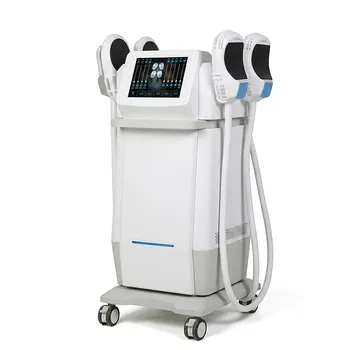
Both RF and MFU provide clinically meaningful, nonsurgical tightening of the submental and neck region. By approximately 90 days, studies report significant improvements in neck laxity, skin firmness, and texture with both technologies, with results persisting through roughly 180 days. The main clinical distinction is that temperature-controlled RF can combine tightening with treatment of localized fat, while MFU is more specifically oriented toward deep dermal coagulation and collagen remodeling.
RF and MFU should be viewed as effective but differently targeted technologies—not as universally superior alternatives. RF is often more versatile when laxity and localized submental fullness coexist; MFU is particularly suited to delivering focused thermal treatment at deeper tissue planes for tightening.
How Both Technologies Improve Neck Laxity
Shared clinical outcomes
Both modalities use controlled thermal injury to stimulate tissue remodeling. Clinical evaluations show reductions in neck laxity grades and improvements in firmness and texture by 90 days, with meaningful effects maintained at follow-up around 180 days.
The visible improvement is not limited to immediate contraction. Longer-term collagen remodeling and fibroblast activity contribute to progressive tightening after treatment.
Why results develop gradually
Energy-based tightening does not physically remove excess skin. Instead, it initiates controlled thermal changes that lead to collagen contraction and subsequent remodeling.
Patients should therefore assess results over several months rather than judging the treatment immediately after the procedure.
Where RF Has a Clinical Advantage
Volumetric heating of dermal and subcutaneous tissue
RF generates heat through electrical resistance within tissue rather than relying on a light-absorbing chromophore. This allows RF systems to heat the dermal and subcutaneous layers volumetrically, depending on the device design and treatment parameters.
Temperature-controlled systems are intended to deliver therapeutic heat while managing surface temperature and protecting the epidermis.
Combined tightening and submental contouring
Subdermal monopolar RF may offer an additional benefit when skin laxity is accompanied by localized submental fat. It can disrupt or reduce localized fat volume while tightening tissue along the jawline and neck.
This makes RF especially relevant when the clinical problem is not simply loose skin, but a combination of laxity and fullness beneath the chin.
Treatment across skin phototypes
Because RF does not depend on melanin or hemoglobin absorption, it is not subject to the same chromophore-related pigment risks as many optical devices. This makes RF broadly adaptable across skin phototypes when the device is used appropriately and treatment is delivered by a trained professional.
This advantage concerns energy absorption and pigment risk, not immunity from burns or other thermal complications. Treatment settings, cooling, anatomy, and operator technique still matter.
Where MFU Has a Clinical Advantage
Focused energy at deeper tissue levels
MFU delivers concentrated ultrasound energy to selected tissue depths, producing controlled zones of coagulation. Its clinical role is therefore more spatially focused than the broad volumetric heating typically associated with RF.
The treatment can target deeper dermal and supportive tissue planes while leaving intervening tissue relatively less affected.
Deep dermal coagulation and fibroblast activation
MFU excels at creating deep dermal thermal injury that stimulates fibroblast activity and subsequent collagen remodeling. This mechanism supports gradual improvement in skin firmness and neck contour.
MFU is consequently a strong option when the principal objective is structural tightening rather than fat-volume reduction.
Precision over broad heating
The key MFU benefit is controlled placement of thermal treatment. This can be useful when the clinician wants to address selected depths and treatment lines rather than heat a broader volume of tissue.
Its effectiveness still depends on appropriate patient selection, treatment depth, energy settings, and anatomical planning.
Understanding the Trade-offs
RF is not automatically superior
RF is sometimes described as the better tightening technology, but that conclusion is too broad. Clinical performance depends on the specific RF system, whether it is monopolar or another configuration, treatment depth, temperature control, protocol, and operator skill.
A high-power subdermal RF system should not be compared directly with a superficial or low-energy RF device. “RF” describes a technology category, not one uniform treatment.
MFU does not primarily address fat volume
MFU can improve laxity and contour, but its principal mechanism is focused thermal coagulation and remodeling rather than direct reduction of localized submental fat. Patients with substantial fullness may therefore require a different or additional contouring strategy.
The presence of fat, skin quality, platysmal changes, and the degree of excess skin should be assessed separately.
Neither modality replaces surgery in advanced laxity
Both treatments are most appropriate for mild to moderate laxity and selected submental contour concerns. Marked excess skin, pronounced platysmal banding, or substantial tissue descent may require surgical evaluation for a more predictable correction.
Noninvasive or minimally invasive energy treatments can improve tissue quality and contour, but they do not reproduce the lifting and excisional effects of a neck lift.
Results and maintenance vary
Results are progressive and not permanent because the underlying aging process continues. Some patients may need planned repeat treatments or maintenance, and the durability of outcomes depends on baseline laxity, age, skin quality, weight stability, and treatment protocol.
Comparisons should therefore focus on validated clinical endpoints and follow-up duration, not only on early photographs or marketing claims.
Choosing the Appropriate Technology
When RF is the stronger fit
RF is particularly attractive when the treatment plan must address both laxity and localized submental fullness. Its ability to heat dermal and subcutaneous tissue, and in some subdermal monopolar systems disrupt localized fat while tightening the jawline and neck, gives it broader contouring potential.
RF may also be preferred when treatment across diverse skin phototypes is an important consideration, because it does not rely on melanin absorption.
When MFU is the stronger fit
MFU is well suited when the dominant concern is skin and structural laxity without a major fat-volume component. Its focused thermal coagulation and fibroblast-stimulating effects make it useful for targeted deep tightening.
MFU may also be appropriate when the clinician prioritizes controlled treatment at selected tissue depths rather than broader volumetric heating.
How to Apply This to Your Treatment Decision
The correct choice should be based on the anatomy being treated, not on the technology label alone.
- If your primary focus is tightening lax neck skin: Consider either temperature-controlled RF or MFU, since both demonstrate meaningful improvement by approximately 90 days with results reported through 180 days.
- If your primary focus is submental fullness plus laxity: Favor a subdermal monopolar RF approach when the specific system and patient anatomy are appropriate, because it may address localized fat volume as well as tightening.
- If your primary focus is focused deep tissue remodeling: MFU may be preferable because it creates controlled zones of coagulation that stimulate fibroblast activity and collagen remodeling.
- If your primary focus is treatment across different skin phototypes: RF offers a chromophore-independent approach, although safe outcomes still depend on proper parameters, cooling, and clinical technique.
- If your primary focus is correcting advanced skin excess: Seek a surgical assessment, because neither RF nor MFU reliably replaces the lifting and excisional effects of a neck lift.
The best treatment is the one whose energy distribution and tissue targets match the specific combination of laxity, skin quality, and submental fullness.
Summary Table:
| Technology | Mechanism | Key Advantage | Best For |
|---|---|---|---|
| RF | Volumetric heating of dermal/subcutaneous tissue | Combined tightening + localized fat reduction; safe for all skin types | Mild-to-moderate laxity with submental fullness |
| MFU | Focused ultrasound coagulation at specific depths | Precise deep dermal remodeling; targeted thermal zones | Skin laxity without major fat component; structural tightening |
At BELIS, we provide professional-grade aesthetic devices including advanced RF and MFU systems tailored for clinics and premium salons. Our portfolio features cutting-edge technology for skin tightening, body contouring, and more, backed by OEM/ODM support and full certifications. Contact us today to find the perfect solution for your practice and elevate your treatment offerings — Get in touch!
Related Products
- Ultrasonic Cavitation Radiofrecuency Machine for Body Slimming
- 4D 12D HIFU Machine Device for Skin Tightening
- 4D 12D HIFU Machine Device for Skin Tightening and Lifting
- Ultrasonic Cavitation Machine Lipo Laser Device
- Clinic Use IPL SHR ND YAG Laser Hair Removal RF Skin Tightening Machine
People Also Ask
- What are the pros and cons of the ultrasonic cavitation slimming treatment? A Guide to Painless Body Contouring
- Does an ultrasonic cavitation machine also tighten the skin? Achieve Total Body Contouring with RF Synergy
- How does radiofrequency technology in slimming machines promote fat reduction? The Science of Non-Invasive Sculpting
- How should one prepare for an ultrasonic cavitation appointment? 5 Essential Tips for Maximum Fat Loss Results
- What is an ultrasonic cavitation machine? Sculpt Your Body with Advanced Non-Invasive Fat Reduction