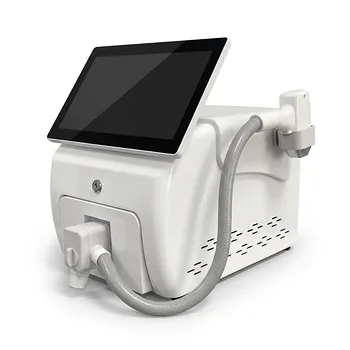
Q-switched lasers fragment pigment mechanically, whereas long-pulsed lasers and IPL primarily heat it. Q-switched systems deliver nanosecond- or picosecond-duration pulses with very high peak power, creating photoacoustic or photomechanical disruption of melanosomes. Long-pulsed lasers and IPL deliver millisecond-range energy that produces photothermal injury, making them better suited to broad, superficial pigmentation and some associated vascular or photoaging findings.
The practical distinction is depth and selectivity: Q-switched lasers are designed for precise pigment fragmentation, including selected dermal lesions, while long-pulsed lasers and IPL depend more heavily on controlled heating and are generally most useful for superficial epidermal pigmentation.
How the Three Technologies Interact With Pigment
Q-switched lasers: mechanical pigment disruption
Q-switched devices emit extremely short pulses, commonly in the nanosecond range, and some systems operate in the picosecond range. The pulse is shorter than the time required for substantial heat to diffuse away from the targeted melanosomes.
This produces a rapid pressure wave that fractures melanin-containing structures into smaller particles. The surrounding tissue receives less prolonged thermal exposure than it would from a millisecond pulse, although some heat and inflammation still occur.
Common wavelengths include 532 nm, 694 nm, 755 nm, and 1064 nm. The appropriate wavelength depends on the lesion’s depth, pigment characteristics, and the patient’s skin type.
Long-pulsed lasers: controlled thermal injury
Long-pulsed lasers deliver energy over milliseconds rather than nanoseconds. Their principal effect is photothermal heating, which can coagulate or thermally damage pigment-containing cells and surrounding target structures.
Because heat has more time to spread, treatment depends on balancing the pulse duration, fluence, spot size, wavelength, and cooling strategy. The goal is to heat the intended target without causing unacceptable injury to the epidermis or adjacent dermis.
IPL: broad-spectrum photothermal treatment
IPL is not a single-wavelength laser. It produces noncoherent, polychromatic light, typically selected with cutoff filters to emphasize wavelengths absorbed by melanin or other chromophores.
Its millisecond-range pulses heat superficial melanin across a relatively large area. Because IPL is less wavelength-specific than a dedicated laser, it can also affect hemoglobin and other chromophores, which explains its usefulness for combined pigmentary and vascular photoaging—but also its lower pigment selectivity.
Why Pulse Duration Changes the Clinical Effect
Thermal relaxation and target confinement
A target absorbs optical energy and then requires time to cool. This is described by its thermal relaxation time (TRT).
A Q-switched pulse is substantially shorter than the TRT of an individual melanosome, so the energy creates rapid mechanical stress before heat can diffuse widely. Millisecond systems operate on a longer thermal timescale and therefore produce more heat conduction into cells and surrounding tissue.
The commonly cited epidermal TRT of approximately 10 milliseconds is a useful clinical reference, but it should not be treated as a universal setting. TRT varies with target size, depth, tissue composition, and treatment geometry.
Selectivity versus volumetric heating
Q-switched treatment is highly selective for discrete pigment-containing targets when the wavelength and fluence are appropriate. Long-pulsed lasers and IPL produce a broader thermal response and may affect melanocytes, hair follicles, vessels, or other structures within the heated zone.
This difference explains why Q-switched systems can be effective for sharply defined lesions, while IPL is often chosen for larger fields of diffuse dyschromia.
How Clinical Applications Differ
Superficial freckles and solar lentigines
Both Q-switched lasers and IPL can treat epidermal pigmentation such as freckles and solar lentigines.
IPL is particularly useful for broad areas of sun damage and generalized dyschromia. It can treat multiple lesions in one session and may also improve associated telangiectasia and other signs of photodamage.
A Q-switched laser is more precise for discrete, well-defined lesions, especially when accurate targeting matters more than treating a large field.
Dermal or deeper pigment
Deep dermal pigmentation generally requires a wavelength capable of reaching the target and a pulse duration that limits collateral thermal injury.
Q-switched systems—particularly appropriately selected 755 nm or 1064 nm platforms—are used for selected dermal pigmentary disorders because their photoacoustic effect can disrupt melanosomes at depth.
IPL and short-wavelength, non-Q-switched devices are poorly suited to deeply situated pigment. Their light is absorbed and scattered more superficially, while the required increase in energy can cause excessive heating of overlying and surrounding skin.
Large-area photoaging
IPL is often the most practical option when the treatment objective is improvement of a broad area rather than removal of a small number of isolated lesions.
Its interchangeable filters and large treatment coverage allow one platform to address pigment, superficial vascular changes, and some aspects of photodamage. This versatility comes at the cost of lower chromophore selectivity.
Hair-associated or follicular targets
Millisecond lasers and IPL can heat larger structures such as hair follicles. This is a fundamentally different objective from selectively fragmenting melanosomes.
Therefore, long-pulsed systems and IPL may be useful when pigment treatment is combined with hair reduction or other photothermal indications, whereas Q-switched devices are optimized for pigment particles and selected pigmented lesions.
What Patients Typically Experience
Q-switched laser endpoints and recovery
Q-switched treatment may produce immediate whitening or frosting, followed by erythema, edema, darkening, and crusting. The treated area may require several days—sometimes approximately a week—to re-epithelialize and shed superficial debris.
Clearance may occur in fewer sessions than with IPL or long-pulsed treatment, but the result is not guaranteed after one treatment. The number of sessions depends on lesion type, depth, skin type, wavelength, and the risk tolerance for inflammation.
Long-pulsed laser and IPL recovery
Long-pulsed lasers and IPL generally do not produce the same immediate photomechanical endpoint. Pigmented lesions commonly darken and gradually slough over several days, often within approximately 5 to 10 days, depending on treatment parameters and the individual response.
These systems may involve less obvious immediate epidermal disruption, but they are not risk-free. Their thermal mechanism can still cause burns, blistering, persistent pigmentary change, or scarring if settings and cooling are inappropriate.
Safety and Patient Selection
Skin type and postinflammatory hyperpigmentation
Q-switched lasers can cause postinflammatory hyperpigmentation (PIH), particularly in darker skin types or after overly aggressive treatment. The risk reflects both the patient’s melanogenic response and the inflammation produced by pigment fragmentation.
Long-pulsed lasers or IPL may sometimes offer a more gradual alternative, but they should not automatically be considered safer for every darker skin type. IPL’s broad spectrum and melanin absorption can create substantial epidermal heating when the contrast between lesion and surrounding skin is insufficient.
Cooling and protection of the epidermis
Because long-pulsed systems and IPL depend on heat, active cooling is important. Cooling helps protect the epidermis while allowing the clinician to deliver therapeutic energy to the pigmented target.
Q-switched systems also require appropriate epidermal protection and conservative parameter selection. Their reduced thermal diffusion does not eliminate the risks of inflammation, blistering, PIH, or hypopigmentation.
Diagnostic assessment comes first
A pigmented lesion should not be treated cosmetically until it has been clinically assessed as appropriate for treatment. Some melanomas and other clinically significant lesions can resemble benign “age spots” or lentigines.
When the diagnosis is uncertain, treatment should be deferred and dermatologic evaluation—including biopsy when indicated—should take priority.
Understanding the Trade-offs
Precision versus coverage
Q-switched lasers offer high spatial and wavelength specificity, which is valuable for isolated lesions and selected dermal targets. They are less efficient for treating a large field of diffuse photodamage.
IPL provides broad coverage and platform versatility, but its noncoherent, divergent light is less precisely confined to the pigment. Contact handpieces and broad illumination can also make endpoint visualization and treatment of concave areas more challenging.
Fewer sessions versus gentler progression
Q-switched lasers may achieve substantial clearance in approximately one to three sessions for some epidermal lesions, but they can produce more visible inflammation and carry a meaningful PIH risk.
Long-pulsed lasers and IPL often require a series of treatments—commonly several sessions spaced weeks apart—but can be useful when a gradual thermal approach and broad-area treatment are the priorities.
Selectivity versus chromophore competition
IPL and some visible-wavelength long-pulsed systems can be absorbed by hemoglobin as well as melanin. This may be advantageous when vascular redness is also being treated, but it reduces pigment specificity and can alter the treatment response.
In selected cases, vascular compression or appropriate filtering can reduce competing hemoglobin absorption. These measures do not replace careful wavelength, fluence, pulse-duration, and cooling selection.
Making the Right Choice for Your Goal
The best device is determined by the lesion’s diagnosis, depth, distribution, skin type, and tolerance for downtime—not by pulse duration alone.
- If your primary focus is a few discrete superficial freckles or lentigines: A Q-switched laser offers precise targeting, while IPL is reasonable when several lesions and surrounding photodamage are being treated together.
- If your primary focus is diffuse superficial sun damage: IPL is often practical because it covers large areas and can address pigment plus superficial vascular photodamage.
- If your primary focus is selected dermal pigmentation: A suitably selected Q-switched wavelength is generally more appropriate than IPL or a millisecond device because it can deliver deeper, photomechanical pigment disruption.
- If your primary focus is minimizing thermal injury: Q-switched treatment provides shorter energy delivery and less prolonged heat diffusion, but it still requires conservative settings and careful PIH risk assessment.
- If your primary focus is treating darker skin safely: Prioritize accurate diagnosis, cautious test spots, appropriate wavelength selection, conservative fluence, and experienced management rather than assuming one technology is universally safest.
Understanding whether the clinical problem requires mechanical pigment fragmentation or controlled thermal treatment is the key to choosing among Q-switched lasers, long-pulsed lasers, and IPL.
Summary Table:
| Feature | Q-Switched Lasers | Long-Pulsed Lasers | IPL |
|---|---|---|---|
| Mechanism | Photomechanical (fragments pigment) | Photothermal (heats pigment) | Photothermal (broad spectrum) |
| Pulse Duration | Nanoseconds to picoseconds | Milliseconds | Milliseconds |
| Wavelengths | 532, 694, 755, 1064 nm | 532, 755, 810, 1064 nm | Polychromatic with filters |
| Pigment Selectivity | High (discrete targets) | Moderate (larger targets) | Low to moderate (affects multiple chromophores) |
| Best For | Discrete epidermal/dermal lesions | Superficial pigmentation, hair removal | Broad areas of dyschromia, photoaging |
| Recovery Time | Approximately 1 week | 5-10 days | 5-10 days |
| Side Effects | PIH risk, frost, crusting | Erythema, blistering, PIH | Erythema, pigment changes |
Expert Guidance for Your Clinic
At BELIS, we offer advanced Q-switched lasers, long-pulsed systems, and IPL platforms tailored to your practice. Our devices are trusted by clinics and premium salons worldwide. Contact us today to discuss which technology suits your patients' needs and elevate your treatments.
Contact us to schedule a consultation and explore our portfolio.
Related Products
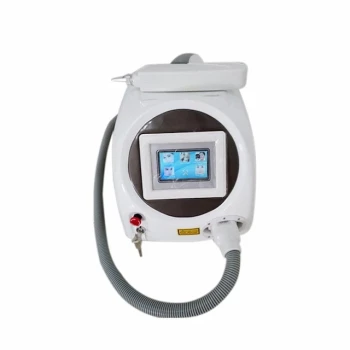
- Q Switch Nd Yag Laser Machine Tattoo Removal Nd Yag Machine
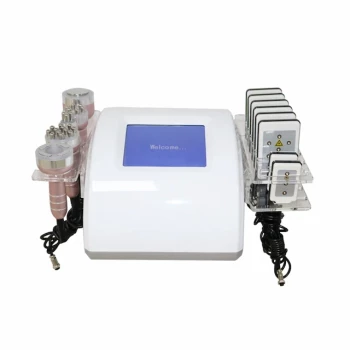
- Cryolipolysis Fat Freezing Cavitation Lipo Laser Machine
- Ultrasonic Cavitation Machine Lipo Laser Device
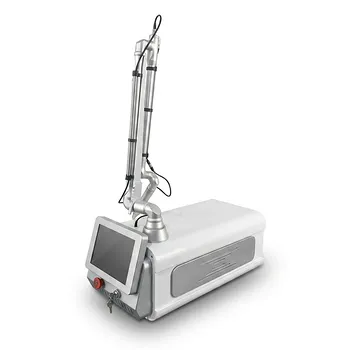
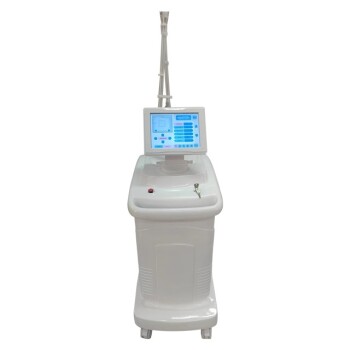
- Fractional CO2 Laser Machine for Skin Treatment
- Fractional CO2 Laser Machine for Skin Treatment
People Also Ask
- What is the documented effectiveness of Q-switched Nd:YAG lasers for tattoo removal? Gold Standard Results
- How do wavelength selection and parameter guidelines differ when using Q-switched Nd:YAG laser equipment for removing different tattoo colors? Master Tattoo Removal for Every Color
- How does laser fluence influence pigment clearance vs. safety? Balancing Speed and Skin Integrity in Tattoo Removal
- What pigment compositions and particle properties should practitioners evaluate before operating Q-switched Nd:YAG lasers for tattoo removal? Evaluate pigment composition and particle size for safe, effective tattoo removal.
- How should aesthetic practitioners select wavelengths across Nd:YAG and Q-switched laser systems for target pigment depth and skin phototypes? Key Insights for Clinicians