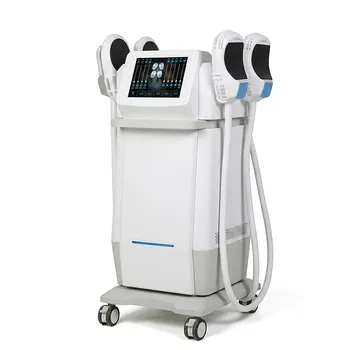
Monopolar radiofrequency devices protect the epidermis primarily through active contact cooling and continuous safety monitoring. The handpiece cools the skin surface before, during, and after RF delivery, creating a reverse thermal gradient: the epidermis remains within a safe temperature range while heat accumulates in the deeper dermis and subcutaneous tissue. Real-time temperature and contact sensors can reduce or stop energy delivery if the surface overheats or the handpiece loses adequate contact.
The key principle is controlled thermal separation: RF energy generates therapeutic heat in deeper tissue, while active cooling and automated monitoring prevent excessive epidermal temperature.
How Monopolar RF Creates Deep Heating
RF heating occurs within tissue
Monopolar RF devices deliver high-frequency electrical current through the skin and into deeper tissue. Tissue impedance converts part of that electrical energy into heat, producing volumetric heating within the dermis and, depending on the device and settings, deeper subcutaneous structures.
The current does not literally bypass the epidermis. Instead, the treatment is designed so that deeper tissues receive the intended thermal effect while the epidermis is actively managed and protected.
Therapeutic heat targets deeper layers
Professional systems may deliver a substantial proportion of their energy at depths around 2 to 2.5 millimeters and deeper, depending on the device design, electrode configuration, tissue properties, and treatment settings.
This deep thermal exposure can cause immediate contraction of existing collagen and stimulate longer-term tissue remodeling through fibroblast activity and new collagen production.
How the Epidermis Is Protected
Contact cooling establishes a reverse thermal gradient
The treatment tip incorporates a direct-contact cooling system, commonly using dynamic cryogenic or other surface-cooling technology. It cools the epidermis immediately adjacent to the handpiece while RF energy heats tissue below it.
This produces a reverse thermal gradient: the surface is kept cooler while deeper tissue reaches the therapeutic temperature range.
Cooling occurs before, during, and after energy delivery
Cooling is not limited to the instant when RF energy is applied. The system can cool the epidermis before delivery, maintain cooling during the RF pulse or cycle, and continue cooling afterward to help limit residual surface heat.
This timing reduces the risk that heat accumulating near the skin surface will exceed the epidermis’s tolerance.
Cooling supports higher treatment intensity
By controlling surface temperature, integrated cooling can allow the device to deliver stronger or more sustained RF treatment while reducing the likelihood of epidermal burns.
Cooling does not eliminate risk, however. It creates a safety margin that still depends on correct device settings, adequate coupling, proper handpiece movement, and appropriate patient selection.
How Sensors Prevent Thermal Injury
Temperature sensors monitor the treatment surface
Advanced handpieces use real-time thermal sensors to monitor epidermal or contact-surface temperature. The system can use this information to regulate cooling, adjust treatment operation, or interrupt delivery when temperature approaches a preset safety threshold.
This feedback is important because skin thickness, hydration, pigmentation, blood flow, and prior treatments can influence how heat is distributed.
Contact sensors verify handpiece placement
Many systems also monitor whether the treatment tip is fully and consistently contacting the skin. If contact becomes incomplete, RF delivery may be reduced or automatically stopped.
Maintaining contact helps ensure that energy and cooling are delivered as intended. It also limits the risk of uneven heating caused by an improperly positioned tip.
Pressure monitoring can improve delivery control
Some treatment tips include pressure sensing in addition to temperature and contact monitoring. This can help confirm consistent coupling between the handpiece and the skin during treatment.
Pressure feedback is a control feature, not a substitute for clinical judgment. The operator must still account for anatomical contours and areas where the skin is thin or close to sensitive structures.
Why Surface Protection Requires More Than Cooling
Energy delivery must be matched to tissue response
Cooling protects the epidermis, but the deeper tissues can still become excessively hot if power, pulse duration, or repetition is inappropriate. Treatment parameters must therefore be selected according to the device’s intended depth and the patient’s tissue characteristics.
The goal is controlled dermal heating, not simply the highest possible temperature.
Patient feedback remains clinically relevant
Pain or an abnormal heat sensation can provide an early warning of excessive or uneven energy delivery. Although cooling and sensors improve device safety, patient feedback remains useful during treatment.
Analgesia may also alter this feedback. In monopolar RF, topical anesthesia may not reach the deeper tissue where heating occurs and can reduce a clinician’s ability to interpret discomfort as a safety signal.
Coupling materials may support surface protection
Some RF systems use conductive gels or specialized contact surfaces to improve energy transfer and reduce irregular contact. These materials support consistent delivery, but they do not replace the device’s active cooling or monitoring systems.
The exact protection mechanism varies by manufacturer and handpiece design.
Understanding the Trade-offs
Cooling can reduce treatment efficiency if excessive
Aggressive surface cooling may draw heat away from the upper dermis and reduce the temperature achieved in the intended treatment zone. The system must balance epidermal protection with sufficient deep-tissue heating.
This is why cooling intensity, RF power, pulse duration, and treatment speed must be coordinated.
Device specifications are not interchangeable
A claim that a device heats tissue at a particular depth or delivers a particular proportion of energy should be interpreted as device-specific. RF frequency, electrode geometry, impedance control, cooling design, skin contact, and treatment technique all affect the final heating pattern.
Depth claims should not be generalized across all monopolar RF platforms.
Monopolar RF is different from insulated microneedle RF
Insulated microneedle RF protects the epidermis through a different design: the needle shaft is insulated, while the active tip delivers energy at a selected depth. That mechanism should not be confused with the noninvasive contact cooling used by standard monopolar RF handpieces.
Both approaches can create dermal heating, but their energy paths, risks, and surface-protection methods differ.
Cooling does not guarantee a complication-free procedure
Thermal burns can still occur if the handpiece is held in place too long, contact is inconsistent, settings are excessive, cooling is malfunctioning, or the skin has impaired sensation or altered healing capacity.
Safe treatment requires functioning equipment, trained operation, appropriate parameters, and monitoring throughout the procedure.
Making the Right Choice for Your Goal
The practical evaluation should focus on how the device controls both deep energy deposition and surface temperature.
- If your primary focus is epidermal safety: Choose a system with active contact cooling, real-time temperature monitoring, and automatic contact-loss or over-temperature shutoff features.
- If your primary focus is deep tissue remodeling: Evaluate the device’s validated heating depth, energy-control system, treatment parameters, and ability to maintain therapeutic temperatures without excessive surface heating.
- If your primary focus is consistent treatment delivery: Favor systems that monitor tip-to-skin contact and, where available, pressure as well as temperature.
- If your primary focus is minimizing discomfort: Ensure that cooling, patient feedback, and treatment parameters are managed together rather than relying only on topical anesthesia.
Monopolar RF protects the epidermis by combining controlled energy delivery with active cooling and real-time safety feedback, allowing deeper thermal treatment while keeping surface temperatures within safer limits.
Summary Table:
| Safety Mechanism | How It Works | Key Benefits |
|---|---|---|
| Active Contact Cooling | Cooling system cools the epidermis before, during, and after RF delivery | Creates reverse thermal gradient, reduces burn risk, allows higher intensity treatment |
| Real-time Temperature Sensors | Monitors skin surface temperature and alerts or shuts off system if unsafe | Prevents overheating and thermal injury |
| Contact Sensors | Ensures handpiece maintains proper contact with skin | Prevents uneven heating, enhances treatment consistency |
| Pressure Monitoring | Confirms consistent coupling and treatment delivery | Improves safety and efficacy for various skin contours |
| Automatic Energy Control | Adjusts or stops energy delivery based on sensor feedback | Prevents thermal injury, improves overall safety |
At BELIS, we prioritize your patients' safety and your practice's success. Our advanced monopolar RF systems feature intelligent cooling and real-time monitoring to deliver effective deep heating with minimal risk. Whether you're a distributor seeking high-profit margins with OEM/ODM support and certifications, or a clinic aiming to enhance treatment outcomes, we offer cutting-edge technology designed to meet your needs. Contact us today to learn how BELIS can elevate your aesthetic practice with safe, reliable, and profitable solutions. Get in touch with our experts now!
Related Products
- Ultrasonic Cavitation Radiofrecuency Machine for Body Slimming
- 4D 12D HIFU Machine Device for Skin Tightening and Lifting
- 4D 12D HIFU Machine Device for Skin Tightening
- 22D HIFU Machine Device Facial Machine
- Ultrasonic Cavitation Machine Lipo Laser Device
People Also Ask
- What are the pros and cons of the ultrasonic cavitation slimming treatment? A Guide to Painless Body Contouring
- Does an ultrasonic cavitation machine also tighten the skin? Achieve Total Body Contouring with RF Synergy
- How does radiofrequency technology in slimming machines promote fat reduction? The Science of Non-Invasive Sculpting
- How should one prepare for an ultrasonic cavitation appointment? 5 Essential Tips for Maximum Fat Loss Results
- What is an ultrasonic cavitation machine? Sculpt Your Body with Advanced Non-Invasive Fat Reduction