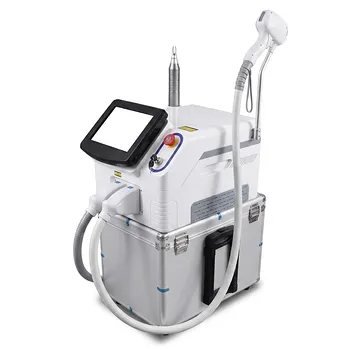
Light-based and laser equipment differ primarily in how precisely they deliver energy. IPL systems emit broad-spectrum, non-coherent light, making them useful for treating diffuse photodamage, superficial pigmentation, and vascular irregularities across larger areas. Laser systems deliver specific wavelengths with greater targeting precision, which makes them better suited to selective hair removal and controlled skin resurfacing.
IPL is generally the more versatile option for broad, superficial concerns, while lasers provide more selective energy delivery for hair follicles, pigmentation, or deeper skin remodeling. The appropriate choice depends on the treatment target, skin type, treatment area, and desired degree of tissue alteration.
How the Technologies Differ
IPL Uses Broad-Spectrum Light
Intense Pulsed Light emits a range of wavelengths rather than one precise wavelength. Filters and treatment settings determine which portion of that spectrum reaches the skin.
This broad delivery allows IPL to address several superficial chromophores, including melanin and hemoglobin, across relatively large treatment areas.
Lasers Use Targeted Wavelengths
A laser typically delivers a specific wavelength of coherent light. That wavelength can be selected to match the absorption characteristics of a particular target, such as follicular melanin or water in the skin.
This precision supports more controlled treatment of defined structures, but it also makes laser selection and parameter adjustment more indication-specific.
Both Rely on Selective Photothermolysis
Both IPL and laser treatments use the principle of selective photothermolysis: energy is absorbed preferentially by a target chromophore and converted into heat.
The difference is how selectively the energy is delivered. Lasers generally provide narrower wavelength targeting, while IPL uses a broader spectrum that may affect multiple chromophores within the treatment area.
Photodamage Treatment
IPL Addresses Diffuse Superficial Changes
For photodamage, IPL is commonly used to treat broad areas of uneven pigmentation, sun-related redness, and superficial vascular lesions.
Its wide treatment field makes it practical for areas such as the face, neck, chest, and hands when the clinical goal is overall tone improvement rather than precise removal of one isolated lesion.
Lasers Target Specific Pigment or Vascular Concerns
A laser may be selected when the clinician needs more specific interaction with a pigmentary or vascular target. Its defined wavelength allows treatment parameters to be matched more closely to the target tissue.
Laser-based pigment treatment can be particularly useful when the concern is localized or requires a depth and energy profile that IPL cannot provide.
Skin Assessment Determines Suitability
Melanin in the surrounding skin can also absorb light, increasing the risk of unwanted heating. Skin type, tanning status, pigment characteristics, and the distinction between superficial and deeper lesions therefore influence device selection.
Treatment planning should be performed by a trained professional who can identify whether the visible discoloration is appropriate for light-based treatment and select suitable parameters.
Hair Removal
Diode and Alexandrite Lasers Target Follicular Melanin
Diode and Alexandrite lasers are designed to target melanin within the hair shaft and follicle. The absorbed energy becomes heat, damaging follicular structures and reducing future hair growth.
They are often effective when there is sufficient contrast between darker hair and lighter surrounding skin, although treatment settings must be adjusted for the individual.
Nd:YAG Lasers Extend Treatment Options
Nd:YAG lasers use a longer wavelength that penetrates more deeply and is less strongly absorbed by epidermal melanin than some shorter-wavelength systems.
This can make them useful for treating patients with darker skin types when conservative parameter selection and appropriate cooling are used. They are not risk-free, however, and clinical assessment remains essential.
IPL Can Also Reduce Hair Growth
IPL can target follicular melanin because part of its broad spectrum is absorbed by the hair follicle. It is a versatile alternative, particularly for treating larger areas.
Because IPL does not deliver one narrowly selected wavelength, its energy distribution is generally less specific than that of a dedicated hair-removal laser.
Professional Systems Differ from Home Devices
Clinical hair-removal systems provide higher usable fluences, adjustable pulse durations, larger spot sizes, and integrated cooling systems. These capabilities support more substantial follicular heating under professional supervision.
Home-use devices operate at lower energy levels for consumer safety. They may delay regrowth or reduce hair over time, but their results should not be assumed to match those of professional medical-grade equipment.
Skin Resurfacing
Fractional CO2 Lasers Produce Controlled Ablation
Fractional CO2 lasers use water absorption to create microscopic columns of thermal injury. Depending on the settings, these columns can include controlled vaporization and surrounding thermal effects.
The resulting micro-injury stimulates wound healing and collagen remodeling while leaving untreated skin between treatment zones to support recovery.
Erbium Lasers Offer More Superficial Ablation
Erbium lasers are also strongly absorbed by water but generally produce more precise, superficial ablation with less residual thermal injury than CO2 systems.
They may be selected when the clinical objective is resurfacing with a different balance between tissue removal, downtime, and thermal remodeling.
Fractional Delivery Controls Recovery
Fractional resurfacing treats only a portion of the skin surface during each pass. This can reduce recovery time compared with fully ablative treatment while still creating a meaningful remodeling response.
The trade-off is that multiple sessions may be needed, particularly for deeper scars, pronounced photodamage, or more extensive textural irregularity.
IPL Is Not a Substitute for Ablative Resurfacing
IPL can improve color irregularities and some signs of photodamage, but it does not normally create the same controlled micro-ablative injury as fractional CO2 or Erbium lasers.
Therefore, IPL is better understood as a photorejuvenation tool, whereas fractional lasers are resurfacing tools that directly alter the skin surface and stimulate deeper remodeling.
Matching the Device to the Clinical Goal
Broad Color Correction
IPL is often appropriate when the goal is to improve widespread superficial redness, sun spots, and uneven tone across a broad area.
It is especially useful when the patient needs treatment of multiple superficial targets at once rather than aggressive textural correction.
Selective Hair Reduction
Diode, Alexandrite, and Nd:YAG lasers are purpose-built for selective follicular heating. The appropriate choice depends on hair characteristics, skin pigmentation, treatment area, and the clinician’s ability to control fluence, pulse duration, and cooling.
IPL may also provide hair reduction, but a dedicated laser generally offers more specific wavelength delivery.
Texture and Scar Remodeling
Fractional CO2 and Erbium lasers are better suited to wrinkles, acne scars, and irregular texture because they create controlled thermal or micro-ablative zones that stimulate collagen remodeling.
These treatments generally involve more downtime and aftercare than IPL photorejuvenation.
Understanding the Trade-offs
Versatility Versus Precision
IPL can treat several superficial chromophores with one platform, which may be operationally useful for clinics and convenient for broad photodamage treatment.
Laser systems are more specialized. That specialization can produce more targeted effects, but it may require multiple platforms to cover different indications.
Results Versus Downtime
IPL is typically associated with less tissue disruption than ablative resurfacing. This can mean shorter recovery, but it may also provide less dramatic improvement in deep wrinkles, scars, or significant textural damage.
Fractional CO2 and Erbium lasers can produce stronger remodeling, with a corresponding increase in erythema, recovery time, and aftercare requirements.
Skin Type and Safety
All light-based procedures can cause burns, blistering, pigmentary changes, or other complications when the wavelength, fluence, pulse duration, or cooling is inappropriate.
Darker or recently tanned skin requires particular caution because epidermal melanin can compete with the intended target for energy absorption.
Device Capability Does Not Guarantee an Outcome
The device category is only one part of the result. Diagnosis, patient selection, treatment parameters, operator training, cooling, eye protection, and post-treatment care all materially affect safety and effectiveness.
A more powerful system is not automatically the better choice if its energy cannot be matched appropriately to the patient and indication.
Making the Right Choice for Your Goal
The most reliable selection begins with the tissue target and the amount of remodeling required.
- If your primary focus is diffuse photodamage: Consider IPL when the main concerns are broad areas of superficial pigmentation, redness, or uneven tone.
- If your primary focus is hair removal: Consider a professional Diode, Alexandrite, or Nd:YAG laser based on skin type, hair characteristics, and treatment area; IPL is a broader-spectrum alternative.
- If your primary focus is wrinkles, scars, or uneven texture: Consider fractional CO2 or Erbium resurfacing when controlled ablation and collagen remodeling justify the additional recovery.
- If your primary focus is treatment flexibility: A clinic with both IPL and multiple laser platforms can match wavelength and tissue interaction more closely to each patient’s needs.
The right technology is the one whose light delivery, wavelength, and tissue effect most closely match the clinical target while maintaining an acceptable safety and recovery profile.
Summary Table:
| Technology | Mechanism | Best For | Limitations |
|---|---|---|---|
| IPL | Broad-spectrum light | Superficial pigmentation, redness, hair reduction (large areas) | Less precise, may require more sessions |
| Diode/Alexandrite Lasers | Specific wavelength targeting melanin | Hair removal on lighter skin types | Less effective on dark skin or light hair |
| Nd:YAG Laser | Longer wavelength, deeper penetration | Hair removal on darker skin types | May require multiple sessions, risk of hyperpigmentation |
| Fractional CO2 Laser | Ablative, water absorption | Skin resurfacing, scars, wrinkles | Longer downtime, risk of side effects |
| Erbium Laser | Superficial ablation | Fine lines, mild texture issues | Less effect on deep wrinkles, multiple sessions needed |
Ready to elevate your clinic's aesthetic offerings? BELIS provides professional-grade laser and light systems, including IPL, Diode, Alexandrite, CO2 Fractional, Erbium, Nd:YAG, Pico, and more. Our advanced technology ensures precise, safe, and effective treatments for your clients. Contact us today to explore our full range and find the perfect solution for your practice. Contact us now!
Related Products
- Professional IPL SHR Hair Removal Machine for Laser and IPL Hair Removal
- Clinic Use IPL and SHR Hair Removal Machine with Nd Yag Laser Tattoo Removal
- Clinic Use IPL SHR ND YAG Laser Hair Removal RF Skin Tightening Machine
- Diode Laser SHR Trilaser Hair Removal Machine for Clinic Use
- IPL SHR Hair Removal Machine for Permanent Hair Removal
People Also Ask
- How does output wavelength spectrum selection in IPL devices influence hair removal efficacy and pigmentary side effects? Optimizing IPL Spectrum for Safer, More Effective Hair Removal
- What technical mechanisms are utilized in Intense Pulsed Light (IPL) hair removal systems to maximize targeted hair reduction while preventing epidermal thermal complications? Master IPL Hair Removal with Advanced Optical & Cooling Tech
- How does filtering specific optical wavelength bands affect efficacy and pain levels in IPL hair removal systems?
- What spectral filter and pulse width adjustments maximize IPL hair removal efficacy and safety for Asian or darker skin phototypes? Discover the optimal IPL settings and protocols for safe, effective hair removal on darker skin.
- What main optical wavelengths and energy modalities are utilized in professional laser hair removal platforms, and how do they function across different skin types? Explore expert insights and advanced solutions.