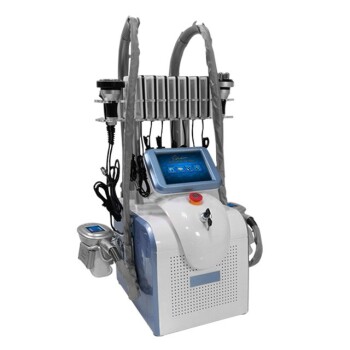
Integrated optical filtering and contact cooling protect skin in two complementary ways: the water filter removes wavelengths above approximately 950 nm, where water absorbs strongly and can cause unnecessary dermal heating, while the cooled handpiece actively removes heat from the epidermis. Together, they reduce thermal injury at the skin surface and help clinicians deliver higher fluences to deeper melanin- or hemoglobin-containing targets.
Optical filtering limits avoidable heat generation; contact cooling manages the heat that remains. The combination preserves epidermal integrity while allowing sufficient energy to reach the intended chromophore.
How High-Fluence IPL Can Injure Skin
Light energy becomes heat
IPL uses broad-spectrum, polychromatic light, typically covering roughly 400–1200 nm. Target chromophores such as melanin and hemoglobin absorb selected wavelengths and convert that energy into heat.
The same process can unintentionally heat surrounding tissue. If epidermal melanin or dermal water absorbs too much energy, the result may include pain, burns, blistering, prolonged redness, or post-inflammatory pigmentation changes.
The epidermis is the critical tissue to protect
Many IPL treatments require substantial fluence to affect targets located below the skin surface. The challenge is delivering enough energy to the dermal target without allowing the epidermis to become the hottest tissue.
This is a form of selective thermal protection: the device should concentrate useful heating in the target while limiting heat accumulation in non-target tissue.
How the Integrated Water Filter Reduces Unnecessary Heating
It removes strongly water-absorbed wavelengths
An integrated water filter cuts off wavelengths above approximately 950 nm. These longer wavelengths are absorbed strongly by water, which is abundant throughout the skin.
Removing them reduces energy deposition in bulk dermal water that does not contribute meaningfully to the intended melanin or hemoglobin target. The result is less nonspecific heating within the treated volume.
It improves the usable energy balance
The filter does not make the remaining IPL energy harmless. Instead, it removes a portion of the spectrum that is more likely to produce unwanted water-related heating.
This allows a greater proportion of the delivered optical energy to support the intended treatment effect, while reducing the thermal burden placed on surrounding tissue.
The cutoff is device-dependent
A nominal cutoff near 950 nm describes the system in the reference, but the exact transmission profile depends on the filter, lamp spectrum, pulse settings, and handpiece design. Clinicians should rely on the device’s validated specifications rather than assume that every IPL system has the same spectral behavior.
How Contact Cooling Protects the Epidermis
It removes heat at the treatment surface
A cooled sapphire, quartz, or comparable contact block sits directly against the skin. Before, during, and immediately after light delivery, it conducts heat away from the epidermis.
This helps prevent surface temperature from rising to the level required for thermal injury, even when deeper tissue is receiving a high treatment fluence.
It increases the epidermal safety margin
Cooling lowers the starting temperature of the epidermis and absorbs heat generated during the pulse. In practical terms, this raises the amount of light energy the surface can tolerate before reaching a damaging temperature.
Cooling therefore creates a larger thermal safety margin between the epidermis and the deeper treatment target.
It improves comfort
The cooled contact surface also reduces pain and burning sensations. Depending on the system, cooling may produce a numbing effect and make high-fluence treatment more tolerable.
Cooling performance varies considerably among devices. Reported operating temperatures should not be treated as universal clinical values; the important principle is controlled, consistent heat removal at the skin–handpiece interface.
Why the Two Mechanisms Work Better Together
Filtering limits heat generation
The optical filter acts before the energy becomes heat. By removing wavelengths that water absorbs strongly, it reduces avoidable thermal loading throughout the tissue.
Cooling manages residual heat
The contact cooler acts after or as energy is delivered. It protects the epidermis from the heat that remains, including heat generated by target absorption and by residual absorption in surrounding tissue.
The combination supports higher fluence
Used together, the two safeguards help preserve the epidermis while allowing clinicians to deliver sufficient energy to deeper chromophores. This is particularly relevant when treating thicker or deeper vascular targets, where inadequate fluence may produce little therapeutic effect.
The protection is not unlimited: higher fluence still increases risk, and treatment parameters must match skin type, target characteristics, pulse structure, and device-specific safety limits.
Understanding the Trade-offs
Cooling does not replace correct parameter selection
A cooled handpiece reduces epidermal heating, but it cannot compensate for excessive fluence, inappropriate pulse duration, excessive overlap, or poor skin contact.
Cooling should be viewed as a safety mechanism that expands the operating margin—not as permission to exceed validated treatment protocols.
Excessive cooling can affect treatment conditions
Very aggressive cooling may alter local tissue conditions and patient sensation. It can also make it more difficult to judge the skin’s immediate response, particularly when the surface appears less erythematous because of cooling.
The device’s specified cooling temperature, contact pressure, timing, and treatment protocol should therefore be followed.
Optical filtering is not complete target selectivity
Removing wavelengths above approximately 950 nm reduces water absorption, but the remaining spectrum can still be absorbed by epidermal melanin, hemoglobin, and other tissue components.
The filter improves spectral efficiency; it does not eliminate the need for appropriate wavelength selection, pulse control, and skin assessment.
Contact quality affects protection
A cooling block can only remove heat effectively when it maintains reliable contact with the skin. Air gaps, uneven pressure, contaminated surfaces, or rapid movement may reduce heat transfer and create nonuniform protection.
Consistent coupling and appropriate handpiece technique are therefore essential.
How to Apply This to Your Procedure
The safest interpretation is that optical filtering and cooling are complementary controls, not independent substitutes.
- If your primary focus is epidermal protection: Use the device’s validated water-filter and cooling settings to reduce long-wavelength water heating and continuously remove surface heat.
- If your primary focus is treating deeper chromophores: Use the available thermal protection to support an effective fluence, while keeping pulse duration, spot overlap, skin type, and target depth within the manufacturer’s protocol.
- If your primary focus is patient comfort: Maintain appropriate contact cooling before, during, and after emission, and monitor the skin response rather than relying on cooling alone.
- If your primary focus is reducing complications: Confirm consistent handpiece contact, avoid unvalidated parameter escalation, and assess the immediate tissue response throughout treatment.
The core principle is simple: remove unnecessary optical heating, actively cool the epidermis, and deliver only the fluence that the target and surrounding skin can safely tolerate.
Summary Table:
| Mechanism | Function | Protection Benefit |
|---|---|---|
| Integrated water filter | Removes wavelengths >950 nm | Reduces unnecessary dermal water heating |
| Contact cooling | Removes heat from epidermis | Prevents surface burns and increases safety margin |
| Combined effect | Limits heat generation and manages residual heat | Allows higher fluence to deeper targets while protecting skin |
Ready to elevate your clinic's IPL treatments with advanced safety features? BELIS offers a comprehensive range of professional-grade IPL systems with integrated water filters and effective contact cooling. Our devices are trusted by clinics and premium salons worldwide, ensuring optimal results with minimal risk. Contact us today to find the perfect IPL solution for your practice, and let our experts help you deliver safer, more comfortable treatments. Get in touch with our team.
Related Products
- IPL SHR Hair Removal Machine for Permanent Hair Removal
- Multifunctional Laser Hair Growth Machine Device for Hair Growth
- Clinic Use IPL SHR ND YAG Laser Hair Removal RF Skin Tightening Machine
- Cryolipolysis Fat Freezing Machine Cavitation Lipo Laser Machine
- Clinic Use IPL and SHR Hair Removal Machine with Nd Yag Laser Tattoo Removal
People Also Ask
- How does an IPL SHR machine achieve long-term hair reduction compared to traditional methods? Professional Tech Guide
- How does the frequency of IPL SHR sessions compare to traditional laser hair removal? Maximize Comfort and Efficiency
- How does IPL SHR technology accommodate a wide range of skin types and hair colors? Safe Solutions for All Skin Tones
- How does the safety mechanism of IPL SHR technology protect the surrounding skin tissue? Advanced Protection Guide
- Why is the IPL SHR hair removal process described as painless and comfortable for the patient? Discover the Tech.