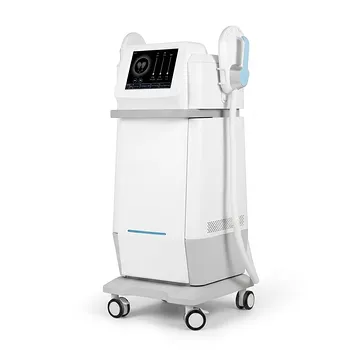
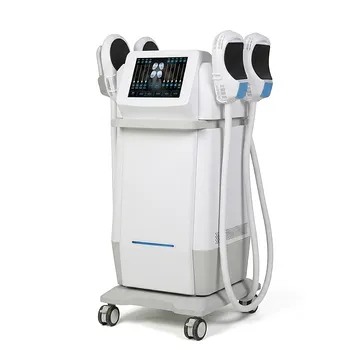
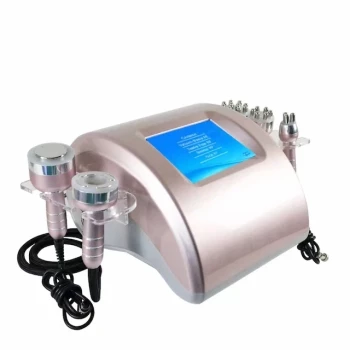
HIFU body sculpting destroys subcutaneous fat through precisely focused heat. The device sends acoustic energy through the skin and focuses it at a defined depth within the fat layer, such as 1.3 cm below the skin surface. At the focal point, tissue temperature rises rapidly to approximately 56°C or higher, producing coagulative necrosis and thermal breakdown of adipocytes while the epidermis and most surrounding tissue remain outside the treatment zone. The body then clears the damaged cellular debris through an inflammatory response, with visible contour changes developing over roughly 2 to 3 months.
HIFU works because energy is concentrated at a selected depth rather than spread across the skin. The critical safety requirement is adequate fat thickness: the treatment depth must be followed by at least 1 cm of additional subcutaneous fat before the underlying muscle or other vulnerable structures.
How HIFU Destroys Fat Cells
Focused Acoustic Energy Reaches the Fat Layer
HIFU transducers deliver high-energy ultrasound pulses through the skin. The superficial tissues transmit the energy, while the device concentrates it at a predetermined focal point inside the subcutaneous adipose layer.
This precision allows treatment of localized fat deposits without the tissue removal or aspiration associated with surgical liposuction.
The Focal Point Heats Rapidly
At the focal zone, acoustic energy is converted into intense localized thermal energy. Temperatures of approximately 56°C or higher can be reached rapidly enough to damage the targeted adipocytes.
The important distinction is localization: the destructive temperature is intended to occur at the focus, not throughout the skin or the entire treatment path.
Adipocytes Undergo Coagulative Necrosis
The heat causes coagulative necrosis, a form of irreversible cellular injury. The targeted fat cells lose their normal structure and die, while the overlying epidermis and dermis are generally preserved when the device is correctly selected and applied.
Some systems may also produce pressure-related mechanical effects within the focal zone, but the central fat-destruction mechanism described for body-sculpting HIFU is targeted thermal injury.
The Body Clears the Cellular Debris
HIFU does not remove the fat immediately. After treatment, macrophages and other clearance mechanisms gradually process the necrotic adipocytes, cellular fragments, and associated lipids.
This biological clearance explains why contouring results appear progressively rather than on the day of treatment. The process commonly unfolds over approximately 2 to 3 months, although the exact clinical timeline depends on the device, treatment area, and patient.
Why Treatment Depth Matters
The Focal Depth Defines the Safety Boundary
A HIFU device must deliver energy to the intended fat layer without placing the focal zone too close to muscle, fascia, organs, or other deeper structures. The nominal treatment depth is therefore not merely a cosmetic setting; it is a safety-critical parameter.
For example, a device focused at 1.3 cm below the skin surface requires sufficient fat thickness beneath that focal point before deeper anatomy begins.
At Least 1 cm of Fat Must Remain Beneath the Focus
The treated area must contain at least 1 cm of subcutaneous fat beyond the device’s treatment depth to reduce the risk of heating or injuring underlying muscle layers.
If the focal depth is 1.3 cm, this rule implies a measured subcutaneous fat thickness of approximately 2.3 cm or more, assuming the depth is measured from the skin surface and the tissue geometry is comparable to the device specification.
This is a minimum geometric requirement, not a universal guarantee of safety. The actual requirement must also follow the device manufacturer’s instructions, applicator design, energy settings, and treatment protocol.
Tissue Thickness Must Be Verified Before Treatment
Practitioners should assess the thickness and anatomy of the intended treatment area rather than relying only on visual inspection or a preset depth. Areas with insufficient fat thickness should not be treated at a depth or energy level that could expose deeper structures to damaging heat.
Where available and appropriate, objective tissue-depth assessment can help confirm that the focal zone and the required safety margin are present.
How Surrounding Skin Is Protected
Energy Passes Through Superficial Tissue
The ultrasound energy travels through the epidermis and dermis before converging at the focal point. Because the energy is concentrated at depth, the superficial tissues are not intended to receive the same destructive temperature as the target zone.
Correct coupling, positioning, treatment spacing, and device settings remain essential to maintaining this selectivity.
The Treatment Zone Must Be Precisely Controlled
HIFU safety depends on controlling several variables at once: focal depth, acoustic energy, pulse duration, applicator position, and the thickness of the intervening fat layer.
A focal point that is misplaced, too deep, too superficial, or used in tissue that is too thin can undermine the intended separation between adipose tissue and vulnerable structures.
Heat Does Not Stop at the Focal Point
Although the focal zone receives the highest energy concentration, heat can diffuse into adjacent tissue. This is one reason the 1 cm fat buffer beyond the treatment depth is critical, particularly where muscle or other sensitive anatomy lies directly beneath the fat layer.
Claims that all tissue outside the focal point is completely unaffected should therefore be treated cautiously. The goal is controlled, localized injury, not the absence of every thermal effect outside a mathematical point.
Understanding the Trade-offs
HIFU Is Not Immediate Fat Removal
HIFU destroys targeted fat cells but does not suction them out. The body must clear the resulting debris over time, so treatment results are gradual and may not be fully apparent for several weeks or months.
This makes HIFU unsuitable for someone seeking the immediate, high-volume fat removal associated with surgery.
Results Depend on Anatomy and Protocol
A device’s advertised focal depth cannot be applied safely to every body area or every patient. Fat thickness, body contour, tissue composition, treatment geometry, and the selected energy level all affect the risk profile.
A treatment area with only a thin fat layer may not provide the required 1 cm buffer, even if it appears to contain a localized bulge.
Mechanical Effects Should Not Replace Depth Assessment
Some descriptions attribute additional fat disruption to cavitation, pressure waves, or mechanical shear. These effects may be relevant to particular systems, but they do not remove the need to verify the treatment depth and the underlying safety margin.
Thermal precision and adequate tissue thickness remain the practical safeguards emphasized for HIFU body contouring.
Contraindications Must Be Taken Seriously
HIFU body sculpting is contraindicated in pregnant or lactating patients and in individuals with a history of hernias, according to the primary reference.
Treatment should also be deferred or avoided whenever the practitioner cannot confidently identify adequate fat thickness and the location of deeper vulnerable structures.
How to Apply This to Your Project
The correct decision depends first on whether the device’s focal zone can be safely contained within the patient’s subcutaneous fat.
- If your primary focus is treatment safety: Verify that the treatment area has at least 1 cm of subcutaneous fat beyond the specified focal depth, and do not rely on visual estimates alone.
- If your primary focus is understanding the mechanism: Recognize that HIFU primarily causes localized thermal coagulative necrosis at approximately 56°C or higher, followed by gradual macrophage-mediated clearance.
- If your primary focus is device selection: Compare the device’s focal depths, energy settings, applicators, and required tissue-thickness specifications rather than treating “HIFU” as a single standardized technology.
- If your primary focus is patient eligibility: Exclude pregnant or lactating patients and people with a history of hernias, and refer uncertain cases for appropriate clinical assessment.
- If your primary focus is setting expectations: Explain that contour changes develop progressively over approximately 2 to 3 months, not immediately after treatment.
HIFU body sculpting is safest when its focal depth, energy, and required fat buffer are verified against the patient’s actual anatomy before treatment begins.
Summary Table:
| Mechanism | Details |
|---|---|
| Energy Source | Focused ultrasound waves |
| Target Tissue | Subcutaneous fat cells (adipocytes) |
| Focal Temperature | ≥56°C (coagulative necrosis) |
| Result | Cell death & gradual clearance by the body |
| Results Timeline | 2–3 months for visible contouring |
| Critical Safety | At least 1 cm of fat must remain below the focal depth |
| Contraindications | Pregnancy, lactation, history of hernias |
Upgrade your practice with BELIS's advanced HIFU and full aesthetic portfolio. Our devices ensure safe, effective body contouring with precision focal depths. For clinics and premium salons seeking professional-grade equipment, BELIS offers complete solutions—from HIFU to Diode Laser and beyond—with OEM/ODM support and global certifications. Contact us today to explore how BELIS can elevate your services and profitability! Get in touch.
Related Products
- 22D HIFU Machine Device Facial Machine
- 7D 12D 4D HIFU Machine Device
- 4D 12D HIFU Machine Device for Skin Tightening and Lifting
- 12D HIFU Machine Device for Facial HIFU Treatment
- EMS Body Sculpting Machine for Body Slimming and Sculpting
People Also Ask
- Is swelling a frequent side effect after a HIFU facial? Expert Insights on HIFU Recovery and Safety
- What is the mechanism of action of High-Intensity Focused Ultrasound (HIFU) devices in noninvasive body sculpting, and how is surrounding tissue protected?
- How do High-Intensity Focused Ultrasound (HIFU) devices function? Master Non-Invasive Face Lifting Technology
- Are home-use HIFU devices a recommended alternative? Why Clinical Safety Beats At-Home Risks
- How do clinical evaluations of wrinkle depth and tissue atrophy guide the selection between non-invasive medical aesthetic equipment and injectable dermal fillers for facial rejuvenation?