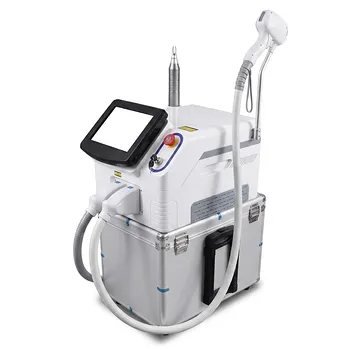
Growth factor pathways and specialized hair-growth machines address androgenetic alopecia from complementary directions. Growth factors such as EGF, FGF-7, IGF-1, PDGF, and VEGF act as biological signals around dermal papilla cells, encouraging follicular activity, cell survival, and support of the growth phase. Devices using low-level light or other physical stimulation primarily influence cellular metabolism and scalp microcirculation, potentially creating a more responsive environment for those signals.
The central idea is complementary stimulation: growth factors provide biochemical instructions, while hair-growth devices provide physical stimulation that may improve follicular activity and local tissue conditions. Together, they may help miniaturized follicles remain in or return to the anagen growth phase, but they do not automatically eliminate the androgen-driven cause of AGA.
Why androgenetic alopecia disrupts hair growth
Follicles become progressively miniaturized
In AGA, susceptible follicles gradually produce thinner, shorter hair shafts. Their growth cycles also become less favorable, with follicles spending relatively less time in the active anagen phase and entering resting or regression phases prematurely.
Androgen-related signaling contributes to this process, particularly in genetically susceptible follicles. A treatment that only stimulates growth without addressing the underlying androgen sensitivity may therefore have limited or temporary results.
The dermal papilla acts as a signaling hub
Dermal papilla cells sit at the base of the follicle and help regulate hair-fiber production. They respond to signals from growth factors, surrounding tissue, blood supply, and hormonal pathways.
This makes them an important target for both biological therapies and energy-based devices.
How growth factor pathways support follicles
Growth factors bind to follicular receptors
Growth factors are signaling proteins. When they bind to compatible receptors on dermal papilla and related follicular cells, they can influence cell proliferation, survival, metabolism, and communication within the follicle.
The specific effect depends on the factor, receptor, dose, delivery method, and condition of the follicle.
They may support the anagen phase
The reference pathways include increased activity of beta-catenin, which is associated with follicular growth signaling, and Bcl-2, which helps support cell survival by limiting apoptosis.
Together, these signals may help prolong the active growth phase and reduce the tendency of vulnerable follicles to shut down prematurely.
They may improve the follicle’s local environment
Some growth factors, particularly VEGF, are associated with blood-vessel and microvascular signaling. Improved local vascular support may help supply follicles with oxygen and nutrients, although the clinical effect depends on the delivery system and the individual’s underlying scalp condition.
Growth factors can be supplied through approaches such as PRP, in which concentrated components of the patient’s own blood are delivered to the scalp. PRP composition and preparation methods vary substantially, so results are not uniform across clinics.
How specialized hair-growth machines contribute
Light-based devices influence cellular activity
Low-level light therapy, often using red or near-infrared wavelengths, is intended to produce photobiomodulation. The treatment goal is to influence cellular energy production and activity without causing thermal tissue damage.
In hair follicles, this may support dermal papilla cell function and help maintain conditions favorable to the anagen phase.
Physical stimulation may improve local circulation
Devices may also be designed to enhance scalp microcirculation or provide other forms of low-energy physical stimulation. Better local circulation can complement growth-factor signaling by improving the follicle’s surrounding environment.
However, improved circulation alone does not reverse every mechanism involved in AGA.
Devices may help activate quiescent follicles
By influencing cellular metabolism and the follicular microenvironment, these devices are intended to encourage some telogen-phase follicles to re-enter anagen. They may also help preserve shaft thickness in follicles that remain viable but have become miniaturized.
The response is more plausible when follicles are weakened rather than completely absent.
How the two approaches work together
Biological signals and physical stimulation target different bottlenecks
Growth factors supply biochemical instructions, such as signals related to proliferation and cell survival. The device supplies physical energy or stimulation, which may improve cellular activity and the local scalp environment.
This is why the combination is described as synergistic: each modality may support a different part of the follicle’s recovery process.
Treatment sequencing can matter
In a combined protocol, a clinician may use a device before or after a biological treatment, depending on the device, delivery method, and clinical protocol. The intended logic is to make the follicular environment more receptive while supplying growth-related signals.
There is no universally established sequencing schedule for every device and growth-factor preparation. Protocols should therefore be based on the specific technology and evidence supporting it.
Results require an active follicular reservoir
A follicle must generally retain enough viable structure to respond. Growth factors and devices may improve the performance of miniaturized or dormant follicles, but they cannot reliably recreate follicles that have been permanently destroyed.
This distinction is important when setting expectations for advanced AGA.
What improvement may look like
Hair density and shaft thickness may change gradually
Hair-cycle interventions do not produce instant results because follicles must transition through biological phases. Clinical treatment courses are commonly evaluated over approximately three to six months, with outcomes assessed through changes in density, shaft thickness, and follicular-unit measurements.
Early shedding or no visible change does not necessarily establish treatment failure, but objective photographs and standardized measurements are more reliable than visual impressions alone.
Maintenance may be necessary
AGA is a chronic, progressive condition. Even if combination therapy improves density, continued treatment may be needed to maintain the response, particularly if androgen sensitivity remains active.
The appropriate maintenance plan depends on the patient’s diagnosis, response, and other therapies being used.
Understanding the Trade-offs
Combination therapy is not automatically better for everyone
Using several modalities can increase cost, appointment time, and treatment burden. It may also make it difficult to determine which component produced the benefit.
A combination should be selected because each component has a clear rationale, not simply because more treatments appear more powerful.
Device quality and protocols vary
“Hair-growth machine” is a broad category. Clinical-grade low-level light devices differ in wavelength, energy delivery, treatment duration, coverage, and regulatory status.
Results from one device should not automatically be generalized to another.
Growth-factor products are not interchangeable
PRP, laboratory-derived growth-factor preparations, and other biological products differ in composition, preparation, sterility controls, and evidence. The presence of a growth factor on a product label does not prove that it will produce a clinically meaningful hair-growth response.
The underlying diagnosis must be confirmed
Not all hair loss is AGA. Diffuse shedding, inflammatory scalp disease, nutritional problems, autoimmune alopecia, and endocrine disorders can require different treatment.
A clinician should confirm the diagnosis before combining procedures, particularly when hair loss is sudden, patchy, painful, or accompanied by scalp inflammation.
How to Apply This to Your Treatment Goal
A combination approach should be built around the diagnosis, the degree of miniaturization, and the quality of evidence for the specific device and growth-factor protocol.
- If your primary focus is stimulating dormant or miniaturized follicles: Consider a clinician-supervised combination of an evidence-supported light or physical-stimulation device with an appropriate biological treatment, while measuring results over at least several months.
- If your primary focus is controlling ongoing androgen-driven miniaturization: Treat the underlying AGA mechanism as well; device-based and growth-factor therapies should generally be viewed as complementary rather than automatically substituting for established medical management.
- If your primary focus is evaluating whether treatment is working: Use standardized baseline and follow-up photographs, hair-density measurements, and shaft-thickness assessments instead of relying only on day-to-day shedding.
- If your primary focus is safety and value: Verify the exact device, growth-factor preparation, treatment schedule, practitioner qualifications, expected maintenance, and evidence before committing to a package.
The most effective strategy is a measured, diagnosis-led plan that combines biological signaling with physical stimulation without overstating what either therapy can achieve alone.
Summary Table:
| Aspect | Growth Factor Pathways | Specialized Hair Growth Machines |
|---|---|---|
| Mechanism | Biochemical signals (EGF, FGF-7, etc.) bind to receptors on dermal papilla cells, promoting proliferation and survival. | Physical stimulation (e.g., low-level light) enhances cellular metabolism and scalp microcirculation. |
| Primary Goal | Support anagen phase and improve follicular environment. | Activate quiescent follicles and maintain favorable conditions. |
| Strengths | Directly address cell signaling and survival pathways. | Non-invasive, can improve local circulation and energy production. |
| Limitations | Dependent on viable follicular structures; preparation variability. | Results vary by device quality and protocol; not a standalone cure. |
| Combination Synergy | Provide biochemical instructions. | Create a more responsive environment for those signals. |
Ready to explore advanced solutions for androgenetic alopecia? At BELIS, we offer professional-grade medical aesthetic equipment, including specialized hair growth machines, designed exclusively for clinics and premium salons. Partner with us to elevate your practice — contact us today to learn how our cutting-edge technology can enhance patient outcomes and grow your business.
Related Products
- Multifunctional Laser Hair Growth Machine Device for Hair Growth
- Multifunctional Laser Hair Growth Machine Device for Hair Growth
- IPL SHR Hair Removal Machine for Permanent Hair Removal
- Clinic Diode Laser Hair Removal Machine with SHR and Trilaser Technology
- Diode Laser SHR Trilaser Hair Removal Machine for Clinic Use
People Also Ask
- Why do professional-grade laser hair growth devices integrate LCD displays? Achieve Clinical Precision in Every Session
- What is a typical treatment schedule when using a laser hair growth device? Maximize Results with the Proven Protocol
- How do professional-grade laser stimulation devices contribute to improving hairline morphology? Revitalize Growth & Symmetry
- For which conditions have laser hair growth treatment devices been approved? Targeted Solutions for Androgenic Alopecia
- How do the biological phases of the hair growth cycle inform the clinical application of specialized hair growth devices for treating androgenetic alopecia? Insights for Clinics & Salons